Voices That Sing
DEC. 03, 2020

“The ultimate measure of a man [or woman] is not where he stands in moments of comfort and convenience, but where he stands at times of challenge and controversy.”
—Dr. Martin Luther King
We, Americans all, have moved forward into a time when we are challenging ourselves to look at each human being for his or her unique gifts and strengths. Among those we can turn to for insights are our artists, and among these artists are poets. The Black poets you are about to meet devote their lives and their creativity to displaying and pointing out the strength and beauty that is in every human being. Grace Cavalieri, Maryland’s Poet Laureate, observes, “Our state is made better by these voices who shine with beauty and truth, especially now, in a trying time. These poets rinse off language, making everything brighter.”
These six wordsmiths create beauty using the medium of language—language carved and polished until it, the poem, gleams with truth and wisdom. These poets have been pursuing their art for most of their lives. They have been recognized with awards; they have traveled to distant lands to share poetry; they have studied and taught others to package truth in beautiful parcels—poems. These poets are Black, and proud, and wise.
In a recent “Letter to Black America,” Tracy K. Smith, former U.S. Poet Laureate, wrote, “We [Black Americans] are a language so deep it has no need for words. And we are words that feint, dart, and wheel like birds…We are fire. Like God, we are that we are.”
Hiram Larew, poet and activist, says of the six poets featured here, “During these times when disease and racial divides are rife, so many of our region’s beloved African American poets and their voices have soared through the e-waves. In countless virtual poetry readings—from Ireland to Charlottesville, to points beyond and in-between—these poets always proudly and beautifully represent our region’s richly diverse poetry heritage and life. Their words of concern, anger, pride, sorrow, joy, and fun arouse the listener and provide balm to all, near and far.”
I am honored to introduce you to these Black poets along with brief samples of their work: J. Joy “Sistah Joy” Matthews Alford; Sylvia “Ladi Di” Beverly; Hoke “Bro Yao” Glover III; Monifa A. Love; Diane Wilbon Parks; and Andre Brenardo Taylor.
J. Joy “Sistah Joy” Mathews Alford
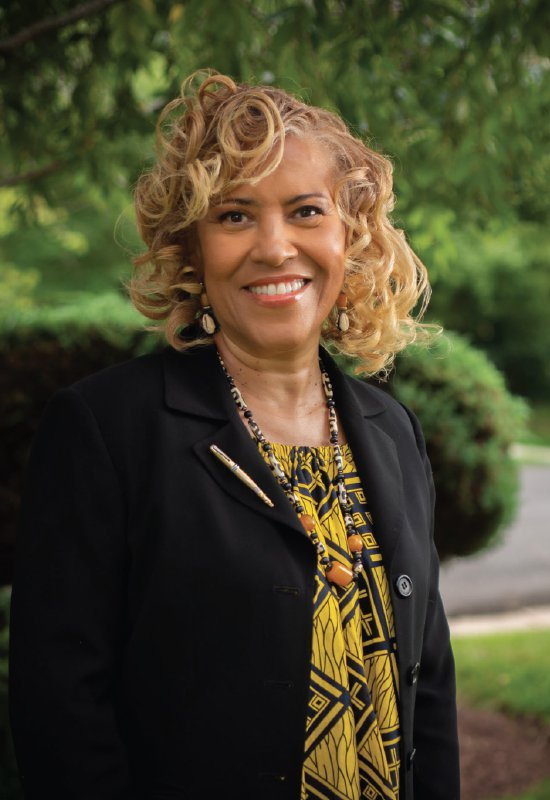
I’ve always felt poets should speak to issues of significance in the community and society at large. Every culture is documented through the Arts. The poet, in particular, has a responsibility to represent the people through the Arts. I want to educate, inform, entertain, and, also, celebrate poetry as an art form; it’s a responsibility of the poet, particularly the Poet Laureate, the people’s poet. It is essentially a service position. It is an honor, one that carries with it a serious responsibility.
J. Joy Matthews Alford, “Sistah Joy,” is Prince George’s County’s first Poet Laureate. “Sistah Joy” is her pen name. Since her appointment as Poet Laureate of Prince George’s County in 2018, Alford has set herself the task visiting each of the County’s nine districts. Prior to the pandemic, for each of these performance-visits, she brought other poets with her, along with musicians and visual artists.
Since March, she has redesigned these presentations for the Zoom platform. She used and continues to use these performances to encourage citizens of every age, every generation, to get involved with poetry, with the arts, with language. Alford works with the residents of the County offering free, quality programs for audiences of all ages to encourage literacy, particularly through poetry by providing opportunities for participants to try writing poetry and/or honing their skills as writers and poets.
Alford’s focus on poetry as communication is equally apparent through her numerous accomplishments. Her nationally recognized, local-access cable television program, “Sojourn With Words,” has aired for 15 years. (She received two Telly Awards from the Television Academy for Excellence in Cultural Programming). Alford has been recognized for her work as creator, host, and participant in this deep dive into writing poetry and literature. She also served as Poetry Editor of ACE Dialogue, a nationally distributed, literary quarterly. As “Sistah Joy,” she founded “Collective Voices,” an ensemble of poets, and was an honored guest reading from her poems at the International Women’s Day Conference: “In Celebration of My Sisters,” held in London, England. “Collective Voices” published a chapbook of their work titled Experience, Expression, Expansion.
“To Heal A Wounded World,” Sistah Joy’s inaugural poem for the new decade, was published in February 2020. She is a charter board member of CAAPA (Coalition for African Americans in the Performing Arts, Inc.), a member of the Prince George’s Truth Chapter of the Association for the Study of African-American Life and History (ASALH), and a lifetime member of the Prince George’s African American Museum and Cultural Center (PGAAMC). And if that weren’t enough, Sistah Joy serves as President of the Poetry Ministry and Poet Laureate of Ebenezer A.M.E. Church, Fort Washington, Maryland. Sistah Joy has authored three collections of her poetry: Lord, I’m Dancing As Fast As I Can, This Garden Called Life, and From Pain to Empowerment: The Fabric of My Being. You can learn more about her work at her web site sistahjoy.com.
Excerpt from “Neither Knees Nor Pandemics”
By Sistah Joy Alford
Through rage we shout at the sun
Pray to the son
Bury too many young
Give our innocent pre-adolescent children “The Talk”
While wiping away tears, shaking our heads
No longer will distraught and bereaved mothers
Merely wring hands while tsk-tsking about
Corrupt cops and court systems
Designed to maintain in lockstep
A march as steady and deadly as Auschwitz
Too many young Black men and women
Succumb as they struggle to breathe
Struggle to have their voices heard
Struggle to catch hold of a promise
That was never intended for them
Sylvia “Ladi Di” Beverly
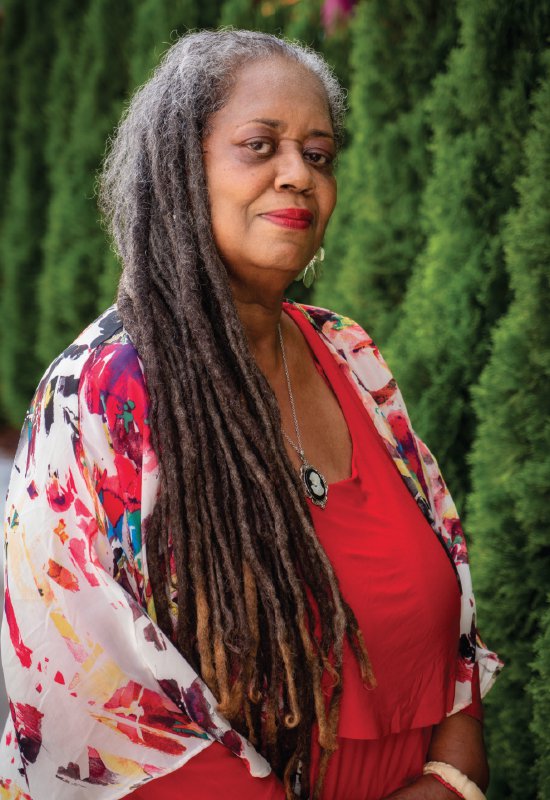
With a group of other Black poets, I was invited to tour Woodland plantation near Mt. Vernon, Virginia. I had never been there before, never visited a plantation. I found the experience sad, strengthening, freeing, and powerful…We were invited to express ourselves about those conditions that never should have been…I wrote the poem “Something Came Over Me.”
Sylvia Dianne Beverly is called, affectionately, “Ladi Di” by friends and admirers. Her power, she knows, is the power of love. “In my poetry, love always shows up.” She speaks of her parents’ love of language and fondly remembers that her dad would wake her for school each morning reciting Paul Lawrence Dunbar’s “In the Morning.” (She can still recite the poem for you, if you ask.) By the sixth grade, Beverly was writing poetry, and her poem was chosen to be read at her graduation ceremony. Forty-six years later, she was invited back to her elementary school as the keynote speaker. After she spoke to the graduates, they recited in unison her poem, “It’s Up to Me.” Beverly went on from her auspicious beginning and studied English at the University of the District of Columbia. Her poetry has been featured at the Smithsonian’s Museum of American History, the National Museum of African Art, and the Hirshhorn Museum. Her work is housed in the Gelman Library at George Washington University.
In 1998, Beverly and four other Black poets who were members of “Collective Voices,” were invited to London to perform poems from the Harlem Renaissance for the Women’s History Month Conference. From that event, Beverly’s poem, “Loves Been Here All the Time,” was included in Whose Equality?: An Anthology of Poets. Recently, she was invited to join an Irish poetry forum. Fifteen Irish poets and five American poets meet on Zoom to recite and discuss their work. Beverly has published two books: Forever In Your Eyes and Cooking Up South.
While Beverly relishes her success as a poet, she is equally proud of her work encouraging and supporting poets and poetry. She was a founding member of poetry ensembles including “Collective Voices” and “Anointed PENS” Poetry Ministry with the Ebenezer AME Church. She founded and directs a group of four poets, “The Dazzling Poetesses.” She has facilitated a variety of poetry writing and study groups for teens and young adults, including founding the “Girls and Boys With Hearts Youth Poetry Group.” Sylvia “Ladi Di” Beverly lives her passion and encourages in others the love of language and poetry. You can find out more about Beverly’s poetry and her performances on her Facebook page, “Sylvia Beverly.”
Excerpt from “Something Came Over Me”
By Sylvia “Ladi Di” Beverly
Wondering how would I have responded
Like Queen Leader I am today
Like Harriet, going back and forth to
Get away
To be strong, to help others, to accept
No wrong
Like Fannie Lou Hammer, sick and tired
Of being sick and tired
Something came over me, there is still
Superiority
We must stand strong to remain free.
Do not be intimidated, Do not be afraid
Be true, Be real
Share righteous goodness of Life
Say your prayers, Do what you feel
Golden opportunities, Accept them
Replace Fear with Faith
Listen, Trust, Obey!
Hoke “Bro Yao” Glover III
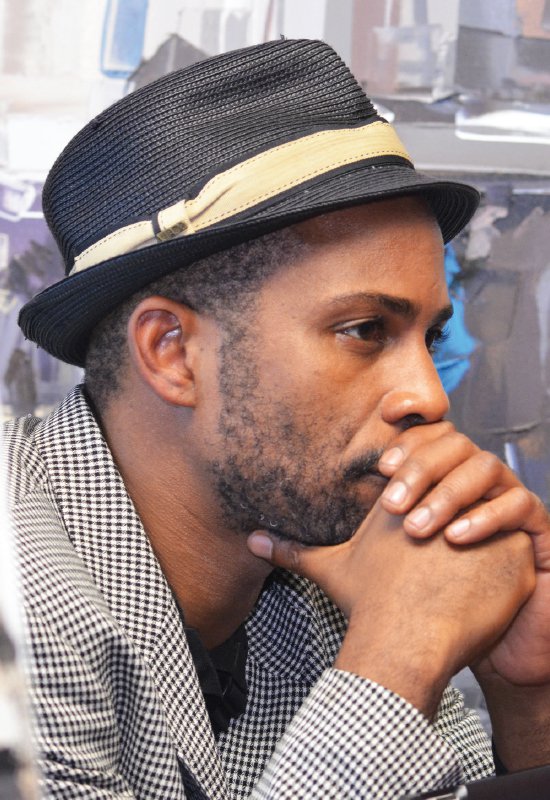
Part of the African-American predicament is trying to resolve the problem with the philosophy that caused the problem…Looking at power, African-Americans are placed in a position where they have to cultivate their own power…For 14 years I have been studying the ancient Chinese art of Taiji, which teaches about the Yin, softness and passiveness, and the Yang, external energy…I think we can triangulate knowledge, applying Chinese philosophy to issues of power faced by African-Americans.
Mr. Glover is immersed in language and the power of words. He spends his professional life teaching, parsing words and guiding young minds as they learn to apply logic and engage in thoughtful discourse. After taking his MFA at the University of Maryland, College Park, Glover accepted a post as an Assistant Professor in the Department of English and Modern Languages at Bowie State University.
Glover writes under the pen name, “Bro Yao.” His works of fiction, nonfiction, and poetry have been published in Ploughshares, the African-American Review, and other publications. His non-fiction essay, “Hospital for the Negro Insane,” was a finalist for the Crab Orchard John Guyon Non-Fiction Literary Prize. His poetry collection, Inheritance, is published by Africa World Press.
In 1993, Glover founded Karibu Books, a chain of six bookstores in Maryland specializing in work by Black writers; the bookstores flourished until the Great Recession of 2008. In 2006, Glover became interested in Taiji, the Chinese martial art. His thinking and his writing have been influenced by the teachings of this ancient philosophy of martial arts. In 2017, he spent his sabbatical studying at Central China Normal University (CCNU) in China, and returned there for a month in 2018 to deepen his studies. “I admire the philosophy that teaches one to be in harmony with nature. I know it takes decades, a lifetime to gain any true understanding of Taiji, but I am drawn to the power of this philosophy. African-Americans have been underground, traumatized by their experiences. The same is true of people in some Asian cultures. We [African-Americans] are on a long-distance run.”
Bro Yao Glover’s most recent work has been with koans; they are paradoxical statements that encourage one to consider the truth underlying the paradox, sort of like a puzzle. (His koan #23, “falling away” follows.) Hoke “Bro Yao” Glover III has recently published a collection of poems based on the koan form, One Shoe Marching Toward Heaven, published by the African World Press. “For me, the koan echoes the voice of African-American wisdom…Through Taiji I’ve come to understand that trauma can provide a root experience that is beyond words, that can be used to refine language,” Glover observes.
Excerpt from “The Minder Speaks of the Underground”
By Bro Yao
I mined
I minded
I minded the mines
I minded the mines forever
Mining forever is hope
The tired religion
The tried and tired religion
I tried the tried to sing on top
koan #23: falling away
By Bro Yao
lord, forgive me
i done stole something
from myself
used it to pay
the man
who stole from me
Monifa A. Love, Ph. D.
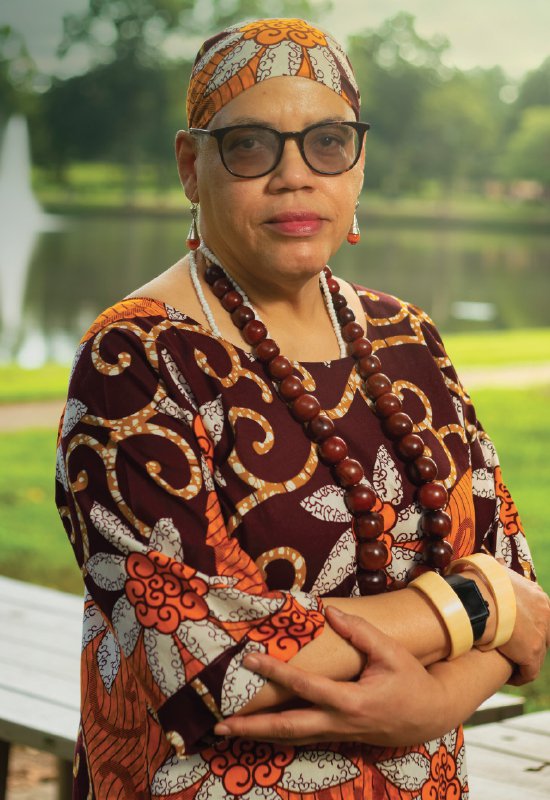
I believe in the power of words. When I’m working with intention, I pray that the work I offer goes out into the world and does the work it’s supposed to do…I have a little, tiny piece of the garden to cultivate with respect, intent, and humility. I am hoping my work as a poet, writer, and teacher contribute to thinking profoundly…I am interested in things being ‘used’—culture in some way is what’s missing from the environment emotionally, spiritually, physically. Art places into culture what is missing.
These are the reflections of Monifa A. Love, Ph.D., Associate Professor in the Department of English and Modern Languages at Bowie State University. Dr. Love spends her life working to supply what is missing—through her poetry, her teaching, and her charitable work, specifically in Ghana. She earned her BA with Honors from Princeton University and went on to study poetry with Pulitzer Prize winning American poet, Galway Kinnell. She received her doctorate in English from Florida State University where she was a McKnight Doctoral Fellow. Two collections of her poetry are in publication, award winning Dreaming Underground and Provisions.
Love attributes her early affinity for language to her parents. She began to read at two, when her parents asked her to read the newspaper at dinner. She visited the library on Saturdays where she met “a world that was vast, a place where life was big. I came to believe that poetry was a means where language might actually meet the vastness of what we could live,” Love recalls. When young Monifa began music lessons at Howard University’s Junior Preparatory Program in piano, she saw, heard, and felt the convergence of music and words. Her life has been devoted to following that astounding convergence.
Speaking of her admiration for the great American author Toni Morrison, Love observes, “I always remember her [Toni Morrison] saying she was working to create characters as large as life. Our salvation comes, I think, if we can treat everyone as they are—as large as life, not smaller. We are programmed to make snap judgements on how we appear. We are caught in terrible loops that we must interrogate.” Love is interested in Afrofuturism, which explores the intersection of history and technology, particularly as they apply to themes taken from the African diaspora. She was a National Endowment for the Humanities Summer Fellow at the African Cinema Institute in Dakar, Senegal. “I am interested in Afrofuturism as an ‘escape hatch’ from the past. Afrofuturism in art can create an imaginative slingshot to ‘the other side’ where life opens to our capacities.”
While she explores cultural aesthetics based on the future, Love keeps her feet firmly planted in the present, and the needs of people struggling in today’s world. Along with her husband, Nana Kweku Carr Asante, Love has worked for 30 years on development projects in Ghana where they have built a medical clinic, funded village wells, a library, and a women’s literacy center. Their most recent projects are the restoration of two schools and the delivery of “100 Shoes for 100 Children.” The Temple of Nyame Dua can be contacted at templeofnyamedua.org if you’d like to help.
Excerpt from “Rain in Due Season: for Rev. Dr. Jeremiah Wright”
By Monifa A. Love
He says, a piece of the main
A measure of the continent
He says
I can never be what I ought to be
Until you are what you ought to be
This is How
God’s universe is made
His annulation:
We are born out of love for love;
And you will bring those who have known long years of hurt and neglect
And you will reach out your arms
And take them close to you and chant your offering
Then, you will feel it for yourself—the rain.
Diane Wilbon Parks
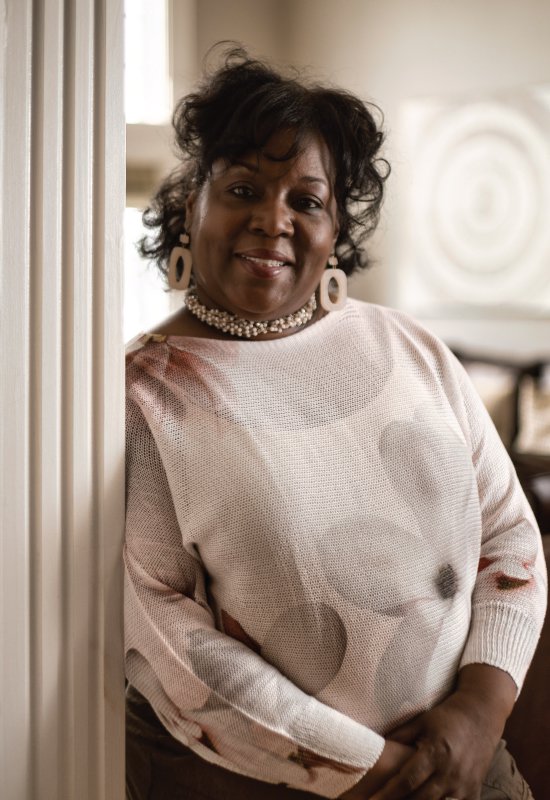
As an African-American poet and artist I have a responsibility to give voice to what I see—the social injustices. I have a platform on which to speak; I represent those who didn’t and don’t have a voice…My writing is reflective of my experiences and observations; it will always include hope, pain, love, light, and struggle, which are subject to change. My heart feels the isolation of the pandemic, feels the heaviness and hope of the Black Lives Matter movement, and knows the tapestry of my skin is still not accepted or protected. It’s hard to believe that in 2020 I’m still judged for something I cannot control; the plight of my brown skin can become a prison or a death sentence. My skin and I are chosen by God.
These are the observations of poet Diane Wilbon Parks. Raised by her mother, a “praying woman,” Parks was inspired to be courageous and wise. She knew from age 11 that she could “birth words.” She joined the United States Air Force, which “has a reputation for ‘thinkers’— where the intellectual work is done,” Parks says with a chuckle. The Air Force influenced her life. While her career as a Sr. IT Program Manager fills her days, poetry is a constant force in her inner life. “My poems are full of imagery; they come to me like photographs.”
In addition to writing poetry, Parks inspires others to explore their own poetic voices. She is the founder of The Write Blended Poetry Circle as well as a member of Voices of Woodlawn, groups of poets sharing their work with the larger community. Her poem “Voice of Hunger” received an honorable mention for the Poetry X Hunger Project. She also works with high school and college students, helping them discover their own writing. Diane Wilbon Parks has published two collections of her poems, Rearview Thoughts and The Wisdom of Blue Apples. She has also written a children’s book, Grandma Doodles Dances with Reindeer. You can hear Parks’ interview with Maryland’s Poet Laureate, Grace Cavalieri, from the Library of Congress, “The Poet and the Poem,” at gracecavalieri.com/poetLaureates/featuredpoet_dianewilbonparks.html.
Excerpt from “Mirrored Moon”
By Diane Wilbon Parks
I am bald, naked, and broken
I have taken my skin off.
I will leave it here with you on this page…
Excerpt from “An Empathetic Life”
By Diane Wilbon Parks
A symposium of loss that silence the will
to introspection, that calls the wilderness of hearts
to love, to behave, to un-earthen what winters it to
empty; theirs is a brown that keeps splitting into death
where it hollows the living into graveside song…
Excerpt from “Her”
By Diane Wilbon Parks
It only takes a whisper to bend inwardly
and know that her gone is not gone.
She is here. I wish her in.
I dress her shadows in silk scarfs,
and wait for her skin to breathe, to stay…
Andre Brenardo Taylor
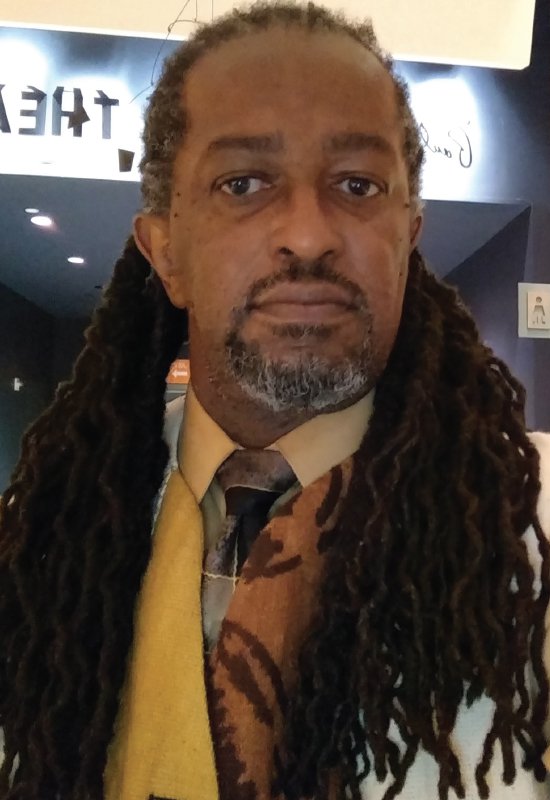
I feel an overwhelming responsibility to present word as the sacred gift it is…the word that was in the beginning and then became…comes to me to create these poems I call mine. Applause feels good, but these poems are more than verses to entertain. I feel I have a responsibility to feed those who hunger for knowledge, to speak against injustice, to bring light to darkness, to help the hurting heal. Sometimes it’s harsh; it’s hard.
Andre Brenardo Taylor is grappling with explaining his calling. His passion is apparent in these words. Since he was a teen, Taylor has been a wordsmith—preacher, teacher, historian, troubadour, all rolled into a poet. He uses his middle name, Brenardo, as his moniker, and he is energized by the mission he’s set out to fulfill. “I view these poems as seeds, accessible to everyone. My mission is to distribute them to express feelings and ideas.”
The eldest of four children, Brenardo recalls his earliest memories at his grandmother’s house reading stories and nursery rhymes from Mother Goose and The Brothers Grimm. He loved those magical tales’ happy endings. Brenardo remembers, “Doctor Seuss blew me away with his rhymes…I was raised pretty much by my mother, who did the best she could as a single, black, female in the 1960s. She sought to give me a better life and sent me to Catholic school. It was hard being the only Black child at St. Theresa’s Elementary School. It was crazy for me, coming home from school in a shirt and tie, trying to fit into the Projects where I lived. I had no one to talk to, particularly no father present, and my mother worked long hours to support us. Writing let me express my feelings.” And so it began, a lifelong passion for words, and particularly words in poetry, rich with rhythm and rhyme.
Brenardo began meeting other poets and performing his poems before live audiences with the former D.C. Poet Laureate Dolores Kendrick. He met regional poets, including Ladi Di and Sistah Joy, and he joined “Collective Voices” and “Anointed PENS” Poetry Ministry. Brenardo has performed at a variety of venues, from South Africa to Puerto Rico to Jamaica, with poets including Sonya Sanchez, Saul Williams, and Amiri Baraka. One of the crowning moments of his career was opening a show for activist Dick Gregory. To learn more about Brenardo Taylor’s work visit his Facebook page, facebook.com/brenardo.taylor.
Excerpt from “My Voice”
By Brenardo
I can’t flow like you flow
Go like you go
Blow like you blow—See
My instrument is tuned in be—To or not to
What have I got to lose
By choosing to play the rifts of bliss
That exist, in the midst of the gift I was blessed with
I was born to blow my own horn
So, stop chasing the cows in the corn
And comeback baby comeback
Cause even a hump back whale
Has got a tale
And a place to swim, in the place that he’s in…
It took some time—But now I find
That this is my voice, this is my voice, this is my voice
DEC. 03, 2020