As I bundle up before the fire and wish spring would hurry up, my thoughts often wander to the joys and activities that are ushered in with the spring’s breezes. Along with getting the bikes tuned up and the barbecue cleaned, those of us who enjoy working on our gardens also know there are tasks and plans that must be addressed. Maybe it’s finally time to have that flagstone path installed, or perhaps this is the spring when you remove that half-dead tree. After what the environment has suffered over the last eleven months, this may be the spring we really commit to doing more to protect and restore the environment.
With that last resolve in mind, here are three suggestions I’ve come across that will reduce our impact on Mother Earth. Each suggestion is easy to implement and sure to make you feel that you are making a positive difference for the environment.
First, water conservation.
Of course, we all try to be mindful of water usage in our homes. Our toilets, washing machines, and showers are fitted with devices to help limit the water flow. But, when we step outdoors, our gardens and lawns always seem to be calling out for another sprinkling, a good soak, more water!
Rain barrels: If you haven’t already done so, you might be ready now to commit to rain barrels at the bottom of each of your downspouts. They’re commonly available at hardware stores, and the children in your life can have fun decorating all the barrels. (They may already have done some of this at school.)
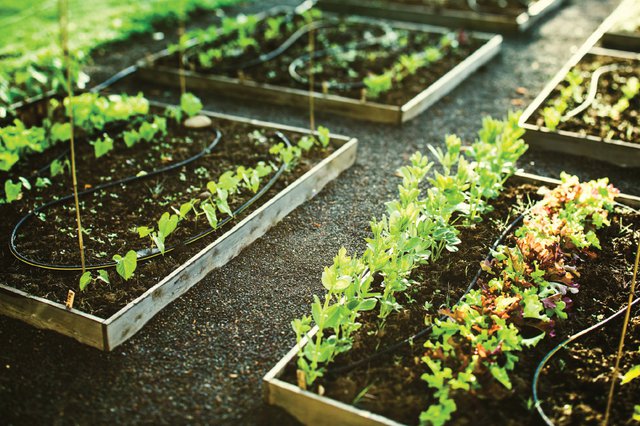
Soaker hoses:Switch out that uncooperative garden hose for a few soaker hoses. You can choose the type that roll out from the downspout, and after the storm they roll up again. The soaker hose allows the water to seep deep into the roots of your plants. Water is not evaporating or, as with my uncooperative sprinkler, watering the sidewalk and sometimes the street.
Grey water-buckets: An easy way to conserve water and keep your potted plants flourishing, both indoors and outside, is the “Bucket Brigade.” All you need are small buckets, one for each bathroom shower. (Perhaps an attractive model, hand painted by some clever artist in your life.) Put a bucket under the faucet when you turn-on the shower to let it heat-up. Instead of sending all that water down the drain, you’ll have a bucket of water to carry to your thirsty plants.
Gray-water plumbing:If you’re ready to really step up to more intensive water conservation, call in a plumber. Have the drains from your dishwasher and wash machine plumbed to go outside and into a containment receptacle. (There are plans online to give you some ideas.) Unless you’re very handy with PVC pipe, don’t try this on your own. Expand
Second, natural fertilizer and weed killer:
Nitrogen run-off is a major contributor to pollution and diminishment of plant and animal life in our creeks, rivers, and the Chesapeake Bay. We all know about the damage chemical fertilizers can cause. There are natural fertilizers and herbicides (weed killers) that can feed our plants and get rid of weeds without causing further damage to our waterways.
Compost:How many times have we read an article or watched a video explaining how to setup a composting site. It’s an excellent way to put leftover food waste and plant matter to use. But, it requires a discreet location to avoid unpleasant odors wafting over your neighbor’s fire pit and pesky critters rummaging through the composting material. So, an alternative for those of us who are reluctant to tackle our own compost bins…natural compost by the bag. You’ll find organic lawn and garden fertilizer by the bag at the hardware store and, sometimes, sold by the Chesapeake Bay Foundation and other conservation groups. They’re the best, often containing byproducts from regional fisheries. Farmers sometimes sell bagged manure as well.
Weed killer:There are lots of recipes online for mixing up a batch of effective weed killer. They usually involve vinegar and sometimes salt. You’ll find one that works for you. They have the added advantage of insuring the safety of children and pets.
The third conservation resolution is perhaps the most fun, native plants.
While it’s interesting to coax exotic flowers, shrubs, or trees to grow and flourish in our gardens, such pampered plants also demand lots of attention and special watering, fertilizer, and protection from pests. Think about replanting some or all of your flowerbeds with native plants. They’re hardy and attractive, and used to the weather conditions of our mid-Atlantic region. Usually, they require less water and are resistant to regional pests.
Ivy, Periwinkle, Ajuga, Sedum: You may want to replace parts of your lawn with hardy, green groundcover. Groundcover provides the same rest for the eye contrasting with the showy, taller flowerbeds. Groundcover can provide charming, seasonal blossoms as well. Periwinkle sports tiny, purple flowers in the spring; Ajuga leaves turn deep russet in autumn. Expand
Snapdragon, Petunia, Zinnia, Foxglove:Those flowers we might think of as “old-fashioned” have retained their popularity for a reason—they’re survivors. If you add groupings of these dependable plants to your garden, you’ll add color while saving worry and effort.
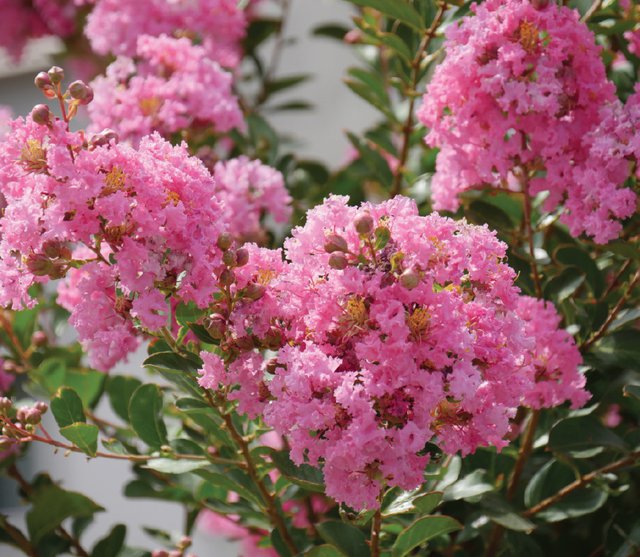
Locust, Gingko, Hickory,Crape Myrtles, and Redbuds: Drought-resistant trees are a boon to our landscapes and our lives. The Shagbark Hickory’s wooly bark is endlessly intriguing. Who can ignore the rosy blossoms and heart-shaped leaves of the Redbuds or the autumnal gold, fan-shaped leaves of the Gingko? (We won’t dwell on their stinky seed balls in the spring.) Crape Myrtles and Honey Locusts are familiar beauties.
After all your work implementing these suggestions, here’s a little hint to impress your neighbors and friends. Everything discussed here—water conservation, natural fertilizers and herbicides, and using native plants—is part of the gardening philosophy with the impressive name, xeriscaping, from the Greek “xeros” or dry.
January can be a tough month to navigate, looking out the window at the muted colors, the gray and white of winter. You may see bare trees, the buffeting wind, here and there a pile of brown leaves and twigs. But, don’t be downcast; you can change your point of view by changing your view all together. Yes, you can work magic, transform a small portion of your home into a springtime garden.
So, sit back, and imagine one of your windows, preferably a window facing east or south, bursting with greenery—frothy Asparagus Ferns, fuzzy Siderasis, fragrant Pineapple Sage, perhaps even a Date Palm or Orchid for a bit of the exotic, tropical vibe. You’re beginning to feel that spring sunshine already, right?
I propose a Window Garden as a project for this blustery January. You might find yourself imagining a window lush with green life, dripping from the “head” or top of the window and climbing along the frame. Or, you might want something a bit simpler—an arrangement of pretty plants all in a row along your window sill. You may want to be very bold and install window boxes on the outside of your window—now there’s a large-scale undertaking. For the purposes of our discussion, let’s stick with indoor window gardens.
For about 30 years, mid-20th Century, Jean Hersey was a popular and respected garden expert. Her popularity was in part attributable to her practical, easily followed instructions for beginning gardeners, and handy hints and clever ideas for the more experienced gardener. She wrote a number of books on gardening, including The Woman’s Day Book of House Plants. In that book she discussed the particular pleasures of window gardens. “When you give your care, interest, and affection to a garden of indoor plants they reward you with vibrant health, gay colors, assorted textures, and myriad fragrances.” Now that’s a resounding and irresistible endorsement; don’t you think?
There are four components in planning and executing a window garden. (Now, that’s not too demanding.) Part 1: Planning, Part 2: Planting, Part 3: Tools, and Part 4: Maintenance Tricks. So, let’s review what’s involved in putting a bit of springtime into your life right now!Expand
Part 1: Planning
Take a seat in your usual spot. Look around. Which window can you see from here? That’s the window where your little garden might prove the most satisfying for you. What direction does it face? Preferably east or south for the best growing sunlight.
Decide how expansive your tiny garden will be—plants only on the sill? Plants hanging and vining? How many plants will you want to create the effect you’re imagining?
Will you want to create a traditional garden with a random assortment of plants, or perhaps a water-garden of plants that can grow in water, or a fragrance-garden, or would it be fun to focus on a particular color scheme?
Part 2: Planting
Look at some pictures of house plants. Choose plants that match your level of commitment to maintaining them. For example:
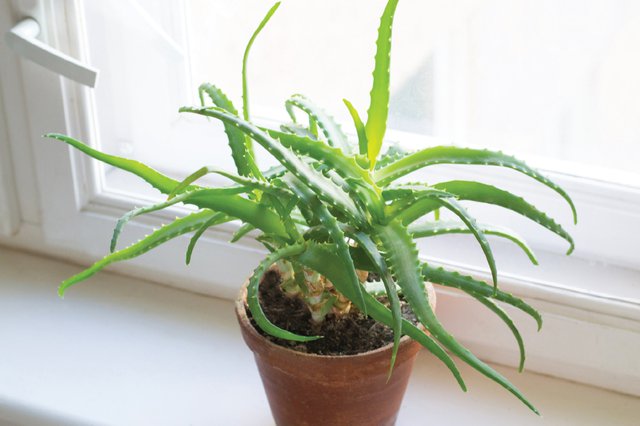
• Easy to grow plants: Aloe—a succulent and good for healing scrapes and burns. Asparagus Fern—feathery sprays of rich green with tiny blossoms when it feels like it wants to. Begonia (many varieties to choose from)—pretty leaves and blossoms, easy to propagate should you decide to start a second or third window garden. Philodendron—an almost indestructible champ that can live in water or soil and loves to grow in any light. You can have fun guiding the tendrils up and around your window.
• Somewhat touchy but awfully nice: Peace or Spathe Lily—graceful arching leaves and scented, white blooms, needs careful attention to watering (not too much or too little.) Winged Pea—great for hanging with feathery, trailing foliage and exotic, red flowers, needs lots of sun but not too much. Miniature Rose—petite plant with delicate greenery and pink (usually) blooms, needs to be away from drafts. Camelia—glossy, deep green leaves and lush, fragrant blooms. Needs fertilizer all year through. Plan to set it outside in the summer to give it a real boost.
• Petulant beauties: African Violets—lush, fuzzy leaves form a nest of soft green with pink and purple violets bursting like sparklers. They’re lovely but sensitive to too much light and water. If you’ve got the “magic touch” they’ll charm everyone with their beauty. Orchid—strange, exotic leaves and tendril/roots with ruffled blossoms atop slender stalks. Another plant that demands the “magic touch.” Sea Onion—talk about a showy gal! A bulbous “onion” with graceful, trailing leaves and a tall, curving stalk festooned with tiny, white stars. A real show-stopper. But, keep her warm and carefully watered, watch for a scale that may form and can be removed.
Part 3: Tools
You may want to identify an attractive basket or box in which to store your tools for this tiny garden. You’ll be using these tools often, and having them nearby makes the tasks less onerous.
• Watering can, jar, baster, dropper. Depending on the plants you’ve chosen, you may want all these on hand to deliver just the right amount of water to each plant.
• Spray jar. Some of your plants will enjoy a light shower to keep their leaves fresh.
• Scissors, tweezers, garden shears. There will be dead leaves and over-zealous vines that you’ll want to remove. You may want to keep a little covered jar or pot nearby for these trimmings. They can go into your compost pile too.
• Plant food/ fertilizer. Unless you’ve included something exotic, any of the common fertilizers, powder or liquid, will do.
• Pencil, short stick. You’ll find the soil may get too compact. Use a pencil to gently poke holes in the soil providing the roots with better moisture and air distribution.
• Soft brush. While your home may be meticulously clean, dust does seem drawn to plant leaves. You can gently brush off the larger, firmer leaves. If the leaves become seriously dusty, dampen a paper towel with milk and wipe off each leaf.
• Floor lamp/clip-on lamp. If you’re finding the window you’ve chosen does not provide enough sunlight, add a lamp with a grow-bulb or a 100-watt bulb. Set the lamp on a timer to come on for 2–3 hours at dusk. (You probably don’t want your window lit up all night.) Expand
Part 4: Maintenance Tricks
No need to re-invent the wheel, as they say. Here are some hints from Ms. Hersey and other window gardeners.
• If your window is drafty, in the evening gently drop a sheet or linen towel over sensitive plants to protect them until the morning sun warms them again.
• Do a bit of pruning when you notice a stray branch or leaves. Keep your plants shapely and properly sized for their locations. Don’t wait until it becomes a big task. (Remember those scissors in your tiny tool-kit.)
• Turn the pots every week so the plants will receive sunlight on all their leaves, otherwise, they’ll become lopsided and flat or thin on one side.
• Egg shells and coffee grounds can make excellent pepper-uppers for your plants. Mix the crushed shells grounds in an old jar or can somewhere unobtrusive. Then, once a month or so, sprinkle the mix on your plants. You may want to poke a few holes with that pencil before adding the shells and grounds.
Well, that sounds fairly simple, doesn’t it? This is a project that can be completed in a weekend but will bring you pleasure for days and weeks to come. You might grow so fond of your window garden that you’ll keep it going all year long. And, it’s a great project to do with children of almost any age. Take lots of pictures to record the progress of the growth and blooms as they emerge. There might even be some botany lessons rolled into the gardening; who knows.
Like every other event and occasion over the last nine months, the holidays will look and feel quite different this year for most of us. With that in mind, I have been thinking of ways we can apply our love of nature and gardens to the joyful task of devising gifts for neighbors, friends, and family.
I’m proposing, dear reader, that the most appreciated gifts this Holiday season may very well be the gifts that “keep on giving,” the gifts that are alive. No, I’m not talking CHIA PETS here, though they can be lots of fun, too. I’m not proposing you pass out puppies or parakeets to friends and family. Rather, I’m thinking of plants and seeds that will engage their new owners and provide days, weeks, months, and, if they’re lucky, even years of pleasure.
So, what are some of the issues you’ll need to consider before preparing your flora gift list?
First, think about delivery:
• Will you present the gift in person, leave it on the doorstep? or,
• Will you be sending the gift by mail?
Second, what do you know about the person receiving the plant?
• Health issues: Does the person have allergies? Breathing problems?
• Time issues: Does she/he have lots of time to fuss with a plant? Is his/her schedule always packed? Does she/he need only carefree plants?
• Household issues: Does she/he have lots of space to give over to plants? Are there lots of windows and sunlight available? Are there small children who might be curious and interested in a plant? Are there pets that might be tempted to taste or play with a plant?
Third, what is the depth of the recipient’s knowledge of and interest in plants?
• Does he/she have plants already?
• Is she/he a gardener, experienced with plants?
• Will he/she enjoy acquainting him/herself with a new type of plant and its particular requirements? The idea, of course, is for the gift to be fun for the recipient.
Once you’ve reviewed your list of those for whom a plant will be appropriate, you’ll be ready to move ahead with the fun part—selecting plants or future-plants for your family and friends.
For our purposes, let’s consider two categories of plant gifts:
• Future-plants, namely seeds/sprouters and bulbs, appropriate for mailing.
• Living plants of various types, appropriate for personal delivery.
Consider future-plants for friends and relatives who are far away, too far for you to deliver a gift in person. Seeds and bulbs are also ideal for children and for those who may have restricted mobility. Watching seeds sprout and grow and watching bulbs produce roots, stems, and blossoms can be exciting and great fun…if you have time to watch and note the changes that come with each passing day and week. Expand
Seeds/Sprouters: It’s fun to give a gift of sproutable salad fixings—a salad-in-a-box. Lettuce, chives, radishes, turnips, broccoli, kale, and beans are great choices. They’ll grow from seeds easily and quickly. Pictures can be taken, measurements too. If sunlight is hard to come by, a desk lamp or growing light will do. In a pinch, your seed-kit could serve as a science project for home schoolers.
Think about making up a cleverly packaged 4-part growing kit for the seeds. You can start with simple (1) cardboard egg cartoons for planting seeds. Or, you can buy specially designed growing boxes at the hardware store. While you’re there, pick up some (2) potting soil. (You can make up small zip-bags of soil sufficient for the project.) You may be able to get the (3) seeds there too; but if they’re not carrying seeds in December, you can quickly order them on-line.
Okay, the most important and fun part of the “kit” will be (4) your Growing Guide or note, explaining which seeds are included and a step-by-step guide for preparing the seeds and watching them grow. (Harvesting the plants will be self-evident, we’ll hope.) Use the personal “guide” as a way to make the gift special for the person(s) receiving the kit. Have fun. Draw pictures or paste in cut-outs from magazines or the web. Be sure to give some idea as to how long it will take the seeds to sprout, grow, and be ready for harvesting. Don’t be afraid to be creative with your Growing Guide.
Bulbs: There are several colorful and fragrant bulbs that can be shipped and take well to being “forced” to bloom indoors, during the winter. Think about mixing a group of Tulips, Crocuses, Daffodils, Amaryllis, and Paper White bulbs. Or, simply send one bulb, plump with the promise of springtime ahead. (Choose bulbs that are plump and firm. The size of the bulb will depend upon the size of the bloom it produces; thus, a Crocus bulb is much smaller than an Amaryllis.) The gift of a bulb is a way to engage your friend or relative in a project with you. You can plan to occasionally phone or email with an inquiry as to the progress of the bulb’s growth. She/he will have the double gift of the lovely flower(s) and the contact from you.
Now, for bulbs, your “kit” will be a bit different. Since you’re mailing this, I would suggest the water and pebbles approach to growing rather than planting the bulbs in soil. Your kit will include a (1) low, flat vase or bowl of a circumference that leaves room for the number of bulbs you’ll include and deep enough to half-submerge the bulbs in water. You’ll need enough (2) tiny pebbles to cover the bottom of the bowl and halfway up the bulb; mail them in a zip-bag. (3) Pack the bulb(s) in soft tissue to protect them in transit. Then, write your (4) Guide Book note. Again, make it personal, fitting the person who’ll receive your gift. Be sure to explain that they’ll need to add water to the bulbs half-buried in pebbles. Give them an idea as to how long it will take for the bulbs to sprout, grow, and bloom. Pictures will be welcome, I’m sure. Have fun personalizing the guide.
And now for the local gifts. These will require less “prep-work,” but more thought. You have lots of choices of plants that will make lovely, treasured gifts. Go back to those three considerations: health, time, and household and review your gift list, make notes as needed. If you enjoyed making up the plant-kits, you can certainly prepare similar kits for personal delivery. They’ll still be fun and special.
But you may want to give your friend an established plant—perhaps something rather exotic or significant to him/her. For example a pretty, sky-blue Forget-Me-Not plant. With any plant you give, two things will make the gift memorable. First, the pot in which the plant arrives. The (1) flowerpot should reflect the style and tastes of the person receiving the gift. They’ll notice! Second, the (2) personalized Growing Guide. Yes, living plants need explanation too. There are the obvious hints about amounts of light, fertilizer, and water. Add comments about blooming (if the plant does so) and issues such as pinching back stems and removing dead blossoms. Include a few words telling the recipient why you chose this plant for her/him. The plant will be an extension of you, of your thoughtfulness. (This is an excellent project for children too. They can give plants to their friends and write and draw their own Growing Guides. They’ll learn a bit about botany and about their friendships.)
Let’s begin with the Easy-Care plants:
• Air Plants: These frothy ferns seem to grow on air alone. They can be “potted” in anything, a baby shoe or seashell. They only need occasional misting to thrive.
• Succulents: Chicks-and-Hens, Jade and Aloe are tried-and-true choices. They’re slow-growing, with plump, green leaves. Succulents need sunlight but little water. (Think desert plants.) Aloe’s long, slender leaves can be pinched off, slit open, and the moist, inner substance applied to cuts, scrapes, and burns to relieve pain and help with healing. (I’ve used-up many a poor aloe applying its healing sap for family first-aid.)
• Lucky Bamboo: Three to four stalks of bamboo in a tall jar or vase filled with pebbles and water will grow for years. They’re lovely for an elegant, minimalist look.
• Peace Lily: Beautiful, glossy leaves and elegant, white blooms twice a year make this plant a favorite gift. In addition to being fairly hardy, indoors, they do a fine job of absorbing toxins in the air, cleansing and freshening any room. They’re a member of the philodendron family, not lilies, so they’re pretty easy to maintain.
• Philodendron: These green or green-and-yellow vines are fun and easy to maintain. They need little attention, and the vines can be trained around a tiny trellis or pinched off and rooted in the soil for even thicker growth. Fun for folks who have no confidence in their gardening skills.
• Snake Plant: These old-fashioned favorites are quiet fellows. Long, thick, variegated leaves grow from a central base and curve as they grow upward. They seem to live oblivious to their surroundings—ideal for someone who wants no fuss or bother, but might enjoy the look of elegant greenery in foyer or bathroom.
Onward to the plants that may be a bit more demanding:
• Orchids: Elegant, varied in colors and sizes, orchids are lovely to give and to enjoy in your home. They have a reputation, and rightly so in my view, of demanding quite a bit of attention and care. I won’t go into the specifics here, but this is a perfect gift for someone who likes to really learn about things, get to know everything about a topic. He/she will have great fun getting acquainted with a beautiful orchid.
• Goldfish Plant: These delightful plants have shiny leaves and gold-orange blossoms (goldfish like, some say.) They’re African Violets, so they too can be particular about their care, but if you get it right, a Goldfish plant will charm you with its cheery blossoms throughout the winter.
• Ferns: If you’re a fern lover, you know they’re a bit particular about their surroundings. But, ferns are so varied in form and lush in appearance, they are stunning additions to a room. The Boston and Maidenhair Ferns are the most familiar. They were very popular before the advent of central heating because they enjoy a chilly room, as long as there are no drafts. So, friends who keep their homes chilly will have great success with ferns.
• Spider Plants: These are wonderful plants for hanging baskets. There is green or green-yellow variegated leaves and sprays of stems with tiny spider plant babies at their ends. The effect is somewhat like a fountain spray or fireworks of new life exploding from the heart of the mother plant. Great fun to snip off the babies and root them in water for later replanting. Soon, there will be a family of spider plants to give away.
There are many other suitable plants for giving, of course. These are only a few of the most common and reliable choices.
After you’ve devised, packed, wrapped, and delivered your gifts, sit back and enjoy the delighted responses from those who received your thoughtful, living gifts. Psychology Today notes that one of the most valuable gifts is the gift of experiences. If we can’t be together to share experiences, the gift of a living plant can allow us to share the experiences of the garden remotely.
“The ultimate measure of a man [or woman] is not where he stands in moments of comfort and convenience, but where he stands at times of challenge and controversy.”
—Dr. Martin Luther King
We, Americans all, have moved forward into a time when we are challenging ourselves to look at each human being for his or her unique gifts and strengths. Among those we can turn to for insights are our artists, and among these artists are poets. The Black poets you are about to meet devote their lives and their creativity to displaying and pointing out the strength and beauty that is in every human being. Grace Cavalieri, Maryland’s Poet Laureate, observes, “Our state is made better by these voices who shine with beauty and truth, especially now, in a trying time. These poets rinse off language, making everything brighter.”
These six wordsmiths create beauty using the medium of language—language carved and polished until it, the poem, gleams with truth and wisdom. These poets have been pursuing their art for most of their lives. They have been recognized with awards; they have traveled to distant lands to share poetry; they have studied and taught others to package truth in beautiful parcels—poems. These poets are Black, and proud, and wise.
In a recent “Letter to Black America,” Tracy K. Smith, former U.S. Poet Laureate, wrote, “We [Black Americans] are a language so deep it has no need for words. And we are words that feint, dart, and wheel like birds…We are fire. Like God, we are that we are.”
Hiram Larew, poet and activist, says of the six poets featured here, “During these times when disease and racial divides are rife, so many of our region’s beloved African American poets and their voices have soared through the e-waves. In countless virtual poetry readings—from Ireland to Charlottesville, to points beyond and in-between—these poets always proudly and beautifully represent our region’s richly diverse poetry heritage and life. Their words of concern, anger, pride, sorrow, joy, and fun arouse the listener and provide balm to all, near and far.”
I am honored to introduce you to these Black poets along with brief samples of their work: J. Joy “Sistah Joy” Matthews Alford; Sylvia “Ladi Di” Beverly; Hoke “Bro Yao” Glover III; Monifa A. Love; Diane Wilbon Parks; and Andre Brenardo Taylor.
J. Joy “Sistah Joy” Mathews Alford
I’ve always felt poets should speak to issues of significance in the community and society at large. Every culture is documented through the Arts. The poet, in particular, has a responsibility to represent the people through the Arts. I want to educate, inform, entertain, and, also, celebrate poetry as an art form; it’s a responsibility of the poet, particularly the Poet Laureate, the people’s poet. It is essentially a service position. It is an honor, one that carries with it a serious responsibility.
J. Joy Matthews Alford, “Sistah Joy,” is Prince George’s County’s first Poet Laureate. “Sistah Joy” is her pen name. Since her appointment as Poet Laureate of Prince George’s County in 2018, Alford has set herself the task visiting each of the County’s nine districts. Prior to the pandemic, for each of these performance-visits, she brought other poets with her, along with musicians and visual artists.
Since March, she has redesigned these presentations for the Zoom platform. She used and continues to use these performances to encourage citizens of every age, every generation, to get involved with poetry, with the arts, with language. Alford works with the residents of the County offering free, quality programs for audiences of all ages to encourage literacy, particularly through poetry by providing opportunities for participants to try writing poetry and/or honing their skills as writers and poets.
Alford’s focus on poetry as communication is equally apparent through her numerous accomplishments. Her nationally recognized, local-access cable television program, “Sojourn With Words,” has aired for 15 years. (She received two Telly Awards from the Television Academy for Excellence in Cultural Programming). Alford has been recognized for her work as creator, host, and participant in this deep dive into writing poetry and literature. She also served as Poetry Editor of ACE Dialogue, a nationally distributed, literary quarterly. As “Sistah Joy,” she founded “Collective Voices,” an ensemble of poets, and was an honored guest reading from her poems at the International Women’s Day Conference: “In Celebration of My Sisters,” held in London, England. “Collective Voices” published a chapbook of their work titled Experience, Expression, Expansion.
“To Heal A Wounded World,” Sistah Joy’s inaugural poem for the new decade, was published in February 2020. She is a charter board member of CAAPA (Coalition for African Americans in the Performing Arts, Inc.), a member of the Prince George’s Truth Chapter of the Association for the Study of African-American Life and History (ASALH), and a lifetime member of the Prince George’s African American Museum and Cultural Center (PGAAMC). And if that weren’t enough, Sistah Joy serves as President of the Poetry Ministry and Poet Laureate of Ebenezer A.M.E. Church, Fort Washington, Maryland. Sistah Joy has authored three collections of her poetry: Lord, I’m Dancing As Fast As I Can, This Garden Called Life, and From Pain to Empowerment: The Fabric of My Being. You can learn more about her work at her web site sistahjoy.com.
Excerpt from “Neither Knees Nor Pandemics”
By Sistah Joy Alford
Through rage we shout at the sun
Pray to the son
Bury too many young
Give our innocent pre-adolescent children “The Talk”
While wiping away tears, shaking our heads
No longer will distraught and bereaved mothers
Merely wring hands while tsk-tsking about
Corrupt cops and court systems
Designed to maintain in lockstep
A march as steady and deadly as Auschwitz
Too many young Black men and women
Succumb as they struggle to breathe
Struggle to have their voices heard
Struggle to catch hold of a promise
That was never intended for them
Sylvia “Ladi Di” Beverly
With a group of other Black poets, I was invited to tour Woodland plantation near Mt. Vernon, Virginia. I had never been there before, never visited a plantation. I found the experience sad, strengthening, freeing, and powerful…We were invited to express ourselves about those conditions that never should have been…I wrote the poem “Something Came Over Me.”
Sylvia Dianne Beverly is called, affectionately, “Ladi Di” by friends and admirers. Her power, she knows, is the power of love. “In my poetry, love always shows up.” She speaks of her parents’ love of language and fondly remembers that her dad would wake her for school each morning reciting Paul Lawrence Dunbar’s “In the Morning.” (She can still recite the poem for you, if you ask.) By the sixth grade, Beverly was writing poetry, and her poem was chosen to be read at her graduation ceremony. Forty-six years later, she was invited back to her elementary school as the keynote speaker. After she spoke to the graduates, they recited in unison her poem, “It’s Up to Me.” Beverly went on from her auspicious beginning and studied English at the University of the District of Columbia. Her poetry has been featured at the Smithsonian’s Museum of American History, the National Museum of African Art, and the Hirshhorn Museum. Her work is housed in the Gelman Library at George Washington University.
In 1998, Beverly and four other Black poets who were members of “Collective Voices,” were invited to London to perform poems from the Harlem Renaissance for the Women’s History Month Conference. From that event, Beverly’s poem, “Loves Been Here All the Time,” was included in Whose Equality?: An Anthology of Poets. Recently, she was invited to join an Irish poetry forum. Fifteen Irish poets and five American poets meet on Zoom to recite and discuss their work. Beverly has published two books: Forever In Your Eyes and Cooking Up South.
While Beverly relishes her success as a poet, she is equally proud of her work encouraging and supporting poets and poetry. She was a founding member of poetry ensembles including “Collective Voices” and “Anointed PENS” Poetry Ministry with the Ebenezer AME Church. She founded and directs a group of four poets, “The Dazzling Poetesses.” She has facilitated a variety of poetry writing and study groups for teens and young adults, including founding the “Girls and Boys With Hearts Youth Poetry Group.” Sylvia “Ladi Di” Beverly lives her passion and encourages in others the love of language and poetry. You can find out more about Beverly’s poetry and her performances on her Facebook page, “Sylvia Beverly.”
Excerpt from “Something Came Over Me”
By Sylvia “Ladi Di” Beverly
Wondering how would I have responded
Like Queen Leader I am today
Like Harriet, going back and forth to
Get away
To be strong, to help others, to accept
No wrong
Like Fannie Lou Hammer, sick and tired
Of being sick and tired
Something came over me, there is still
Superiority
We must stand strong to remain free.
Do not be intimidated, Do not be afraid
Be true, Be real
Share righteous goodness of Life
Say your prayers, Do what you feel
Golden opportunities, Accept them
Replace Fear with Faith
Listen, Trust, Obey!
Hoke “Bro Yao” Glover III
Part of the African-American predicament is trying to resolve the problem with the philosophy that caused the problem…Looking at power, African-Americans are placed in a position where they have to cultivate their own power…For 14 years I have been studying the ancient Chinese art of Taiji, which teaches about the Yin, softness and passiveness, and the Yang, external energy…I think we can triangulate knowledge, applying Chinese philosophy to issues of power faced by African-Americans.
Mr. Glover is immersed in language and the power of words. He spends his professional life teaching, parsing words and guiding young minds as they learn to apply logic and engage in thoughtful discourse. After taking his MFA at the University of Maryland, College Park, Glover accepted a post as an Assistant Professor in the Department of English and Modern Languages at Bowie State University.
Glover writes under the pen name, “Bro Yao.” His works of fiction, nonfiction, and poetry have been published in Ploughshares, the African-American Review, and other publications. His non-fiction essay, “Hospital for the Negro Insane,” was a finalist for the Crab Orchard John Guyon Non-Fiction Literary Prize. His poetry collection, Inheritance, is published by Africa World Press.
In 1993, Glover founded Karibu Books, a chain of six bookstores in Maryland specializing in work by Black writers; the bookstores flourished until the Great Recession of 2008. In 2006, Glover became interested in Taiji, the Chinese martial art. His thinking and his writing have been influenced by the teachings of this ancient philosophy of martial arts. In 2017, he spent his sabbatical studying at Central China Normal University (CCNU) in China, and returned there for a month in 2018 to deepen his studies. “I admire the philosophy that teaches one to be in harmony with nature. I know it takes decades, a lifetime to gain any true understanding of Taiji, but I am drawn to the power of this philosophy. African-Americans have been underground, traumatized by their experiences. The same is true of people in some Asian cultures. We [African-Americans] are on a long-distance run.”
Bro Yao Glover’s most recent work has been with koans; they are paradoxical statements that encourage one to consider the truth underlying the paradox, sort of like a puzzle. (His koan #23, “falling away” follows.) Hoke “Bro Yao” Glover III has recently published a collection of poems based on the koan form, One Shoe Marching Toward Heaven, published by the African World Press. “For me, the koan echoes the voice of African-American wisdom…Through Taiji I’ve come to understand that trauma can provide a root experience that is beyond words, that can be used to refine language,” Glover observes.
Excerpt from “The Minder Speaks of the Underground”
By Bro Yao
I mined
I minded
I minded the mines
I minded the mines forever
Mining forever is hope
The tired religion
The tried and tired religion
I tried the tried to sing on top
koan #23: falling away
By Bro Yao
lord, forgive me
i done stole something
from myself
used it to pay
the man
who stole from me
Monifa A. Love, Ph. D.
I believe in the power of words. When I’m working with intention, I pray that the work I offer goes out into the world and does the work it’s supposed to do…I have a little, tiny piece of the garden to cultivate with respect, intent, and humility. I am hoping my work as a poet, writer, and teacher contribute to thinking profoundly…I am interested in things being ‘used’—culture in some way is what’s missing from the environment emotionally, spiritually, physically. Art places into culture what is missing.
These are the reflections of Monifa A. Love, Ph.D., Associate Professor in the Department of English and Modern Languages at Bowie State University. Dr. Love spends her life working to supply what is missing—through her poetry, her teaching, and her charitable work, specifically in Ghana. She earned her BA with Honors from Princeton University and went on to study poetry with Pulitzer Prize winning American poet, Galway Kinnell. She received her doctorate in English from Florida State University where she was a McKnight Doctoral Fellow. Two collections of her poetry are in publication, award winning Dreaming Underground and Provisions.
Love attributes her early affinity for language to her parents. She began to read at two, when her parents asked her to read the newspaper at dinner. She visited the library on Saturdays where she met “a world that was vast, a place where life was big. I came to believe that poetry was a means where language might actually meet the vastness of what we could live,” Love recalls. When young Monifa began music lessons at Howard University’s Junior Preparatory Program in piano, she saw, heard, and felt the convergence of music and words. Her life has been devoted to following that astounding convergence.
Speaking of her admiration for the great American author Toni Morrison, Love observes, “I always remember her [Toni Morrison] saying she was working to create characters as large as life. Our salvation comes, I think, if we can treat everyone as they are—as large as life, not smaller. We are programmed to make snap judgements on how we appear. We are caught in terrible loops that we must interrogate.” Love is interested in Afrofuturism, which explores the intersection of history and technology, particularly as they apply to themes taken from the African diaspora. She was a National Endowment for the Humanities Summer Fellow at the African Cinema Institute in Dakar, Senegal. “I am interested in Afrofuturism as an ‘escape hatch’ from the past. Afrofuturism in art can create an imaginative slingshot to ‘the other side’ where life opens to our capacities.”
While she explores cultural aesthetics based on the future, Love keeps her feet firmly planted in the present, and the needs of people struggling in today’s world. Along with her husband, Nana Kweku Carr Asante, Love has worked for 30 years on development projects in Ghana where they have built a medical clinic, funded village wells, a library, and a women’s literacy center. Their most recent projects are the restoration of two schools and the delivery of “100 Shoes for 100 Children.” The Temple of Nyame Dua can be contacted at templeofnyamedua.org if you’d like to help.
Excerpt from “Rain in Due Season: for Rev. Dr. Jeremiah Wright”
By Monifa A. Love
He says, a piece of the main
A measure of the continent
He says
I can never be what I ought to be
Until you are what you ought to be
This is How
God’s universe is made
His annulation:
We are born out of love for love;
And you will bring those who have known long years of hurt and neglect
And you will reach out your arms
And take them close to you and chant your offering
Then, you will feel it for yourself—the rain.
Diane Wilbon Parks
As an African-American poet and artist I have a responsibility to give voice to what I see—the social injustices. I have a platform on which to speak; I represent those who didn’t and don’t have a voice…My writing is reflective of my experiences and observations; it will always include hope, pain, love, light, and struggle, which are subject to change. My heart feels the isolation of the pandemic, feels the heaviness and hope of the Black Lives Matter movement, and knows the tapestry of my skin is still not accepted or protected. It’s hard to believe that in 2020 I’m still judged for something I cannot control; the plight of my brown skin can become a prison or a death sentence. My skin and I are chosen by God.
These are the observations of poet Diane Wilbon Parks. Raised by her mother, a “praying woman,” Parks was inspired to be courageous and wise. She knew from age 11 that she could “birth words.” She joined the United States Air Force, which “has a reputation for ‘thinkers’— where the intellectual work is done,” Parks says with a chuckle. The Air Force influenced her life. While her career as a Sr. IT Program Manager fills her days, poetry is a constant force in her inner life. “My poems are full of imagery; they come to me like photographs.”
In addition to writing poetry, Parks inspires others to explore their own poetic voices. She is the founder of The WriteBlended Poetry Circle as well as a member of Voices of Woodlawn, groups of poets sharing their work with the larger community. Her poem “Voice of Hunger” received an honorable mention for the Poetry X Hunger Project. She also works with high school and college students, helping them discover their own writing. Diane Wilbon Parks has published two collections of her poems, Rearview Thoughts and TheWisdom of Blue Apples. She has also written a children’s book, Grandma Doodles Dances with Reindeer. You can hear Parks’ interview with Maryland’s Poet Laureate, Grace Cavalieri, from the Library of Congress, “The Poet and the Poem,” at gracecavalieri.com/poetLaureates/featuredpoet_dianewilbonparks.html.
Excerpt from “Mirrored Moon”
By Diane Wilbon Parks
I am bald, naked, and broken
I have taken my skin off.
I will leave it here with you on this page…
Excerpt from “An Empathetic Life”
By Diane Wilbon Parks
A symposium of loss that silence the will
to introspection, that calls the wilderness of hearts
to love, to behave, to un-earthen what winters it to
empty; theirs is a brown that keeps splitting into death
where it hollows the living into graveside song…
Excerpt from “Her”
By Diane Wilbon Parks
It only takes a whisper to bend inwardly
and know that her gone is not gone.
She is here. I wish her in.
I dress her shadows in silk scarfs,
and wait for her skin to breathe, to stay…
Andre Brenardo Taylor
I feel an overwhelming responsibility to present word as the sacred gift it is…the word that was in the beginning and then became…comes to me to create these poems I call mine. Applause feels good, but these poems are more than verses to entertain. I feel I have a responsibility to feed those who hunger for knowledge, to speak against injustice, to bring light to darkness, to help the hurting heal. Sometimes it’s harsh; it’s hard.
Andre Brenardo Taylor is grappling with explaining his calling. His passion is apparent in these words. Since he was a teen, Taylor has been a wordsmith—preacher, teacher, historian, troubadour, all rolled into a poet. He uses his middle name, Brenardo, as his moniker, and he is energized by the mission he’s set out to fulfill. “I view these poems as seeds, accessible to everyone. My mission is to distribute them to express feelings and ideas.”
The eldest of four children, Brenardo recalls his earliest memories at his grandmother’s house reading stories and nursery rhymes from Mother Goose and The Brothers Grimm. He loved those magical tales’ happy endings. Brenardo remembers, “Doctor Seuss blew me away with his rhymes…I was raised pretty much by my mother, who did the best she could as a single, black, female in the 1960s. She sought to give me a better life and sent me to Catholic school. It was hard being the only Black child at St. Theresa’s Elementary School. It was crazy for me, coming home from school in a shirt and tie, trying to fit into the Projects where I lived. I had no one to talk to, particularly no father present, and my mother worked long hours to support us. Writing let me express my feelings.” And so it began, a lifelong passion for words, and particularly words in poetry, rich with rhythm and rhyme.
Brenardo began meeting other poets and performing his poems before live audiences with the former D.C. Poet Laureate Dolores Kendrick. He met regional poets, including Ladi Di and Sistah Joy, and he joined “Collective Voices” and “Anointed PENS” Poetry Ministry. Brenardo has performed at a variety of venues, from South Africa to Puerto Rico to Jamaica, with poets including Sonya Sanchez, Saul Williams, and Amiri Baraka. One of the crowning moments of his career was opening a show for activist Dick Gregory. To learn more about Brenardo Taylor’s work visit his Facebook page, facebook.com/brenardo.taylor.
Excerpt from “My Voice”
By Brenardo
I can’t flow like you flow
Go like you go
Blow like you blow—See
My instrument is tuned in be—To or not to
What have I got to lose
By choosing to play the rifts of bliss
That exist, in the midst of the gift I was blessed with
I was born to blow my own horn
So, stop chasing the cows in the corn
And comeback baby comeback
Cause even a hump back whale
Has got a tale
And a place to swim, in the place that he’s in…
It took some time—But now I find
That this is my voice, this is my voice, this is my voice
The information in this article was compiled before the emergence of the COVID-19 Pandemic and the ensuing health crisis and economic uncertainty. The circumstances of homelessness have worsened drastically since March of 2020. “At our food pantry [Haven Ministries in Chester, Maryland] we are feeding 100 percent more people in July than we did in January,” says Director & Founder Krista Pettit.
There’s Carl, moving from shelter to shelter during the long, winter months. He lost everything after his wife died of liver disease, leaving him with thousands of dollars in medical bills he couldn’t pay.
There’s Devon, a professional painter, who broke his pelvis and ribs when he fell from a ladder. He is trying to learn a new trade, but meantime, he’s homeless.
And then there’s Sam. He moved here from Texas with his wife and daughters to attend Johns Hopkins University School ofMedicine on a full scholarship. He had a Master’s Degree and a good job in Texas, but he knew he could do more, and medicine was his passion. During his second year of med school, Sam suffered an aneurysm and meningitis. He lost his scholarship, was left penniless, and unable to continue his studies.
Eventually, he lost his wife and daughters, his home, and his future. While living in shelters, he has been studying to become a mental health worker and hopes to establish his own nonprofit to help other folks that have suffered.
These are only a few of the people behind the label, “Homeless.”
Steve Hays, coordinator for the Winter Relief Program at First Presbyterian Church in Annapolis, has gotten to know some of the men and women who seek shelter through the program’s more than 60 Houses of Worship. He listens to the stories of the homeless and shares their stories with the community, encouraging all of us to appreciate how fragile the safety net is that keeps any of us from a cot in a shelter on a cold winter’s night. (Editor’s note: the names of the homeless mentioned in this article have been changed.)
“People who are struggling, who may be homeless or face losing their homes, want to be seen. They want the dignity of being acknowledged,” observes Sarah Ryan, Volunteer Programs Administrator at The Light House. Dignity is what many organizations and individuals are working hard to offer the men, women, and children in our community who are without a place to live. From the County level, to private and publicly funded organizations, many people in Anne Arundel and Eastern Shore counties are acknowledging those in need and recognizing their value to the community.
There are three dimensions to homelessness; the unsheltered or chronically homeless, the homeless who are being housed temporarily or long-term, and those at risk of homelessness. For each group of homeless folks, there are ways to lend a hand.
Just the Facts, Please
In 2017, (the most recent figures available) over 7,000 men, women, and children were homeless in Maryland on any given day. This number does not include those who were homeless and “couch surfing,” moving in with a friend or relative on a temporary basis; nor does it include the transient homeless who find shelter in hotel rooms and automobiles. Of our state’s 7000 homeless people, almost one-third or more than 2,100 were military veterans. We also know that 1,300 children in Maryland were without permanent shelter, a number large enough to fill two elementary schools.
Anne Arundel County’s homeless population was 1,600-plus according to the 2017 survey. A “Point In Time” survey by the County’s Social Services on January 29, 2020, conducted by Social Services, counted 314 homeless people; of those, 48 were children. The eight counties that makeup the Eastern Shore counted almost 1,800 homeless citizens in 2016.Expand
The struggle to house the homeless is the struggle to provide safe, affordable, long-term housing while residents overcome the circumstances that left them homeless initially. National and State agencies monitor programs, provide statistics, and support federal, state, and local approaches to helping the homeless. Among the organizations monitoring and fighting for the homeless are; the National Alliance to End Homelessness, which includes the Homelessness Research Institute (HRI) and the Center for Capacity Building (CCB), the Maryland Interagency Council on Homelessness (ICH), and the National Coalition for the Homeless, an advocacy group of activists who were themselves formerly or are now homeless. These and other organizations keep statistics on issues facing the homeless and advocate for better regulations, laws, and programs to eliminate homelessness across the country.
Affordable housing gets harder to find in America as property values and rental costs rise while hourly wages remain static in most regions of the country. According to The National Low-Income Housing Coalition, the 2017 Housing Wage (the hourly wage at full-time employment necessary for average housing costs that represent 30 percdent of one’s income) is estimated at $21.21 per hour in Maryland. The Housing Wage exceeds the $16.38 hourly wage earned by the average renter by almost $5.00 an hour, totally out of reach for low-income workers. In fact, the hourly wage needed for renters hoping to afford a two-bedroom rental home is $10.21 higher than Maryland’s minimum wage of $11.00 an hour.
What About Us?
Anne Arundel County Executive Steuart Pittman has said, “Government should be measured by how it treats the most vulnerable people in the society.” So, how are we, residents of Anne Arundel and adjacent counties, to be judged? What are we doing to improve the circumstances for the poorest and most vulnerable among us?
Anne Arundel County, for example, has instituted several new programs to make it easier to find long-term and permanent housing for homeless residents. The Anne Arundel Coalition to End Homelessness brings together representatives from 50 of the private, religious, and government entities who are trying to assist the homeless and end homelessness in our area. Justin Bieler, Social Services’ Homeless Coordinator, supervises “Access Housing” and “Street Outreach” programs.
Access Housing works to move the homeless into housing and follow-up with the essential social services to help people stay in their homes. A “Vulnerability Index” has been devised to move folks off the streets and into apartments. This prioritized wait-list moves people up the list based on issues such as length of time homeless, health risks, mental health, and substance use.
Street Outreach and Youth Outreach send social workers out into the community to locate the homeless, access their vulnerability, and help them get the financial and material help they need.
Bieler meets with the AA Coalition to End Homelessness on a monthly basis. “Together we try to devise broader approaches or strategies,” Bieler points out. He recalls one of the encouraging stories, a couple, we’ll call them Dion and Marie, who had lived on the streets or our county since the mid-1990s. Access Housing brought them in, got them vouchers, helped them find an apartment they could afford, and helped them learn to budget and plan so they could continue to live in their own space. After 20 or more years on the streets, Marie and Dion have been in their own apartment for a year, and they’re going strong.
But, government agencies can’t solve this chronic problem alone. In addition to the traditional social services organizations, there are three other significant approaches to addressing homelessness in Anne Arundel County: temporary assistance, long-term aid, and alternative solutions. Here are some of the solutions provided by agencies and organizations whose mission it is to help our region’s homeless:
Temporary Assistance:
(often providing long-term aid as well)
Sarah’s House provides emergency housing, life skills training, and transitional housing for those in crisis as well as the chronically homeless. They also take on long-term interventions. Director Kelly Anderson points to the “holistic approach” used by Sarah’s House to help people find homes and work to figure out how best to keep those homes. Sarah’s House offer a “Coordinated Entry Program” that educates clients about budgets, home maintenance, and other skills that are necessary if you want to keep that apartment or room. Sarah’s House has clients as young as 18 and as old as 87, veterans, mentally and physically disabled, recovering addicts, and multi-generational families. “When they finish our 12-week program, we’ve done our best to prepare each person to live safely in an apartment or house,” Anderson observes.
SCAR Foundation (Second Chances After Rehabilitation): Established by Willie and Delores Bullock of the Blessed In Tech Ministries, SCAR Foundation goes into the streets and parks looking out for vulnerable teens and folks recently released from jails and prisons. The Bullocks work to establish trust relationships with these homeless young people, as young as 7 and through their mid-20s. SCAR provides them with temporary shelter and counseling; the Bullocks also help these vulnerable folks connect with other agencies that can provide assistance. To do that, Delores Bullock is Co-Chair, along with Kelly Anderson, of the AA Coalition to End Homelessness.
During the winter of 2019–2020 for the first time, SCAR took on Winter Relief at the Stanton Center. They’re also instituting the “Hip-Hop Program” where they’ll offer a group home for homeless teens between the ages of 16–24. Delores Bullock recalls a quiet pair of kids, Jay and Paula, 16 and 18. She’d been molested by her father; he’d been kicked out of his home. Jay, 16, was too young for Winter Relief, so they slept in unlocked cars or in all-night restaurants. Through Bullock’s connections with the AA Coalition, the young lovers were taken into Sarah’s House, where they were counseled and safe.
Bullock says, “They come to us broken, but we work to make them whole.”
House of Hope’s Winter Relief is one of the outstanding success stories for aiding the homeless. In 1992, the Glen Burnie United Methodist Church, under the leadership of Reverend Olin Herndon, brought together leaders from area churches to establish a sustainable program to help the homeless during the winter months, from October through April. For 28 years, the program has remained an invaluable source of comfort to our region’s homeless with over 60 faith-based organizations participating. Each of the 60-plus organizations houses, feeds, and looks out for the homeless for one week, transporting them to the church’s facility and on to the next sheltering location when their week is done. Usually, two or three organizations are housing groups simultaneously, and some of the 60 organizations volunteer for two weeks. Based on the statistics collected by Winter Relief, during 2017–2018 from October to April, more than 250 homeless men, women, and children received temporary, safe shelter, food, and encouragement. One-third of those homeless guests self-reported as suffering from some form of mental illness. The guests, over 70 percent of whom are men, also reported suffering from physical disabilities, domestic violence, drug abuse, and other significant health conditions.
Light House’s Safe Harbour Resource Center, Emergency Aid and Intervention offers immediate assistance with clothing, food, showers, and laundry as well as counseling and shelter placements. Director Karen Williams sees Safe Harbour as a place where “we meet people where they are, without a time frame [to accomplish a goal and move people on]…Sometimes folks will just come in to be warm, have a cup of coffee, sit where they’re safe. Then, eventually, they’ll want to talk to me, tell me what’s going on. That’s when I can sometimes help. It might be a woman with an eviction notice. In addition to providing resources such as eviction and utility aid, we also sit down and unravel the pieces, get help for the issues, connect her with resources. Hopefully, we can help her overcome the cause,” Williams says. In 2019, over 600 households were “stabilized” by Safe Harbour’s intervention.
Haven Ministries, in Chester, Maryland, on Kent Island, began as a faith-based temporary winter-housing resource 16 years ago, and has grown to serve those in need through two food pantries per month, a retail thrift store, resource centers, an emergency homeless shelter, a street outreach program, an art program, and a retail warehouse with job training and employment opportunities. Haven Ministries is in the process of launching a Housing Assistance Program, which will help provide affordable housing in Queen Anne’s County. Two single family homes will be built for residential use and will transform lives; offering stability, safety, and reliability to those who quite often go without. Long-term assistance is on the way.
Long-term Aid:
Arundel House of Hope, founded in 1992, is an ecumenical organization that has developed and manages a variety of programs and services to aid the homeless. The first and most successful, long running of their programs is Winter Relief. House of Hope also manages job training programs, a medical clinic, substance abuse intervention, and permanent housing. House of Hope currently manages four long-term residences and are preparing to open The Patriot House, a permanent residence for Veterans.
The Light House: A Homeless Prevention Support Center provides emergency aid through the Safe Harbour, as well as a shelter program for individuals and families who are experiencing homelessness. The Light House mission states, “Our vision is to be a national model for how a community cares for its neighbors experiencing homelessness. We strive to break the cycle of homelessness by providing a place of belonging, life-changing programs, and a broad continuum of support to people who are homeless or at risk of becoming homeless. The Light House intervenes to ‘break the cycle of homelessness.’” The Light House provides transitional housing in a variety of properties and locations around the city. There are also job training programs and supportive counseling. In 2019, the Light House provided housing for over 250 people, 15 families with 26 children. With a view to the long-term, since 2012 The Light House B.E.S.T. workforce development program has trained 350 people for jobs in trades, and particularly the food industry through their very successful Light House Bistro.
Tameka is one of the many success stories from the Light House’s hands-on employment training. As a homeless mother of small children, she came to the Mission from “a lifetime of trauma, addiction, homelessness, abuse, and a criminal record,” notes Associate Director Lara Ippolito. With help from the Light House, Tameka expunged her criminal record, completed GED classes, and is working full-time in a management position with plans to attend community college. “The Light House was there to lift me up. I’m now able to support myself, spend time with my beautiful children, and plan for a stable future,” Tameka says.
Arundel Community Development Services (ACDS) oversees a variety of programs in the county that are working to provide more housing and aid for low-income people to find permanent homes. ACDS provides services that include homeownership counseling, foreclosure prevention counseling, down payment and closing cost assistance, accessibility modifications, property rehabilitation, and affordable rental units to County residents. Among the signature accomplishments of ACDS was the redevelopment of the Wiley Bates High School into the Wiley Bates Heritage Park, with affordable housing units for seniors, a senior activities center, and a Boys & Girls Club.
Talbot Interfaith Shelter (TIS) in Easton, Maryland, was founded in 2009 by Julie Lowe in an effort to offer long-term support and services to homeless citizens who were willing to work to acquire and maintain a stable home. TIS is built on the “S4 Principles:” Shelter, Stability, Support, and Success. Partnering with government and faith-based sources, the program offers immediate shelter for up to 35 clients at a time in Eaton’s Promise, a former bed & breakfast. The residents commit to working with members of the TIS staff to acquire the skills necessary to manage their expenses while living an increasingly more independent life.
Alternative Solutions:
ACDS oversees a variety of federal and state agencies that encourage and fund programs devised to aid the homeless. Among these supervising agencies are:
HOMEInvestment: An Investment Partnership Program which approves and oversees Block Grants to programs and nonprofits that plan to provide decent, affordable housing for the poor and homeless.
Community Development Block Grant Program (CDBG) distributes and oversees grants to states, cities, and counties with plans to develop “viable urban communities,” with decent housing, suitable living environments, as well as programs to expand economic opportunities for low and moderate-income people.
Emergency Solutions Grants (ESG) are overseen by HUD to fund plans that develop rapid re-housing and engage homeless individuals and families living on the street, as well as plans to improve the number and quality of emergency shelters for the homeless.
Habitat for Humanity collaborates with local organizations to find locations and build new homes that are affordable for low-income residents. As of 2019, Habitat for Humanity had constructed 127 homes in Anne Arundel County. Accordingly, there are 18 more homes that presently in the works. The program allows interested homebuyers to qualify based on desire to own, income limits, and willingness to work helping to restore an existing house or construct their new home. Mortgages with zero percent interest are arranged, and new homeowners pay no more than 30 percent of their income to satisfy their mortgage.
As this story was researched, I was struck by the increasing numbers of seniors who are homeless, as observed by both volunteers and professionals. Sometimes the cause of homelessness for people 60 or older is the catastrophic illness of a loved one or oneself. Medical bills leave them destitute and lead to the loss of their homes. Chronic unemployment or a working life spent as a homemaker leaves women without Social Security or pension benefits. Elders are being asked to care for grandchildren, a responsibility that drains physical and financial resources. The County is working through the Department of Aging to provide services, including adequate, affordable housing for Seniors before they lose their savings and their homes and are reduced to homelessness.
One final story of despair transformed to hope. The Light House shares the story of Faith and Cody and their two children. Though the couple was holding down full-time jobs, they were facing eviction, unable to pay the rent on their apartment. They came to the Light House where they were housed in one of the family apartments. Cody and Faith worked with their Light House Case Manager to learn how to manage their meager resources. They applied for healthcare, public assistance, and debt repayment support. Both parents participated in the Nurturing Parenting Program as well. The family eventually was able to move into a home of their own again, this time with essential skills and a plan in place to help them remain independent and secure as a family.
Light House Safe Harbour Director Karen Williams shares this adage with us all, “The healing happens in relationships, and relationships take time.”
Contact List for Organizations Mentioned within this Article
Access Housing: Anne Arundel County:
410-222-6200
Arundel Community Development Services: 410-222-7600
Arundel House of Hope: Winter Relief Program: (Winter only) 410-222-7600
Community Development Block Grant Program: Contact, Cindy Stone Director, Community Development Programs, Div. of Neighborhood Revitalization, Maryland Department of Housing and Community Development, 7800 Harkins Road Lanham, 301-429-7519 or 1-800-543-4505
Habitat For Humanity: HFH of the Chesapeake: 3741 Commerce Drive, Ste. 309, Baltimore, http://www.habitatchesapeake.org, 410- 366-1250
Haven Ministries: 608 Church Hill Road, Centreville, Sandi, Case Manager, 410-739-7859
Home Investment Partnership Program: Anne Arundel County Single Family Housing Programs: Contact: Community Development Administration, Maryland Department of Housing and Community Development, 7800 Harkins Road, Lanham, 301-429-7797
Homelessness Solutions Program: Contact
Steve Holt, Asst. Director, Homelessness
Solutions Program, Div. of Neighborhood Revitalization, Maryland Department of Housing and Community Development, 7800 Harkins Road, Lanham, 410-209-5847