My first published poems, part of a collection of poems by 6 poets and friends. Perhaps you’ll want to read some of our work.

Posted in Uncategorized | 2 Comments

Giving us a breath of fresh air…

Where Would We Be Without the Trees?

BY JANICE F. BOOTH

AUG. 06, 2021

Tree3.jpg
Tree2.jpg

If you’re lucky, you may be reading this as you sit beneath a leafy oak or maple tree, sun filtering through the leaves, a gentle breeze moving the summer air. You’re breathing a bit easier thanks to that tree overhead. In fact, that tree overhead produces approximately 260 pounds of oxygen each year. You need, on average, the annual output of 3 mature trees working to absorb carbon dioxide and produce oxygen to meet your body’s requirements. How many trees can you see from your vantage point right now? Perhaps a nod and a smile their way is in order? 

Better yet, why not plant a tree or two in your garden and make your own contribution to carbon sequestration and oxygenation? In addition to these two important accomplishments by our leafy neighbors, there are lots of benefits to having trees as part of your landscape design. Trees are beautiful—as if I needed to tell you. If you’re reading this article, you already know the beauty that nature provides. And those fluttering leaves, the songbirds that nest in the trees, and the whispering breezes that move through the branches help to lower your stress levels. Trees, whether ornamental, fruit, or shade, increase the value of your property. When they mature, they help cool your house in the summer and protect your home from winter winds, thus lowering heating and cooling costs. The network of roots that feed a tree provide an important network of protection for the soil, encouraging aeration while providing a soil safety net to keep heavy rains from washing away the precious topsoil. Oh, and one more thing; trees are safe havens for nesting birds and squirrels, with ready supplies of nuts and berries to feed your garden’s feathered and furry friends. 

The Big Commitment

Which brings us to the big question: Is there space in your garden for one – or one more tree? If the answer is “yes,” now’s the time to start planning. Fall—October to early November in our region—is the best time to plant trees. There’s usually a moderate amount of rainfall, temperatures are mild, and the sapling you plant is ready to go dormant until spring, lessening the chance it will be shocked by the move/planting. 

Which Type is for You?

Choosing a variety of tree to plant may depend on several factors. The most common choices are based on: 

Character:

  • Purpose – privacy, decoration, encouragement of wildlife, shade
  • Shade tree – deciduous (sheds its leaves in autumn)
  • Ornamental tree – often conifers (evergreens) but also some with exotic growth or leaf patterns
  • Fruit tree – apple, peach, and pear are common (Caution: fruit trees require year-long attention if you want to enjoy their fruits in season.)
  • Size – large, slender, dwarf

Aesthetics

  • the colors of the tree’s display during spring and/or fall
  • the shape of the leaves or the shape of the tree’s crown (the form the tree grows into naturally, often a semi-circle or cone shape
  • fragrance, scented blossoms or even fragrant leaves
  • bark and trunk appearance, rough and variegated or smooth and uniform 

Growth:

  • Fast or slow growing 
  • Well-mannered, requiring little or no pruning vs. distinctive and sometimes surprising growth of trunk and/or branches
  • Shallow or deep root system

Placement requirements:

  • Proximity to buildings; placing the tree far enough from the structure to avoid roots or branches interfering with the house or garage’s structure
  • Clay or loamy soil
  • Damp or dry conditions
  • Sunny or shady location
  • Crowded or vacant location; amidst other trees, shrubs, and plants or situated alone

Expand

Tree1.jpg
Tree4.jpg

All of these issues demand research or an arborist’s knowledge. If you’re ready to commit to adopting a new resident to your yard or garden, this may be the time to consult your gardener, garden designer, or arborist. After considering the issues I introduce here, you can come to the conversation with your landscape specialist armed with some ideas and questions that may help you choose a tree or trees that will be happy in your location and will make you happy with their inclusion in your landscaping.

We’re fortunate to live in a fairly moderate climate, and so we have lots of varieties of trees that will flourish here and provide just the qualities you’re looking for. You probably have your favorites among the grand dames of our urban and rural forests and gardens. I’d like to just tell you about a few less-familiar varieties that you may want to look into. It’s fun to pique your fellow-gardeners’ curiosity as your tree begins to develop its unique characteristics.

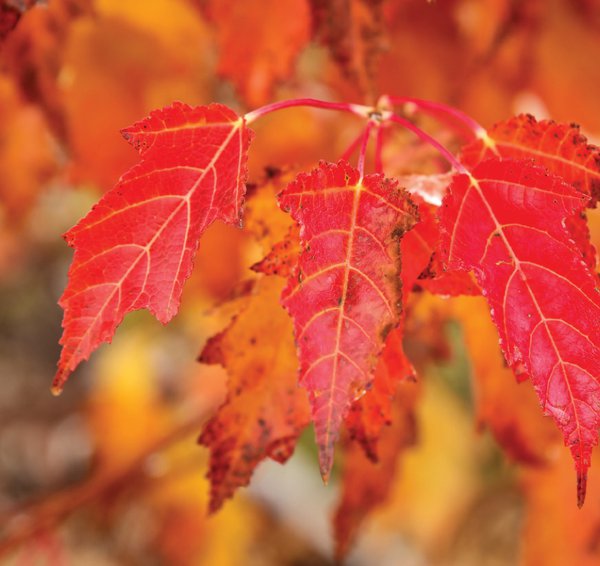
Amur Maple: Like its big sisters the Silver and Sugar Maples, this small tree offers stunning color in the autumn. It’s relatively pest resistant. Its one drawback is that it easily propagates, so keep your eye out for unwanted “volunteers” and pluck them out. (Perhaps replant the volunteers in pots to grow until they’re big enough to give as gifts to friends.)

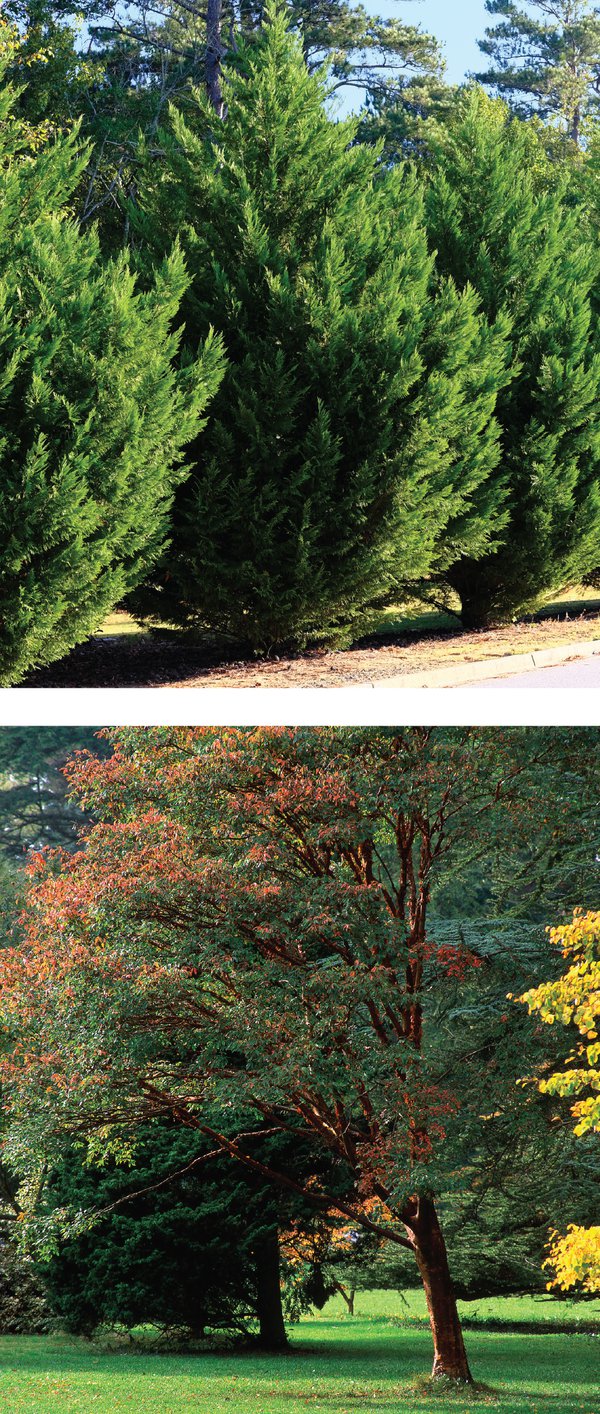
Paper-Bark Maple: Mid-size and reasonably fast growing, what makes this maple a treasure is its beautiful, papery bark. As the tree grows, the lighter color outer-bark begins to peel back revealing the deep cinnamon to brown bark beneath. Add to this year-round interest, she’ll display her leaves in deep reds in the autumn. 

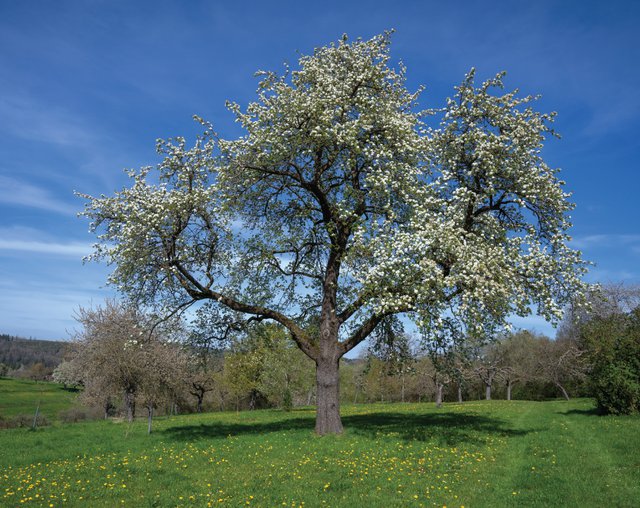
Weeping Flowering Pear: This beauty has slender, willowy leaves, silver in color. The branches of this fairly small tree droop gracefully. In the spring there’ll be a lovely display of white blossoms. If pollinated, she’ll produce small pears that are tasty only to squirrels, foxes, and other furry guests. One final reason to add a Weeping Flowering Pear to your garden is that the tree is an endangered species, having originated as a cultivar in Germany in the mid-19th century, it’s no longer commonplace. 

Leyland Cypress: This slender evergreen makes a subtle privacy barrier. It’s fast-growing and undemanding. In three years it can grow 50 to 60 feet tall. (No need to avert your eyes from the back of your neighbor’s garage any longer.)

Your arborist or garden consultant also will have lots of lovely suggestions, I’m sure. My goal here is to plant the seed, or seedling, and suggest one way we can each make a tiny improvement in our environment. If every garden had a tree, think how many tons of oxygen we’d add to the atmosphere. It seems such a simple way to help Mother Earth.

Posted in Uncategorized | 2 Comments

Take a look at this interesting literary magazine!

Friends & colleagues, Jade Dee & Wilnona Marie are published their third annual literary magazine., And I Thought. My interview with Wilnona and Jade begins on page 67.

And I Thought Shop (andwethought.com)

Posted in Uncategorized | Leave a comment

We Meet Again – reuniting with Oscar and Opal

Today marked the first time in 17 months I have been able to walk around the Naval Academy – a walk I’ve enjoyed for 20 years. Not only was it a pleasure to return to the trees and waterway views I’ve enjoyed for many years, but I had the added bonus of sharing the delights with Larry. We had a leisurely walk, and I tried not to be too anxious about my old friends, the ospreys Opal & Oscar, who’ve nested at the Academy for many years.

My heart stopped as we approached the outer perimeter of the “Yard” where we could see the field-light pole and the sturdy nest perched on top. One of my old friends – Oscar or Opal, was on the adjacent pole. I will look forward to keeping a look out for both old friends over the coming weeks.

I also observed over the soccer field a second nest, perhaps one of Oscar & Opal’s progeny. I didn’t see the birds or get close enough to see the nest’s construction. I’ll keep you updated.

Posted in Uncategorized | 3 Comments

Mini-Gardens

The Theme Game: Mini-Gardens Can Be Fun

BY JANICE F. BOOTH

MAY 27, 2021

12:51 P.M.RSSPrintExpand

garden1.jpg

I would like you to consider a new component for your garden; perhaps one that will be fun for you and refreshing for your outdoor space. While it’s true that for some of us, gardening is a solitary pleasure, we still welcome appreciative comments on our efforts from our family, neighbors, or friends. With that in mind, consider a new element in your garden, a project that will satisfy you and delight others; how about creating tiny Theme Gardens? The size of these little treasures will depend on your enthusiasm and space. They can be any size, from a small grouping of flowerpots to an entire flower bed or even the entire garden. You may have seen examples of the recent craze for miniature and fairy gardens. In fact, they seem to harken back to the ancient Bonsai container gardens for which trees and other plants are carefully tended to create a landscape in miniature. But, I digress. 

A Theme Garden or a group of such gardens might be a way to engage your horticulturally-challenged family and friends in gardening. There are a few ways to do that. If you have children or grandchildren, even neighborhood kids, you might offer them the opportunity to claim a garden. Or, you might create gardens for them and have them guess which is for them and what the themes are; sports, book titles, favorite places. It can be fun to brainstorm ideas with your 12-year-old for a soccer garden. She might use the shells of old soccer balls, planting flowers in them that will bloom in her team’s colors. Or, how about a garden based on a favorite book, Treasure Island for example? A wooden packing box might be transformed into a treasure chest, dripping with jewels and cascading ferns and ivy. The children might make a competition of the gardens, keeping their ideas secret and inviting everyone to guess the theme, sort of a mime game with plants. For the wee folk, how about small pots, each containing a plant for a letter of the alphabet. (No need to do all 26; maybe just the vowels, or the letters of a child’s first name.) The children could paint or draw labels for each plant-letter to be taped to the pot or stuck in the pot on a straw. Expand

garden3.jpg

If that doesn’t catch on with your younger set, you might want to tax your own creativity and design a mystery theme garden. Invite folks to guess the theme of the garden(s). You could choose a historical period; the Colonial age or medieval times and create a garden filled with plants that would have been common in that period. Another idea is to create an honor garden for someone or some event. Perhaps your parents’ favorite flowers, or a grouping of plants recalling your trip to Italy or Arizona. Instead of a photo album, why not a photo garden? You might laminate copies of some favorite family photos; attach them to ribbons to hang from your crape myrtle tree or placed among the plants on stakes, and build a theme garden around those memories and people. You could harness any of these theme gardens to an educational goal. Encourage kids to see history through the lens of nature and plants. Make biology and botany part of their real-world experiences. Invite young people to consider their heroes in light of the natural world. Even geometry could be explored through miniature gardens—the hexagonal, rhombus, and diamond gardens would be a challenge. And how do you calculate their areas? How much soil is needed? 

Okay, now that you’re getting the idea—how about moving beyond the herb garden… What could we do with a burrito garden or a snacks garden? How about that tiny avocado tree you’ve been coaxing from the seed? And what about some heads of iceberg lettuce? Now, cheese may not be feasible, I realize, but perhaps some yellow loosestrife or goldenrod? If you squint they resemble grated or lumps of cheese, don’t you think? And as for a snack garden—baby carrots, cherry tomatoes, radishes, a vine of green beans or peas, even a raspberry bush or a few strawberry plants in a hanging basket…doesn’t that sound tempting? 

And, while we’re thinking of food, how about a Native American garden? You might need more room, but the traditional “3 Sisters” garden—corn, beans, and squash—would make for interesting conversations with admirers. Native Americans knew that these three plants completely support each other and those who plant and harvest them. In addition to providing a complete balanced diet, these three plants support each other, literally. The corn stalk supports the pole bean vine; the bean vine pulls nitrogen from the air and into the soil to feed the roots, while the squash vines cover the soil and roots, protecting them from wind and sun damage—wise lessons there for us all. Another type of Native American garden is an apothecary garden. Similar to an herb garden, the apothecary garden contains medicinal plants. (You might include these plants in a Colonial History garden as well.) Rosemary grows well in our climate, and it’s purported to boost one’s memory as well as reduce swelling. Aloe Vera is a familiar and reliable succulent that eases burn pain and helps heal scrapes and cuts. Hardy Valerian, when brewed in tea, helps with relaxation and relieves indigestion. And our sweet, familiar Wooly Lambs Ear is the original band-aid. Soak those fuzzy leaves until they’re soft, then apply them to a cut or scrape. Expand

garden4.jpg

And finally, my last suggestion, and perhaps my favorite, is a Moon garden. The idea here is to use plants whose variegated leaves and white blossoms reflect the moonlight. The blousy, night-blooming Moonflower and Evening Primrose are two beautiful options. You might want to create your moon garden around your handsome Southern Magnolia, with its stunning white blossoms. Candytuft beneath and a delicate clematis vine winding through the garden would all glimmer in the moonlight. 

Whatever theme or themes capture your imagination, I know you’ll have fun expanding on these suggestions. Gardens offer us endless opportunities for reinvention and restoration. This is a spring like none we have enjoyed before. We are all in need of restoration and perhaps reinvention. 

Posted in Uncategorized | 3 Comments