What’s Up? Magazine: Orchids

Orchids Delight: Growing Orchids in Your Indoor Garden

by Janice F. Booth

Sep. 18, 2023

garden1.jpg
garden2.jpg

The orchid grows where others cannot, enduring the hardships of hunger and thirst, and is loosely tied to the things that support it. And, even with all the difficulty of its life, the orchid graces the world with beautiful colour and rare fragrance.—Confucius, from a translation by Jonathan Steffen 

Perhaps you’ve received a lovely spray of orchids as a gift or picked up a tiny, potted orchid on the sale table in the grocery store. Well, if you did, I hope you had more luck than I at keeping that lovely plant alive and blooming. But if you’ve found growing orchids difficult, or if you are simply toying with the idea of adding orchids to your houseplant collection, this article may be of help.

I interviewed Carol Allen, the Orchid Lady, a regional authority on growing orchids (orchidlady.net). Allen teaches, lectures, records videos, and does clinics where gardeners bring their ailing orchids for diagnoses and treatments. She is funny and wise, and truly enjoys plants and people of all varieties. 

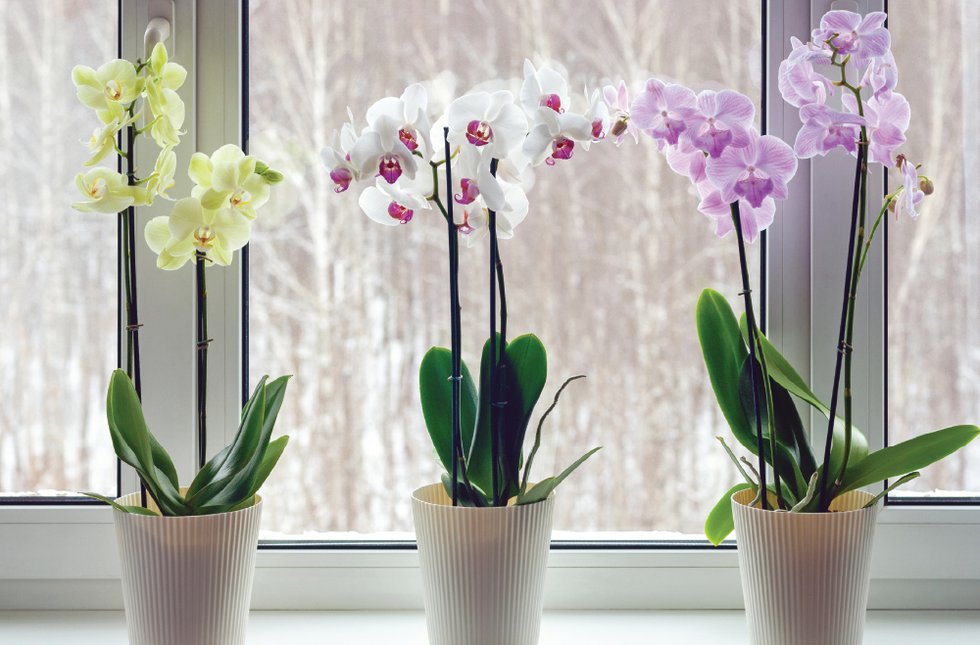
The Orchid Lady assures me that growing orchids is easy. The pointers below will apply to most orchids, but Allen suggests gardeners just getting started try Moth Orchids (phalaenopsis). They’re pretty and forgiving if their growing needs are not always perfectly met. There are three basic requirements. If you get these right, your orchids will delight you for years to come; they can live to be 100.

1. LIGHT: 

In our mid-Atlantic region, two to three hours of fairly direct sunlight through a window should keep your orchids happy. If your windows are the new UVA or UVB high-efficiency light-filtering glass, longer sunlight exposure may be necessary. 

2. WATER: 

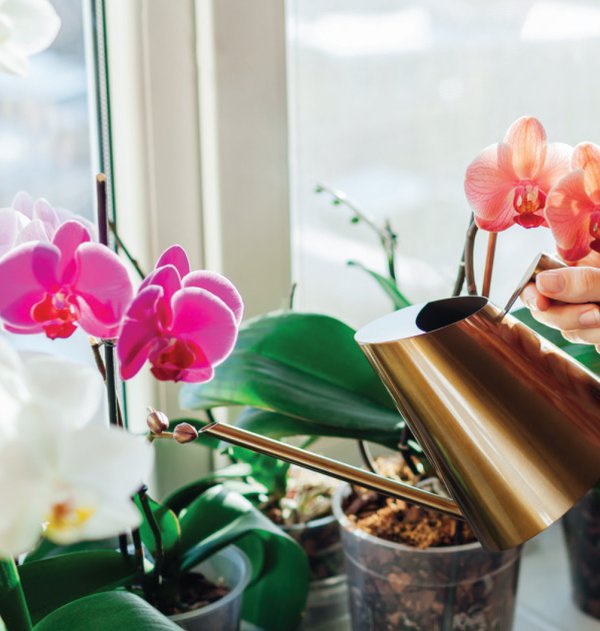
If we remember that orchids are bromeliads, we can follow the same schedule and use the same techniques. Water thoroughly and let the plant drain. Do not allow the roots to sit in standing water. Water again when the plant’s soil feels dry. If the leaves are dusty, gently wipe them with a damp cloth. If your home is dry, create a shallow evaporation dish; let the orchid’s pot sit on the gravel or stones above the water. 

3. POTTING:

 Although there is some controversy on this topic, Allen urges plastic pots for orchids. The plastic pot holds the dampness. The clay pot dries out quickly—perhaps too quickly for the orchids. Do not allow mineral salts to build up in the soil. If you see chalky powder collecting, remove the plant from its pot, clean the pot and replace contaminated soil. Carol recommends a peat-based potting soil, for example Premix or ExPona. The planting medium should be light, allowing air to get to the roots. 

Okay, you’re still with me on this? Let’s move on to selecting a healthy orchid specimen to buy. 

garden3.jpg

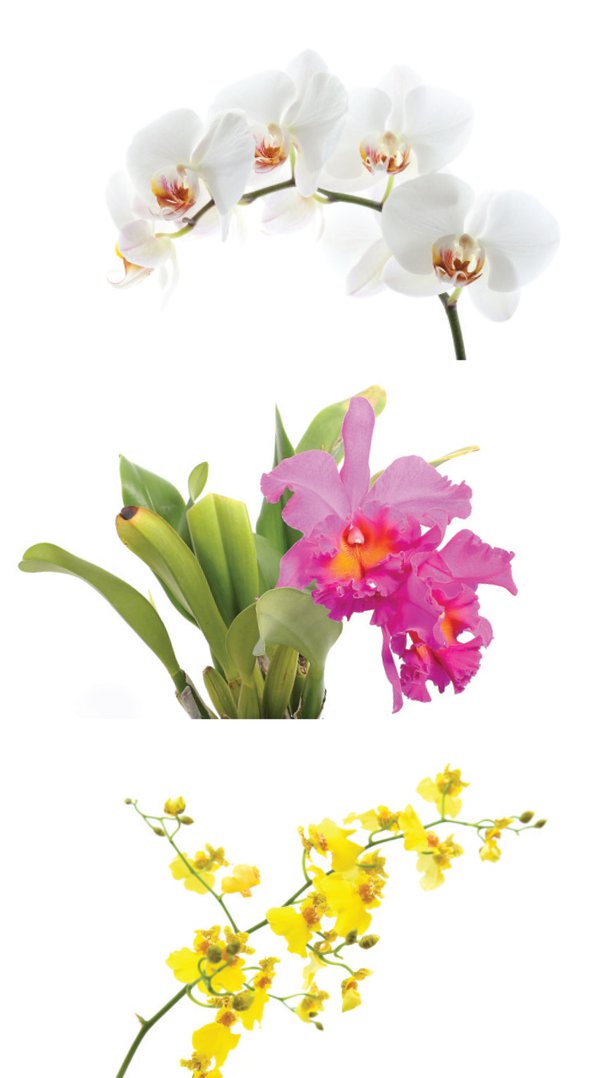
There are 3 types of orchids that are relatively easy to care for:

Moth Orchids (phalaenopsis)—habits similar to African Violets. 

Corsage Orchids (cattleya)—they’re more forgiving of very sunny locations.

Dancing Lady Orchids (oncidium)—lovely blooms and comfortable with temperatures below 80° F. 

Watch for these qualities when choosing a specific plant:

Choose a plant with many buds and only a few open flowers. You’ll have the pleasure of watching these closed buds unfold.

Check for firm, bright green leaves; be sure there are no dried or squishy leaves near the soil. Also, check that the visible roots are not brown or shriveled.

Unless you can move your plants in-and-out every day, orchids do not work as outdoor plants in the mid-Atlantic region. Avoid leaving an orchid in a hot or cold car, even for a short time. The plant is extremely sensitive to temperature and can be damaged or killed.

Expand

garden4.jpg

Since water is such a vital part of caring for orchids, there are differences of opinion on technique. 

I spoke about the plastic vs. clay pot debate – which best controls the moisture level in the planting medium. Plastic pots allow the water to evaporate more gradually. But, clay pots allow for better aeration of the growing medium. 

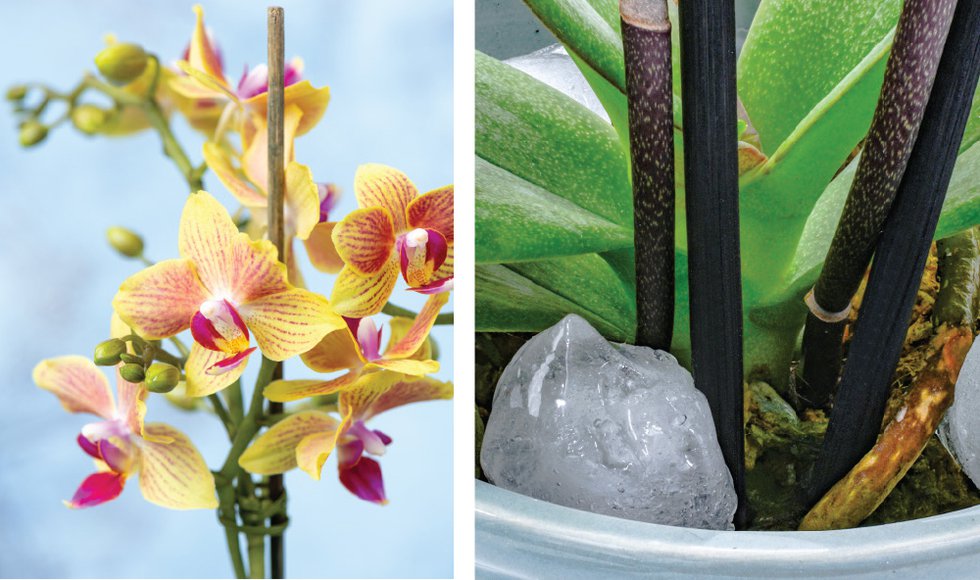
There’s a watering debate around ice cubes. For a 7–8 inch pot, there is a consensus that three ice cubes per week will provide sufficient water. Just lay the cubes under the leaves, on the soil or stag moss. You can check moisture level by observing the roots. If the roots are silver, the orchid needs water. If the roots are green-ish, the plant is fully hydrated. 

You will want to repot your orchid annually. Remove the pot and gently clear the soil from among the roots. Look for any softening or rot among the roots. Also check that there is no salt buildup, those chalky particles I mentioned previously. Use a pot that is just big enough to give the roots room to spread; do not overdo it on the size. Make sure the drainage holes are open and clear, then add growing medium and the orchid.

Don’t worry. This may all sound like a lot of work, but once you’ve begun to enjoy the lovely blossoms on your orchid’s stem, all the work and worry will fade. Orchids really are quite hardy. They’ll be content with very little attention, once you have the right windowsill and a watering routine. 

by Janice F. Booth

Posted in Nature, Published articles, Uncategorized | Leave a comment

What’s Up? Magazine: Preserving Flowers

Make Those Beauties Last: Preserving Your Garden’s Blooms

by Janice F. Booth

Aug. 02, 2023

garden1.jpg

We’re all enjoying the glorious blooms of summer—blue and lavender multi-flora hydrangea, orange and yellow zinnias, creamy Magnolia blossoms, rosy cone flowers, and ubiquitous Black-Eyed Susans. Perhaps you even have floribunda or knock-out roses in coral, white, and pink. Soon we’ll all enjoy sedum, in their subtle hues, blue and purple asters, elegant, purple spiked Agastache, and delicate pink and white statice adding to our gardens’ lush color bouquet. 

How about preserving these beauties so they can be enjoyed during winter? There are four simple and common methods of preserving blooms. You might try several approaches; see which method gives your flowers the look you’re after for dried arrangements. With a bit of planning and some simple materials, it’s possible to preserve some of those beauties, retaining most or all of their color and grace. Even if the first few attempts disappoint, don’t give up. You’ll soon figure out just the technique that works for you and your garden’s blooms.

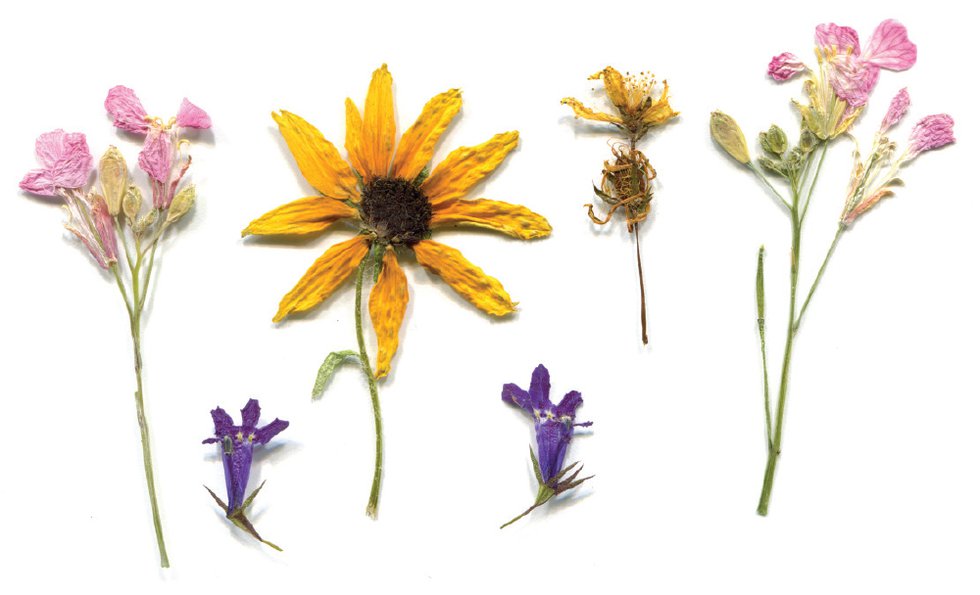
The four techniques are: (1) oven drying, using a microwave or traditional oven, (2) air drying, (3) drying using sand or rice, and (4) pressed drying, using heavy books.

Before we get into the techniques for drying flowers, consider how you’ll collect your specimens. Think of the drying of blossoms as an ongoing project. As blooms reach their peak, cut and dry them. You might do a few flowers every week, or even more often when your garden is at its showiest. 

garden3.jpg

1. Microwave or Oven Drying: 

You’ll need silica gel crystals (available at craft stores) for the microwave method.

1. Line a microwave-safe container with silica gel crystals to a depth of 1-inch. 2. Carefully remove the flowers from their stems and set each flower into the silica gel crystals so the petals do not touch one-another. 3. Gently pour silica gel crystals over the blooms until they’re covered. 4. At a LOW power setting, microwave the dish of blooms (uncovered) for 2–5 minutes. (Check occasionally to see if the flowers seem dry.) 5. Remove the container from the microwave and cover, leaving a space for moisture to escape. After 24 hours, uncover container and remove gel crystals by gently brushing blooms. (An old makeup brush works well.) 6. Spray dried flowers with crafter’s acrylic or hairspray and attach flowers to wire “stems.” OVEN method: 1. Preheat oven to 200F. 2. Arrange blossoms (foliage removed) on cookie sheet lined with parchment. 3. Bake for 8 hours, uncovered, with the oven door cracked to release moisture. 4. Allow flowers to cool on cookie sheet before handling.

Expand

garden2.jpg

2. Air Drying: 

This is a lovely method if you like an antique look—works best for bouquets and nosegays. 

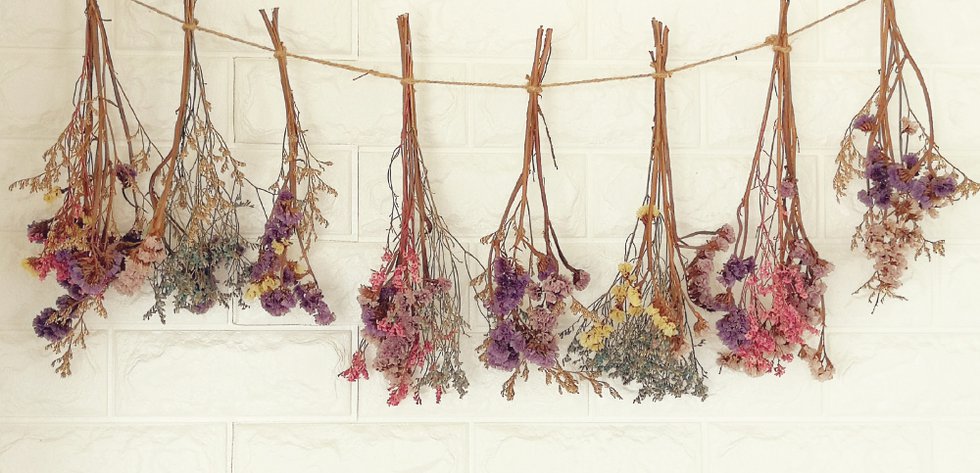
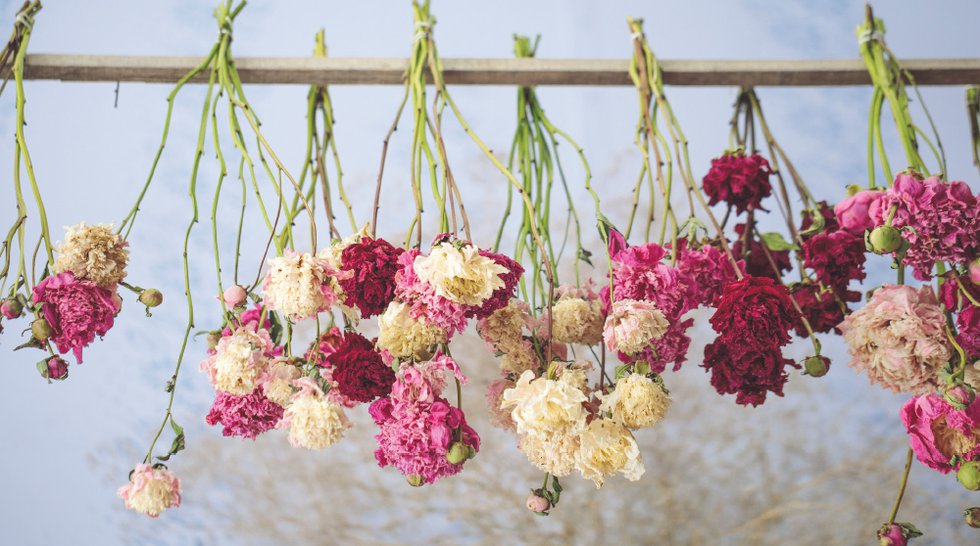
1. Gather your flowers—lavender, statice, lilies, roses, and leave at least a 6” stem on each bloom. Strip the stems of leaves. (The leaves won’t dry properly.) 2. Tie stems together in the arrangements you desire. Use twine or rubber bands; ribbons can be added later. 3. For 2–3 weeks, hang the drying clusters upside down in a well-ventilated area, out of reach of children and pets. Avoid areas where direct sunlight might fade the flowers. 4. When thoroughly dry, take down the bouquets, spray with acrylic or hair spray, and decorate with ribbons or arrange in baskets and bowls.

garden4.jpg

3. Drying in Sand or Rice: 

This method is inexpensive and uses non-toxic material. These materials are heavy, so use only with sturdy blooms.

1. Collect your flowers and remove foliage. 2. Gather sturdy boxes with lids—shoe boxes work well, and lots of clean sand or rice. 3. Layer the bottom of the box with a half-inch of sand or rice and arrange blossoms, with or without stems, in the box so the flowers do not touch. 4. Slowly and carefully pour sand or rice over and around each flower, being careful to get in between petals, until the flowers are completely covered. Close the box lid tightly. 5. Leave covered 2–3 weeks before removing sand or rice carefully from around the dried blooms. Brush gently with soft bristles to remove remaining crystals or kernels. (Spraying blooms with preservative is an option.)

garden5.jpg

4. Pressed Drying: 

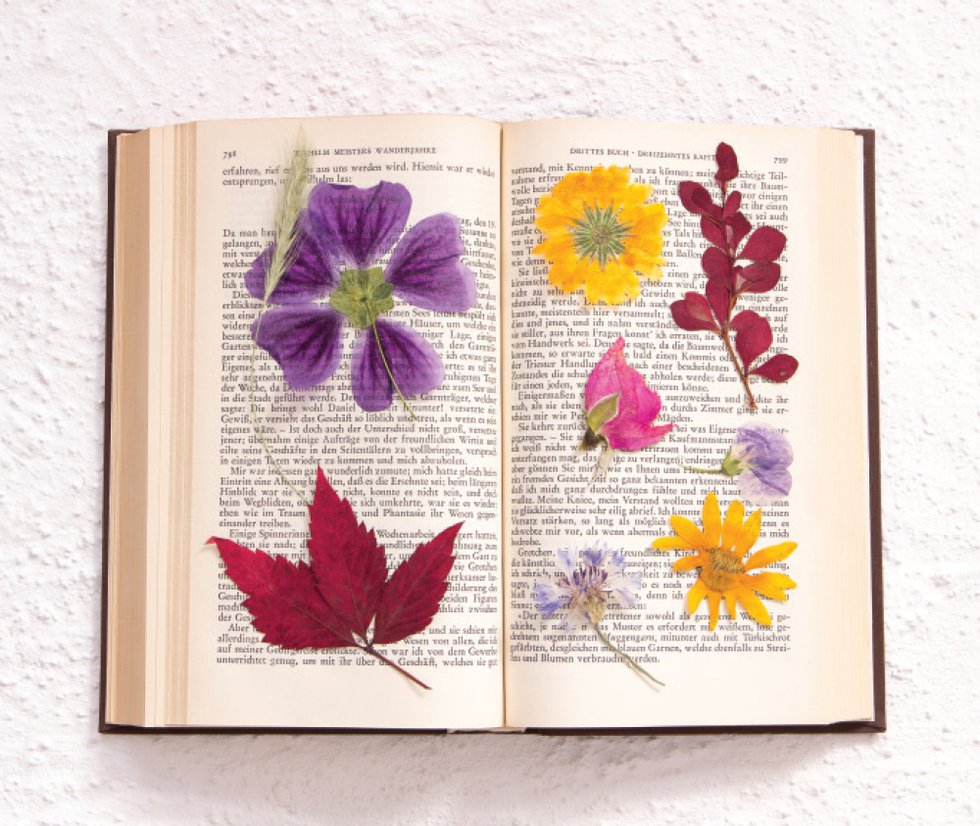
This traditional method of preserving flowers was popular in the Victorian age. It’s still romantic to find an antique bloom pressed between the pages of a favorite novel or collection of poetry. 

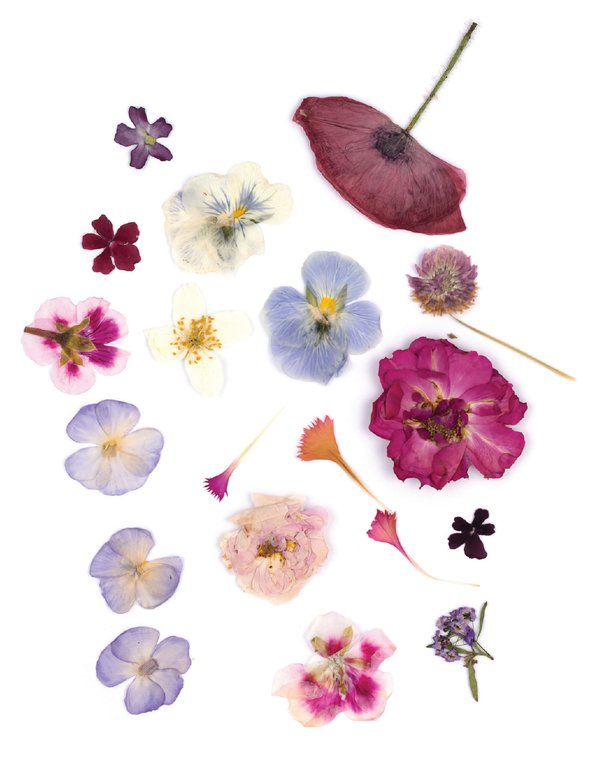
1. Gather a few heavy books or a flower press if you have access to one. You’ll also need heavy paper such as watercolor paper or card stock and sheets of parchment. 2. Gather the blooms you want to preserve. They will be flattened, so keep that in mind when selecting the flowers. 3. Open a book and place a piece of heavy paper on the page, then a piece of parchment. 4. Arrange the flowers, face down, on the parchment, then cover the flowers with another piece of parchment and, finally, another absorbent paper. (You’ll have four layers of paper.) 5. Close the book and pile on several more heavy volumes. (Rely on your own judgement as to the weight you’ll need.) 6. After 3–4 weeks, you can remove the weight and see the antique-looking flowers on the page. You may want to leave them in the book, but remove all but one sheet of parchment, to protect the book’s page. If you remove the flowers from the book, you’ll need to decide on some other flat surface to store or display the blooms—perhaps in a shadow-box frame or on a side table under a sheet of glass.

Whatever you choose to do with your summer garden’s beauties—arrangements in vases, wreathes, gift decorations, nosegays, you’ll be reminded of the beauty of your garden throughout the winter months until the garden comes to life again. 

by Janice F. Booth

Aug. 02, 2023

Posted in Nature, Published articles | Leave a comment

Pots That Pop

What’s Up? Magazine

BY JANICE F. BOOTH 

JUL. 05, 2023

pot1.jpg
pot2.jpg

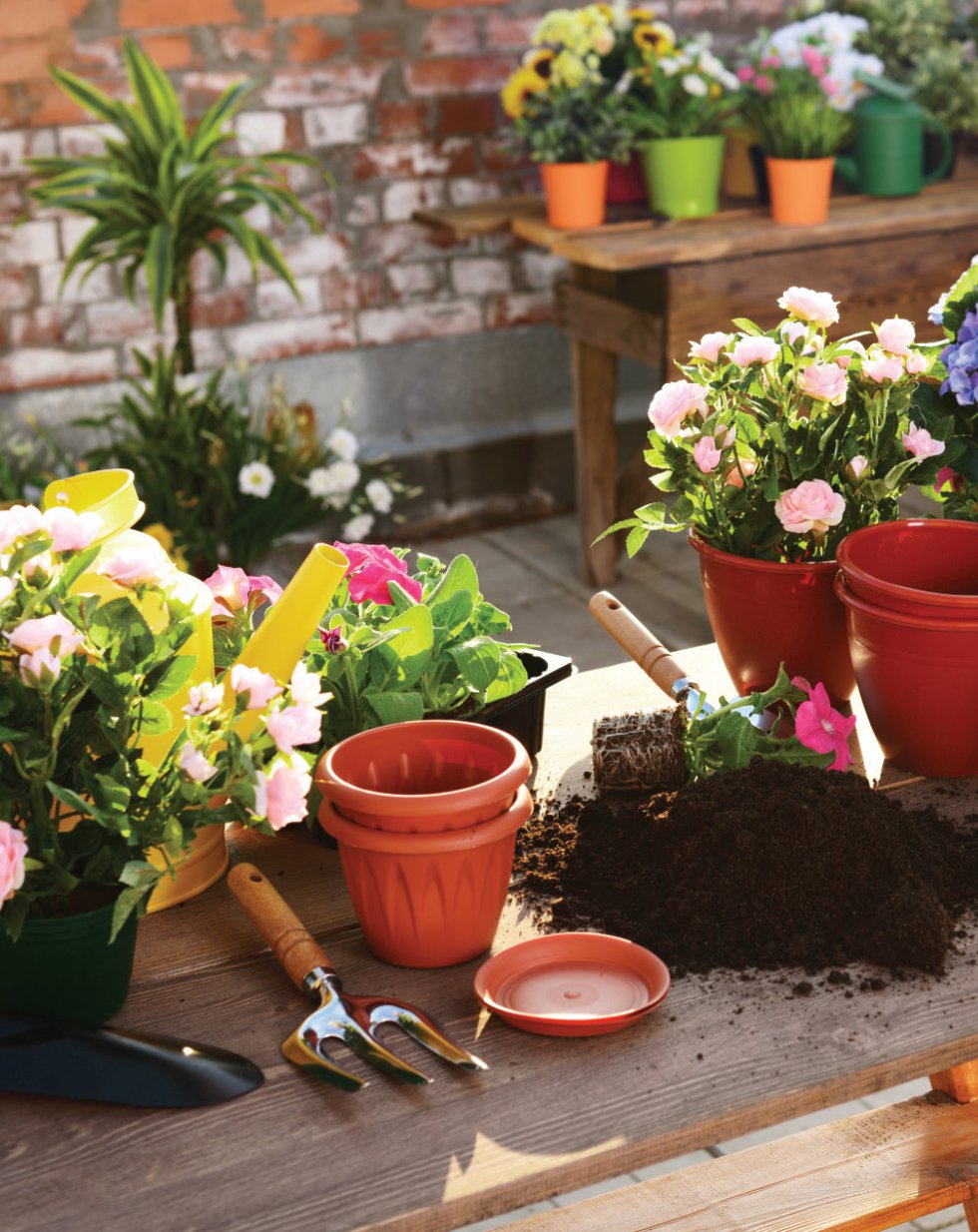
My neighbor’s hanging baskets and flowerpots are the envy of the neighborhood. She’s talented florist and decorator, Rhonda Sears. Recently, I asked her the secret of her always unique and beautiful floral containers and pots. Her answer, “One word, surprise. Find something unique and build your arrangement around that.” Ah, the artist’s eye. 

Let me break down into five steps the process of creating beautiful and unique planters: (1) What is the purpose of the planter? (2) Where is the pot to be located? (3) What effect are you going for? (4) How is a healthy potting environment created? (5) What are the steps in maintaining the pot? We’ll also keep in mind Sears’ element of surprise. 

Purpose: 

There are lots of reasons to add potted flowers and window boxes to our gardens. 

Masking a flaw: There may be that one area of one flower bed where your sweet pet enjoys soaking up the sun. Nothing gets a chance to grow there. A pretty pot of geraniums or begonias might discourage puppy and solve that problem. Or, that area beneath the old magnolia where sun seldom reaches; a large, dramatic pot of ferns and caladium could surprise the wandering eye. 

Adding pizzazz: Does that flowerbed near the driveway need a bit of punch? How about an unusual pot that will liven up the area? Keep the planting simple with an unusual cluster of twigs or an antique garden tool as the focus. Perhaps the “pop” will come from the clustering of pots—vary the size or color, but stick to some unifying plants to retain the grouping effect. 

Outdoor vacation for houseplants: I like to set out my sweet house plants once the warm weather truly sets in. They’ve kept us company all winter, and now they deserve a bit of natural light, not to mention some repotting, root freshening, and fertilizer. I find a spot with filtered light and protection from the wind and set out the dears for their summer vacation. 

pot3.jpg

Location:

Just as with the transplanting of any plant, shrub, or tree, consider three basic issues when deciding on the setting for your pots and containers:

Sun and shade: After all your planning and efforts, you’ll want your lovely arrangements to thrive. For that to happen, the plants must get the amount of sunlight and shade they require—with very little deviation. That means choosing plants that share the same preferences and being sure you’ve carefully evaluated the locations you’re using. Additionally, it’s helpful to think about each location’s vulnerability to wind. Many plants can be affected by constant winds, even if it seems mild to us.

Size: I’ve found myself very disappointed after spending hours planting a pot of varied plants, only to find the whole effect looks positively puny in the location I had in mind. What may seem BIG in your potting shed, may look much smaller set near the towering, elegant Foxglove or Delphinium. Play around a bit with the pots you plan to use. Group them, arrange them, take pictures of a particular pot in several locations—before you load it with soil and plants. 

Watering: When you finish creating your flowerpots, they’ll be heavy. You’re not going to want to move them very often. So, consider how you will water each pot. Will the hose reach? Must you bring a sprinkling can for the daily watering…will you do that? 

pot4.jpg

Effect: 

All the thought you’ve put into your pot-plans will pay off now. What are you really going for with these additions to your garden? As my florist neighbor, Sears says, “You want a thriller, a filler, and a spiller.” Something tall and unusual (the thriller), with lower and lush begonias or annuals to fill the planter, and some ivy or Creeping Jenny to spill over the pots’ edge, softening the effect. 

Drama: My front porch is small and simple. I might want to add a tall pot with a few shade-tolerant plants for a memorable “welcome.” Or perhaps your patio needs some “zing.” A cluster of red and orange pots of varying sizes, filled with bright marigolds and stately yucca might be just the ticket. 

Lushness: There always seems to be an uncooperative place in the garden that refuses to nurture the plants placed there, no matter how you look after them. By adding a few containers of varying sizes and material, you can disguise this “dead zone” as a lush and welcoming spot. 

pot5.jpg

Planting and Maintaining: 

You may already know the process of grouping plants in pots or containers, but I’ll do a quick review, in case there’s something I can offer that you may not have considered.

Prepare the pots: If the pots are new, remove any labels or potentially toxic substances stuck to the pot. Check for at least one good size drainage hole. If the new pot is glazed inside, line the pot with gardener’s cloth (a porous, usually black fabric) that will help maintain the proper pH balance in the soil and roots. If the pot has been used before, rinse it down. Be sure the drain hole(s) is clear. 

Filling the pots: You’ll need potting soil—loose soil that will allow water to drain. There is a debate among gardeners as to putting pebbles in the bottom of the pot to aid in drainage. If the pot is quite large, some gardeners advise filling the bottom third of the pot with packing peanuts to lighten the pot. (I’ve done this and found no ill effects—pot and plants did well.) 

Watering and fertilizing: Depending on the amount of sunshine the pot receives, water often enough so the plant’s roots are never too wet or too dry. Fertilize each time you water. 

Deadheading: To encourage those pretty blooms, deadhead the plants—that is remove the dead blossoms. Avoid dropping the dead blossoms around the pot. 

Whatever you decide to do with your planters and the plants that fill them, have fun. You’ll surprise yourself with the original ideas you’ll come up with.

Posted in Nature, Uncategorized | 1 Comment

S/He Speaks: Voices of Women & Trans Folx

My poem, “Counterpane” has been included in a new anthology of poems for and about LGBTQ and Trans people. I wrote the poem for my beloved daughter, Zoey.

Counterpane                                      

Precious quilt, lush and richly hued,

of discarded pieces; lush velvet, worn silk.

Threaded with loss and suffering,

plump with filling of her fabrication – my daughter.

Like Scheherazade, she weaves her own life’s story,

fitting and folding-in her needs.

Looking within her zōētrope –

spinning visions.

There is no yesterday, no treasured

snippets of former garb.

Only today, this vision, this fashion

fits her image now.

My daughter’s guises

stitched from threads of sweetness

and regret, hope and grief.

I fold away discarded specters of my child.

Posted in Life Lessons, Poetry, Published articles, Uncategorized | 2 Comments

Earthly Delights: Gardening with Children

by Janice F. Booth

Jun. 08, 2023

garden1.jpg

If you love gardens and children, let me offer a few suggestions for planting a love of gardens in the hearts of the children in your life. School is finishing and summer plans are gelling. Spirits are rising, along with the early hellebore, peony, and iris. Maybe you’ll be looking after your grandchildren, niece, or nephew for a week or two. Or your neighbor’s toddlers are finding your garden and puppy irresistible and spending lots of time visiting you as you work in your garden. 

Whatever the reason, let’s consider (1) the advantages of encouraging a love of gardens and gardening. (2) Local and regional public gardens you can enjoy with your young friends. (3) Hints and equipment for gardening with children. (Keep in mind that children may only find gardens and gardening interesting for a few days or a few weeks. That’s okay.) 

Advantages & Skills Acquired While Gardening. Pediatricians and Child Psychologists agree on the skills and attributes developed by children involved in gardening:

Children Ages 2–10

Communication skills: giving and following directions, describing a process, asking questions, predicting outcomes, drawing conclusions

Interpersonal skills: team building, sharing responsibilities, listening to others

Setting and achieving goals: recognizing time constraints, appreciating appropriate goals, developing adaptability when problems arise 

Exercise: the usual with fresh air, sunshine, and motor skills

Adolescents Ages 11–16

Exercise: (for those teens who prefer the computer to the soccer field) fresh air and sunshine. Tip: Sometimes, you might need to use the tried-and-true ploy, “Could you give me a hand with this? I can’t seem to be able to…” 

Knowledge: I can imagine a science fair project in the offing. You might encourage your teen to take some time-lapse photos and measurements. The information can be set aside, and dusted off in the fall, when the school’s science fair is announced. It may be a relief for everyone if half the work is already completed and only a poster board and some glue are needed to display the experiment on photosynthesis or companion planting.

Interpersonal skills: “Helping” you trim the forsythia or plant marigolds and petunias may be a rare opportunity to listen to your teen. A few casual questions on a sunny afternoon in the garden can become a precious experience for you both. Working together to accomplish a task may be a rare experience for our often-isolated adolescents. “Responsibility” may be another skill developed while gardening. Watering, weeding, protecting young plants from bugs and bunnies; all opportunities to assume responsibilities that are achieved in real time. 

Stress reduction: Teens are old enough to face lots of stress and need opportunities to deal with that stress. Gardening can prove a healthy alternative to zoning out on video games or sleeping. Depression can sometimes be eased with sunshine and Nature’s many charms, including fresh air and songbirds.

Expand

garden2.jpg
garden3.jpg

Kid-Friendly Public Gardens

Perhaps you’ve tried introducing your child to gardening in the past without success. A trip to a public garden that has child-friendly areas and programs might provide a fresh start to encouraging children to get involved with gardening:

Adkins Arboretum, Ridgely, MD: On the Eastern Shore with lots of trails for children to explore

American Horticultural Society Children’s Garden, Alexandria, VA: Includes a “Little House On the Prairie” garden

Brookside Gardens, Wheaton, MD: Includes a live caterpillar and butterfly exhibit

Lewis Ginter Botanical Garden, Richmond, VA: Includes a “water play area” and Klaus Family Tree House” 

Longwood Gardens, Kennett Square, PA: Includes an indoor children’s garden and “Nature’s Castle Treehouse”

Miller Branch Library, Ellicott City, MD: An “Enchanted Garden”

U.S. Arboretum and Botanical Gardens, District of Columbia: Includes gardens planted by children

Winterthur Gardens, Wilmington, DL: Includes “The Enchanted Woods” 

Expand

garden4.jpg

Suggestions & Tips for Adult-Child Gardening: 

Following are a few suggestions that might help make your foray into gardening with children less daunting:

Plan Ahead: If you’re working with several children or only one: 

  • Decide and mark the area each child will have for her/his own garden. If you have room, spreading out the patches may avoid comparisons and competition.
  • Gather enough tools for each child: sharing may come eventually, but start each child with his/her trowel, watering can, and work gloves.
  • Be sure each plot has sufficient sunlight. 
  • Gather a few gardener’s catalogues. Each child will be able to see what the various plants will look like as they begin to mature. You can even make picture plant stakes to help the child remember what is planted and where.

Top Crops: Here’s a list of almost-fool proof plants children enjoy:

Bush beans • Carrots (fun example of tasty roots) • Cherry tomatoes (tasty treat for a tired gardener) • Lambs Ear (fool-proof, fuzzy, and cute plant) • Lettuce (nice because children can often get several harvests) • Nasturtiums (great for a conversation on edible flowers) • Potatoes (another tasty root) • Pumpkin (a big favorite, if you have room enough for the sturdy vines to spread) • Snow peas (fun to eat fresh off the vine) • Sunflowers (talk about photosynthesis and watch those heads turn!)

Expand

garden5.jpg

Miscellaneous Tips: 

  • Be prepared to “cheat”: If a bunny has devoured your young gardener’s lettuce plants, go ahead and replace them with a few fresh plants. Pull a few of those weeds choking her snow peas. Also, if you’re watering, sprinkle a bit around the children’s patches. It’s more important that they enjoy the gardening and the garden than that they do everything perfectly themselves. 
  • You may have an old sandbox in the garage or gardening shed. Fill it with soil and make that a child’s garden. 
  • Take lots of pictures of gardener and plants. Keep an on-line or paper scrapbook, even if the whole project lasts only a few days or a week. It will be fun to look back at the project as your young gardener matures and, hopefully, takes on more responsibilities and projects in the garden.
  • Suggest a theme garden, perhaps like one they saw at a public garden. Paint rocks to place in the garden. Use twigs and shells to decorate the soil. 
  • If all else fails and the kids are getting cranky, build a scarecrow. Grab a leaky pair of boots or old sneakers, some socks, worn-out jeans, a long-sleeve shirt, garden gloves, a beach ball or big balloon, and a hat. Get that left-over straw from the spring or lots of newspaper and rags. Stuff those clothes; tie them together with gardening twine. Draw features on that balloon or ball, and bingo! You’ve got a scarecrow. (It can be a reclining scarecrow if the construction seems precarious.) 

Whatever happens, have fun. Take pictures. Take your time. Savor those hours or days shared with children. You may get tired, frustrated, even annoyed, but you’ll look back on the days in the children’s gardens with appreciation and delight. Truly! 

Posted in Life Lessons, Nature, Published articles | 1 Comment