
Here’s a recent gardens column from What’s Up? Magazine.
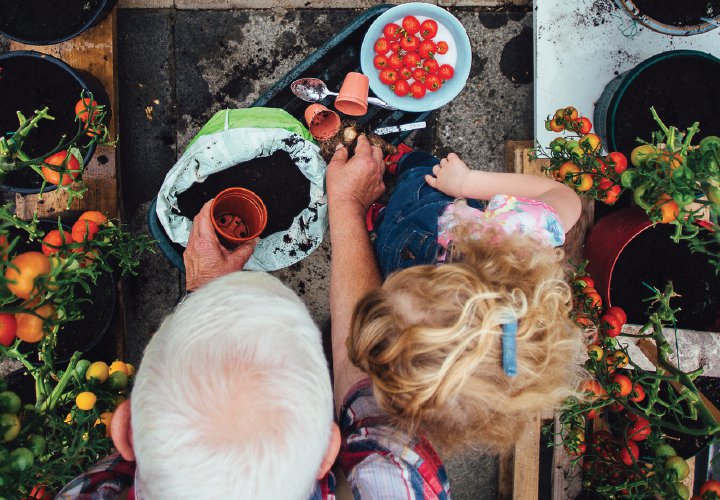
Spring is just around the corner, or at least most of us hope so. With the wild winds of March upon us and April’s rain close behind, it’s time to review our plans for our gardens—and our gardeners.
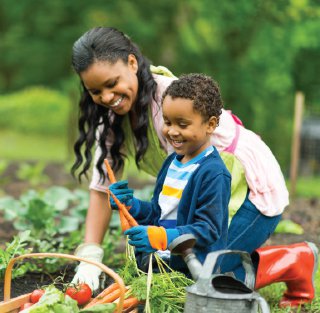
Perhaps you’re a gardening mom, dad, granddad, or grandmother. Maybe you have young children or even pre-adolescents in your neighborhood. Investing time in the garden with the children in your life may prove fun, and a lifelong gift for the children and for you. Let me offer some suggestions for gardening with children.
Before we get to specific ideas for garden projects with children of different ages and with different interests, let me list some basic pointers that will be useful if you undertake sharing your interest in gardens with children:
“A picture is worth a thousand words,” says the old adage. In this age of Google, when you can get a picture of anything within 30 seconds, introducing children to gardens is much easier if you show rather than tell children about the garden—what a seed looks like when it sprouts, how much soil a seedling needs around it, what a weed looks like. Show, don’t tell, applies to activities too. On your knees among the children or elbow to elbow with your young gardener is the best place to really teach children about plants and planting.
Let’s all get dirty! Relax, enjoythe mess of soil, water, and curious children.
You’ll need the real deal—tools that is. Avoid the plastic tool set from the local Dollar Store. Provide a trowel, a watering can, and a pair of gloves that will fit the size and strength of your young gardener. (Be sure to have enough tools for all the children to avoid conflict. They can use Sharpies to decorate the handles of their own trowels.)
Most children have short attention spans. Be flexible; have lots of little things to look at or do for those first few garden adventures. Instead of asking a 10-year-old to plant eight seedlings in a row, you might suggest she plant a seedling, dig a few holes for future planting, look for some slender twigs to hold identification signs, and design a sign with an index card and a few crayons or colored pencils.
Young children need instant gratification—sometimes we all do. Try a quick-growing vegetable such as radishes, which are ready to eat in three or four days. Or, plant seeds with the little gardener, but pick-up some seedlings, a couple of inches tall, to plant alongside the seeds. Maybe you can even find an almost-mature plant of the same variety for immediate satisfaction for your young tomato farmer.
“Farm to table” can work with kids too. You might plan a meal or a dish with your little gardeners. If one child plants lettuce, another raises a tomato plant, and a third harvests cucumbers, you’ve got a salad for lunch to which everyone has contributed.
Now that we have a few basic precepts, let me divide my suggestions into three groups
1 Ideas for gardening with pre-adolescents
2 Ideas for gardening with little people
3 Ideas for gardening with children who have special needs
1
Those high-energy 8 to 12-year olds may be a challenge, but a garden is a great place for these youngsters to hang out, when the house is too small, and the world is too large. Taking out some frustration by pulling weeds, or getting some gratification from harvesting your own, tender carrots, or satisfying your romantic nature by creating a fairy garden where only you are in charge may be a real lifesaver.
For our grownup sensibilities, let’sreview some of the useful knowledgepre-teens can learn in the garden:
Number one, self-reliance. Once you’ve introduced the basics and given over a portion of the flower beds or a plot of soil, step away from the project—unless, of course, you have the good fortune to be invited by your 10-year-old to help her set up the fairy castle under the Japanese maple. Or, you may find your 12-year-old complaining at lunch that slimy slugs are crawling around his tomato plant. “What do you think I should do to get rid of them, Grandpa?”
Number two, basic biology and horticulture. (Great preparation for high school.) While making those identification signs, they’ll learn the common plants’ names and information such as edible vs. inedible, sun vs. shade loving, moist vs. dry. They’ll learn about food production and preservation, germination, erosion, and insect infestations and treatments.
Number three, the value of patience and observation. Children develop these qualities over time, with practice. Gardening provides a perfect activity for developing these skills.
Here are a few projects you might introduce to your young gardener:
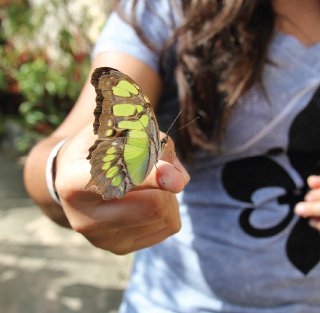
A Butterfly Garden: Offer a portion of the garden where some wildness can be tolerated. Your young gardener can research types of butterflies common to our region. Then, determine what kinds of plants will entice those butterflies to stop by and deposit cocoons. Among favorites for butterflies are asters, lavender, milkweed, clover, and violets. My neighbor has had success luring swallowtails to her yard with fennel plants. We’ve had fun watching the cocoons and emerging butterflies.
Art Projects: If fussing about in the dirt doesn’t seem to interest your youngsters, suggest she or he decorate the garden. Some easy creations might be preparing staked signs for the plants and trees in the garden. Building a birdbath or feeder could be fun. (Remind your young builder to research the depth of birdbath water; you don’t want to drown the thirsty birds. And, be sure the birdfeeder is designed to be reasonably safe from marauding squirrels and cats. Gathering interesting flatware, old jewelry or metal scraps to create a wind chime, then figuring out where and how to hang the wind chime will intrigue some pre-teens. Or, build a scarecrow. Halloween is always in season for this age group. The old clothes box and wood scrap pile have just the makings of a fine, scary guard for those flower or vegetable plots.
2
Young children, 2 to 7-year olds, are usually more enthusiastic about mucking about in the dirt. The trick is to corral their energy and curiosity, so they begin to acquire some appreciation for gardens. The useful skills and knowledge you’ll be imparting might include: developing the child’s attention span, gross and fine motor skills, simple problem solving, and outcome predictions. The projects for this age group are short-term and straightforward.
Flower Pool or Flower Box:
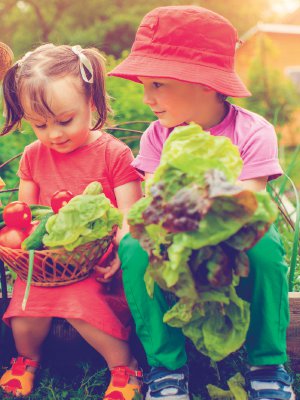
Depending on your available space, use a kiddie pool or a wooden or plastic storage box as the container for vegetables and flowers.
Decide on a location which has some sunlight every day and where it will be easy to water the plants. Punch a few drain holes (not too large) in the container’s bottom.
In the bottom, layer pebbles and sand; then cover that layer with garden soil. (Avoid putting soil too deep. The container will be very heavy, and in a rainstorm, the plants could wash out, over the sides.) Dampen the soil.
Encourage your gardeners to “plan” what they want to plant and where they will plant. Draw a simple diagram marking where holes should be dug. If your little gardener is interested, he or she could draw pictures of the anticipated plants.
Together, choose seed packets at the hardware store. Check to see if the seeds need to be soaked before planting. (Perhaps you can buy seedlings of the same plants. It’s fun to have the immediate gratification of seeing the growing plant.)
From this point, it’s a matter of watering, observing, talking about what is growing, pulling out any little weeds that might find their way into the garden box.
Take time for daily observations with the little gardeners. You can encourage them to illustrate the growth and measure the sizes. Eventually, there may be flowers to pick or vegetables to harvest.
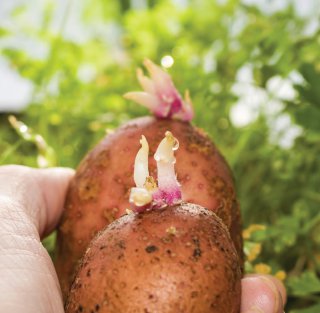
Potato Sprouts & Root Cuttings: This is a great precursor to the ubiquitous science projects you’ll soon be undertaking with your little gardener.
Choose a wide, low jar or glass,one for each rooting or sprout.Fill the jar with water.
Select a chubby potato, some branches of herbs such as rosemary or mint, or forsythia or willow twigs.
If you’re doing the potato, cut the spud in half. Poke toothpicks around the diameter, about 1/2 inch below the cut surface. The toothpicks will serve as scaffolding to hold the potato just immersed part way into the water. (Don’t let the potato fall into the water. It won’t sprout if it’s underwater.)
If you’re doing the twigs, simply put the bunch of twigs in the jar. They can be a variety, which makes it fun to identify which is the mint and which the willow.
Put the jar in a sunny window or shelf. Watch that enough water remains in the jar.
Within a week or so, you’ll begin to see green shoots pop up from the eyes of the potato, or small hair roots grow out from the immersed branches.
Over the next week, watch as the new growth transforms potato sprouts or branches. Drawing and talking aboutwhat is occurring makes a fun project even better.
Finally, you can plant thepotato and the branches inpots or in flowerbeds. They’ll grow into handsome, mature plants, no doubt.
Of course, there are lots of other activities to do with small children. You’ll find ones that are interesting to you as well as to your little gardeners.
3
Finally, a few thoughts on gardening with special needs children. Gardening helps improve everyone’s motor skills, creativity, and self-confidence. And that’s particularly important for people with special needs. When you’re gardening, stress and anxiety seem to melt away, and if there are other gardeners about, it’s easy to talk about the weather or the sprouting potatoes. These benefits are particularly important for those with developmental and learning disabilities.
Any garden project will work; only a few safety precautions and adjustments might be necessary.
Use tables to hold pots and flower boxes so gardeners in wheelchairs can work in the soil.
Work as a team; keep the ratio high; one helper to one gardener is best.
Avoid tight schedules and time constraints. Easy, repetitive tasks are perfect.
Use pictures to explain processes, and take lots of pictures of the projects.
Choose sturdy equipment and materials.
Avoid crowding the gardeners. Leave lots of space between each gardener’s plot.
When all the seeds are sown, and all the flowers planted, you and the children will have lots of shared laughs and solved problems to reflect upon—together.
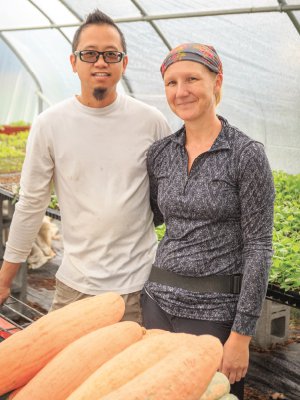

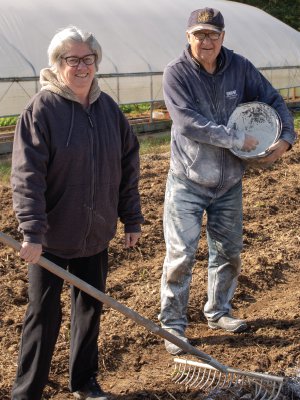





 Maryland’s Secretary of Agriculture, Calvert County Commissioner