For, lo, the winter is past, the rain is over and gone; the flowers appear on the earth; the time of the singing of birds is come, and the voice of the turtle is heard in our land.
I can’t assure you that the rains are past, and I’m not too sure I’ve ever heard a turtle’s voice, but these beautiful lines from Ecclesiastic’s “Song of Solomon” seem to me just the right note for this season in the garden. We’ve come through a long, difficult winter, and many of us have rushed early into our gardens to look and plan and dream of better seasons ahead.
We may have spent some of our daydreams imagining which bulbs will burst into bloom first and how lushly the camellia or the azalea’s blossoms will cover the bushes. But, let me turn your thoughts and imagination to an asset in your garden that may have been either overlooked or overused through the long winter past—your porch, deck, or patio. Perhaps now is the time to plan a few projects to freshen up that transitional space—half house, half garden. Through the winter months, you may have used your patio as a place to more safely meet friends or just breathe some fresh air. Or, maybe you preferred the cozy indoor spaces and left your deck chairs and tables covered and unused.
So, let me propose, first, we re-examine how you and your family and friends can comfortably enjoy your garden’s beauty from your porch, patio, or deck. Second, let’s consider ways to enhance your outdoor living areas. And finally, how can we bring our gardens into or nearer our porches and decks, bring Nature’s charms within easy reach.
Comfortable Outdoor Living
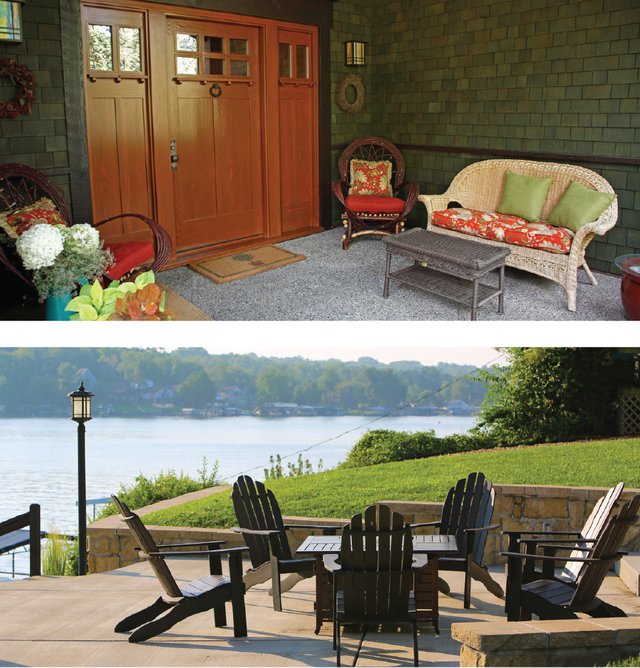
Depending on the style of your home, you may have a porch or porches and a deck. A patio is often part of a townhouse or condominium’s amenities. Sometimes, one or more of those structures, particularly a front porch, is overlooked and underutilized, its beauty and usefulness left untapped. So, looking first at a front porch, consider that it is more than a setting for the front door and steps. Think of your front porch as a gift box inviting guests into the beauty contained inside. The porch can set the tone for the residence—calm and sophisticated or casual and bustling. We’ve all read and seen videos on the importance of the front door, both for design and color. Perhaps what surrounds that front door can be equally inviting. The size of your front porch dictates your plans. The long porch facing the front yard and walkway flower beds is the perfect place for inviting neighbors and friends passing by to stop and chat. A few chairs and small table provide a conversation area and a great setting for a cascading fern or perky, pink begonia. For a comfy, old-fashioned look, install a porch swing suspended from the ceiling or on a glider-frame. A swing can be a handy way to turn away from the neighbor’s driveway and face the attractions of the front yard. Expand
If your front porch is little more than a stoop, don’t despair. Look at the porch as an architect might. The support for the roof—could there be columns rather than posts? Would adding a wrought iron railing add a touch of elegance? Here too, bring some of your garden’s beauty to that tiny porch. A tall urn filled with elegant plants or a low bowl overflowing with blooming flowers might sit invitingly beside the front door.
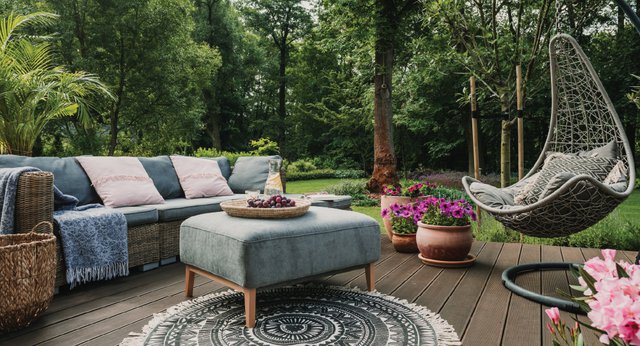
The back porch, patio, or deck will be much easier to update and freshen. Lighting is important, and easy string lights are great. But, you may want to consult an electrician about adding recessed lighting on the steps leading from the porch or deck. Seating is equally critical to a comfy outdoor area. Simple wood or vinyl chairs will work. You can choose cushions for added comfort. And, again, add some potted plants to your porch, patio, or deck. The porch has one important difference in that it’s usually roofed. So, if you’re choosing plants to bring on the porch, consider shade plants: coleus, sweet potato vine, vincas, hellebores, and impatiens. Lots of color there. And think about looking up! Hang some plants from the ceiling; bicycle hooks are sturdy and easy to install. Another option is to install a trellis on the porch or patio. Add rectangular pots beneath the trellis, and plant vines that will find their way up the trellis. This is great if you have some unsightly recycle cans or a neighbor’s garden shed to hide.
Expanding Your Outdoor Living Space
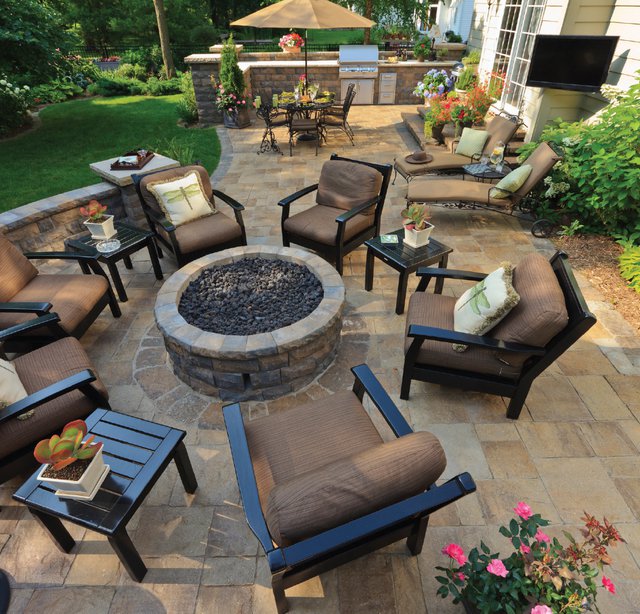
Even if your living space is interior, you might want to consider expanding out into lawn or garden. One simple way to do that is by creating a small seating area. This doesn’t have to be set up on a permanent slab or wooden platform. Your two chairs and small table might be placed, picturesquely, near the tall pine in your backyard, or next to a group of azaleas. If you wish, you could even pick up a few paving stones at the hardware store and put them under the chairs for stability. Or, why not have a small area set out with timber or brick borders and fill that square with gravel or crushed shell? This impromptu patio can be a charming gathering place. Expand
If you’re ready for a bigger project, why not consider screening-in your porch, patio, or deck? While the screens will lessen the breezes, they’ll also keep out the pesky mosquitoes, flies, and midges that plague us day-and-night. If you decide to go with screening the porch, add ceiling and pedestal fans to the area. They’ll keep the air moving.
Bringing the Garden onto the Porch, Patio, or Deck
In addition to the planters, trellises, and hanging pots we’ve already discussed, you can bring your garden onto the porch in other ways. It may be interesting to set up a little plant nursery on the porch. Start some seeds, they could be flowers or vegetables, even an avocado pit or pineapple top would be fun. As the weeks go by, you can enjoy watching the seedlings and shoots grow and strengthen. (And, if they don’t make it, just quietly dispose of them and start again.) You might want to frame a group of your garden photos to hang on the porch. You don’t need a wall, you could suspend them, one below the other, from the ceiling—a great conversation piece.
Whatever you decide to do, I hope you’ll enjoy the voice of the turtles and the touch of the breezes in your garden, as I will in mine.
After more than a year of pandemic quarantine, many of us are starved for contact, for interactions—a hug, a shared joke, and unmasked smiles. A pet is one way to safely share a hug and enjoy time with a friend—a dog or cat, fish or bird. But what about something or someone more substantial than that pet rabbit or gerbil? Have you thought about getting acquainted with a six foot-tall, 1,000-pound intelligent creature who can respond to your moods and will listen discretely to your secrets? Working with and caring for a horse could safely provide some of the emotional and physical warmth we’ve been craving. Horses and horseback riding might be the activity your family has been looking for, a sport you and/or your child can enjoy now. Riding provides opportunities for friendship, exercise, and skill development—no matter what your age. Sporting events, school athletics, and even the casual pickup game of baseball or basketball are dishearteningly dangerous during the pandemic. We’re left with a few “safe’ sports—singles tennis, single-handed sailing, and… horseback riding among them. Horses and riding can be both a hobby and a sport even during this pandemic.
Since it’s fun to have some basic knowledge of the “game” before you participate, here are a few bits of information about horses. You can toss these into a conversation to impress your friends; they may want to take up riding too:
Horses are herd animals: They feel more comfortable following a leader or moving in a group. As a rider, you will be the leader your horse will trust and follow; that will require confidence.
Horses are prey animals: That means they instinctively protect themselves and react to what they perceive as danger. As a rider, you must protect your mount by guiding and directing it to avoid danger and injury; that will require concentration and careful observation.
As of the 2014 survey by the Kentucky Equine Research Institute, over 80,000 horses reside in 16,000 locations in Maryland; 700 of are licensed stables. “Maryland claims to have more horses per square mile than any other state,” according to Equinews.
There are 2,000 miles of riding trails in Maryland. Lots of beautiful places to explore on horseback, from Calvert Cliffs to the Susquehanna River.
Symbiotic Relationship
To get started with this new activity, you and your child may want to learn to care for and interact with horses, perhaps volunteering at a local farm or stable. From that acquaintance, you can move on to horseback riding where the rider develops skills like self-control and patience, which are prized in most sports. Teacher and mother of two, Megan Ells-Perry is a skilled rider and horse trainer. She has spent her career working with children in the classroom and with horses on the farm. “Working with a horse requires that I regulate my own emotions. The horse senses if I’m tense or distracted,” she says. “Horses live in the moment. They’re very responsive to the people who are caring for, handling, or riding them. If I’m riding, or working a horse from the ground, I have to stay in the present moment, just as my horse is. The horse needs me to stay grounded, in the moment. That’s an important life skill that I need to practice.”
In addition to helping us relax and regulate our feelings, there are other skills we can cultivate as we take up riding. Like other sports, riding demands the synchronization of mind and body to achieve mastery. Physical balance must be combined with mental concentration. Cooperation between the horse and rider must be practiced, the way a quarterback or a captain of a swim team unites the team under her or his leadership. And, the rider must learn strategic planning, thinking ahead as to the path, the pace, and the goal for each riding experience. Riders learn to practice high-level observation and problem solving. For example, trail riding demands the rider anticipate dangers the horse might encounter such as uneven ground or startling distractions.
Guiding a horse through a jumper’s course takes strength on the part of both horse and rider, as well as balance, coordination, and experience. In any type of riding, the rider and horse must be fully aware of one another’s emotional state. Confidence on the part of the rider encourages the horse to obey and trust the rider’s directions so they work as a team. Attentiveness is also critical; if a rider’s attention strays from the horse and the course at hand, the ride will falter. Expand
Training to be intensely focused is an important skill for any sport, and particularly for riders. Controlling and directing the animal requires concentration at every moment. The rider must synchronize his or her body with the horse’s, and command that animal although that animal is many times larger and strong-willed. Essential to the rider’s success is teamwork—respect between the rider and her or his mount. While other sports may require coordination with team members on a defined playing field, riding demands coordination with the team member who cannot see you, but is propelling you through the event. You must call the plays, be the strategist for both of you. Without your guidance and the horse’s cooperation, success will elude you.
Learning and practicing sportsmanship is a valued quality in athletic events, and particularly so in horseback riding. Sportsmanship recognizes the importance of generous, honest, and fair behavior, treating others with respect—particularly that 1,000-pound animal that will carry you through the event safely and successfully. As the rider becomes experienced, she or he learns the rules and acquires skills and experience. Once the rider learns the elements and rules of dressage or cross-country or pleasure riding, he or she also figures out that the well-being of the rider and mount is the most important goal.
Like most sports, you’ll want to be sure the rider enjoys spending time with teammates, getting to know them, becoming familiar with the unspoken signals of teamwork. If you’re a rider, your teammate is your horse. The rider and the horse are a team, each with its own unique role to play in the sport. If you or your child is not sure horseback riding is the sport for him or her, volunteering at a horse rescue farm provides an opportunity to discover if there’s an affinity there—before you invest in expensive equipment and lessons. There are a variety of horse recue organizations in Maryland. These organizations are always looking for volunteers to help care for the horses. You might be shown how to groom, feed, or exercise the horses, giving you the opportunity to discover whether you are comfortable and enjoy working with horses. (Usually, volunteers must be teens or older.)
Stable Pursuit
The next level of involvement with the sport of horseback riding may be selecting a place to begin your training. The type of riding you are to learn may depend on the instructor and stable or barn where you take lessons. Owning a horse is seldom a first step for novice riders. Just as a competitive swimmer seldom begins by building a pool, a rider may wait years to buy her or his own horse. Instead, investing in riding lessons allows you to use a horse owned by the stable offering the lessons. Riding lessons may seem expensive, but you are getting the use of an expensive horse and the equipment needed to ride that horse, along with the instructor’s experience and time. There are many stables across Maryland that offer lessons as well as other horse-related services. It’s wise to get recommendations from friends, if possible, or to research your options on the internet, noting the endorsements included on a stable’s website.
There are some basic considerations when you are choosing a riding instructor from those available at the stable where you decide to ride. You can expect to be instructed in three areas: horse care, training (yourself and the horse), and riding. When you meet with an instructor be prepared to ask a few questions. See how she or he responds to you. Is she comfortable being questioned? Does he give answers that are clear to you? Is there a good feeling established between you? Trust your judgement. You or your child will get much more out of riding lessons if you and the instructor get along. You might even check to see if the instructor is certified.
There are two common certifications, either the American Riding Instructors Association (ARIA) or the Certified Horsemanship Association (CHA). Finally, ask about costs. You don’t want any surprises there. Are you paying for a lesson of a specific length? Will you pay for a block of lessons? Must those lessons be taken before an expiration date? Are there stated goals for the lessons? What equipment does the stable provide and what equipment is your responsibility? Remember, as with any sport, you or your child should enjoy learning; the training should be fun. If you get an uncomfortable feeling while you’re talking with a particular instructor, it may be best to keep looking. Interview a few other instructors at other stables until you find someone who makes you feel comfortable and enthusiastic about riding lessons. Expand
Saddle Up
Once you’ve found a place to learn to ride, you’ll be ready to invest in the essential equipment. Your instructor may give you a list of equipment suggestions, but you may want to do some research, so you have an idea of your investment before getting too deeply committed to the sport. Along with the horse you ride and that horse’s tack (saddle, bridle, etc.) that are owned by the stable, the clothes you purchase and wear are important if you are to enjoy riding and remain safe. The ridinghelmet is critical and should be new. (Old helmets may be damaged or brittle, unable to provide the essential safeguards you will need.) Look on the helmet’s label for “SEI Certified.” The Safety Equipment Institute (SEI) monitors safety equipment for most sports.
Next in importance are the ridingboots. They don’t have to be elegant leather, but they should have only slight tread and half-inch heels. The heels are vital to keeping your feet from sliding out of the stirrups. (Winter boots won’t work, since they have deep tread for snow and ice.) A bright colored vest and shirt will help the rider stand out against the grays, browns, and greens of the ring and field. (Of course, dressage has very specific attire for competitive events.) Pants and undergarments should be chosen for comfort. Two-way stretch is useful for riding britches, though jeans are acceptable; avoid baggy styles that may bunch and rub against the skin. Close-fitting gloves will help protect your hands as you grasp the leather reins. That’s about all you need.
In this difficult time of isolation and loss, Ells-Perry points out the value of horses and riding as therapy. Horseback riding and simply spending time with these intelligent, empathic, beautiful creatures can comfort us. As an elementary school teacher, Ells-Perry has worked with children with special needs such as Autism, ADHD, ADD, and Asperger’s Syndrome. She and her husband, attorney George Perry, have raised their children around horses. “Everyone has personal challenges, especially now,” she says. “Engaging with a horse brings a lot of joy, builds confidence, patience, and self-control. Horses don’t care if your highlights have grown out or you don’t feel like talking. Working with a horse decreases hyperactivity and develops sustained attention…A horse provides immediate feedback. If you stop paying attention to the horse, it stops paying attention to you—simple to see and understand.” Ells-Perry points to Maryland Therapeutic Riding located in Crownsville, which has real success helping special needs children, and even veterans, through horses and horseback riding. (horsesthatheal.org)
Finally, there is simply joy in spending time with horses and riding. Ells-Perry observes, “Horses read your intent; they’re sensitive to your emotional state. We can all use some empathy right now.” If all these skills and qualities seem worthwhile to you, you may be ready to try horseback riding as your hobby or sport of choice. Perhaps you’re looking for a safe sport for your child, one that encourages all the fine character traits of competitive sports but keeps your young athlete out of the six-foot danger zone and away from unmasked competitors. Saddle up!
For, lo, the winter is past, the rain is over and gone; the flowers appear on the earth; the time of the singing of birds is come, and the voice of the turtle is heard in our land.
I can’t assure you that the rains are past, and I’m not too sure I’ve ever heard a turtle’s voice, but these beautiful lines from Ecclesiastic’s “Song of Solomon” seem to me just the right note for this season in the garden. We’ve come through a long, difficult winter, and many of us have rushed early into our gardens to look and plan and dream of better seasons ahead.
We may have spent some of our daydreams imagining which bulbs will burst into bloom first and how lushly the camellia or the azalea’s blossoms will cover the bushes. But, let me turn your thoughts and imagination to an asset in your garden that may have been either overlooked or overused through the long winter past—your porch, deck, or patio. Perhaps now is the time to plan a few projects to freshen up that transitional space—half house, half garden. Through the winter months, you may have used your patio as a place to more safely meet friends or just breathe some fresh air. Or, maybe you preferred the cozy indoor spaces and left your deck chairs and tables covered and unused.
So, let me propose, first, we re-examine how you and your family and friends can comfortably enjoy your garden’s beauty from your porch, patio, or deck. Second, let’s consider ways to enhance your outdoor living areas. And finally, how can we bring our gardens into or nearer our porches and decks, bring Nature’s charms within easy reach.
Comfortable Outdoor Living
Depending on the style of your home, you may have a porch or porches and a deck. A patio is often part of a townhouse or condominium’s amenities. Sometimes, one or more of those structures, particularly a front porch, is overlooked and underutilized, its beauty and usefulness left untapped. So, looking first at a front porch, consider that it is more than a setting for the front door and steps. Think of your front porch as a gift box inviting guests into the beauty contained inside. The porch can set the tone for the residence—calm and sophisticated or casual and bustling. We’ve all read and seen videos on the importance of the front door, both for design and color. Perhaps what surrounds that front door can be equally inviting. The size of your front porch dictates your plans. The long porch facing the front yard and walkway flower beds is the perfect place for inviting neighbors and friends passing by to stop and chat. A few chairs and small table provide a conversation area and a great setting for a cascading fern or perky, pink begonia. For a comfy, old-fashioned look, install a porch swing suspended from the ceiling or on a glider-frame. A swing can be a handy way to turn away from the neighbor’s driveway and face the attractions of the front yard. Expand
If your front porch is little more than a stoop, don’t despair. Look at the porch as an architect might. The support for the roof—could there be columns rather than posts? Would adding a wrought iron railing add a touch of elegance? Here too, bring some of your garden’s beauty to that tiny porch. A tall urn filled with elegant plants or a low bowl overflowing with blooming flowers might sit invitingly beside the front door.
The back porch, patio, or deck will be much easier to update and freshen. Lighting is important, and easy string lights are great. But, you may want to consult an electrician about adding recessed lighting on the steps leading from the porch or deck. Seating is equally critical to a comfy outdoor area. Simple wood or vinyl chairs will work. You can choose cushions for added comfort. And, again, add some potted plants to your porch, patio, or deck. The porch has one important difference in that it’s usually roofed. So, if you’re choosing plants to bring on the porch, consider shade plants: coleus, sweet potato vine, vincas, hellebores, and impatiens. Lots of color there. And think about looking up! Hang some plants from the ceiling; bicycle hooks are sturdy and easy to install. Another option is to install a trellis on the porch or patio. Add rectangular pots beneath the trellis, and plant vines that will find their way up the trellis. This is great if you have some unsightly recycle cans or a neighbor’s garden shed to hide.
Expanding Your Outdoor Living Space
Even if your living space is interior, you might want to consider expanding out into lawn or garden. One simple way to do that is by creating a small seating area. This doesn’t have to be set up on a permanent slab or wooden platform. Your two chairs and small table might be placed, picturesquely, near the tall pine in your backyard, or next to a group of azaleas. If you wish, you could even pick up a few paving stones at the hardware store and put them under the chairs for stability. Or, why not have a small area set out with timber or brick borders and fill that square with gravel or crushed shell? This impromptu patio can be a charming gathering place. Expand
If you’re ready for a bigger project, why not consider screening-in your porch, patio, or deck? While the screens will lessen the breezes, they’ll also keep out the pesky mosquitoes, flies, and midges that plague us day-and-night. If you decide to go with screening the porch, add ceiling and pedestal fans to the area. They’ll keep the air moving.
Bringing the Garden onto the Porch, Patio, or Deck
In addition to the planters, trellises, and hanging pots we’ve already discussed, you can bring your garden onto the porch in other ways. It may be interesting to set up a little plant nursery on the porch. Start some seeds, they could be flowers or vegetables, even an avocado pit or pineapple top would be fun. As the weeks go by, you can enjoy watching the seedlings and shoots grow and strengthen. (And, if they don’t make it, just quietly dispose of them and start again.) You might want to frame a group of your garden photos to hang on the porch. You don’t need a wall, you could suspend them, one below the other, from the ceiling—a great conversation piece.
Whatever you decide to do, I hope you’ll enjoy the voice of the turtles and the touch of the breezes in your garden, as I will in mine.
Wandering through three Annapolis gardens on a journey through time
Gardens are more than noble trees, graceful paths, and colorful flowers. Heart-wrenching tales of love, hate, suffering, and ultimately death lay beneath and even within a garden’s seemingly innocent beauty. Since its founding in 1649, Annapolis has served as much more than a bustling port; its attraction as a cultural and social hub became the backdrop for many of America’s most important political events that impacted this city down to its roots, which have grown deep and strong. Along our streets and past its gardens have strolled some of the great names in American history: George Washington, Thomas Jefferson, James Madison, James Monroe, Alexander Hamilton, Charles Carroll, and Samuel Chase, among many others. Their homes in other parts of the country reflect a deep commitment to architectural style and impeccable gardening, and the places they and others lived while in Annapolis are no different.
Within its current boundaries, at least a hundred buildings dating back to the 1700s still stand, mostly on their original plots, surrounded by some of the same trees, boxwoods and rhododendrons that gave these structures their indelible character more than 300 years ago. History is not merely a chronology of brick-and-mortar-based events; the very soil, trees, and plants that have been nurtured and protected for decades—in some cases, centuries—have stories all their own. Perhaps nowhere is that more evident than within the green leaves and above the deep roots of the Government House Gardens, the Annapolis campus of St. John’s College, and the Charles Carroll House Gardens.
Like politics, horticulture has an extensive and fascinating history. Enclosed gardens have been uncovered dating back to approximately 10,000 BC. While many famously stood out as unique, such as the Hanging Gardens of Babylon (900 BC)—one of the Seven Wonders of the Ancient World—and Ptolemy II’s “Garden of Egypt,” cultivated on land reclaimed by draining Lake Moeris (300 BC) The Romans created garden-design manuals in order to replicate their rather sophisticated methods. Ever since the genesis of humans sculpting nature in order to impose a cultural stamp on their surroundings, ornamental gardens have generally exhibited four prevailing characteristics or themes: First, an expression of beauty; second, a display of a society’s taste and style; third, an expression of philosophy, such a Classicism or Romanticism; and fourth, a display of status. Expand
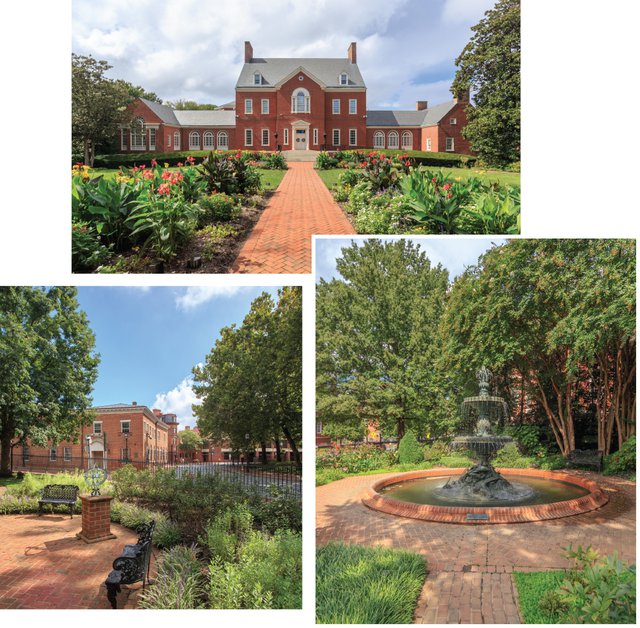
The Government House and Gardens are home to Maryland’s Governor and First Lady, and boast lush magnolias, willow oaks, yew, firs, boxwood hedges, azaleas, and rhododendrons.
Our first stop is the magnificent Government House and Gardens, the residence of Maryland’s governor since Oden Bowie in 1870, the year it was completed. Situated on land between Church Circle and State Circle—the location of the Maryland State House—Government House is graced by two acres of luxuriant gardens behind an elegantly wrought iron fence and several original gates surrounding the property; while inside, the wrought iron benches placed selectively throughout the grove date back to 1924.
The layout “creates a garden to be enjoyed by the passersby,” according to Jay Graham, the landscape architect. Lush magnolias, willow oaks, yew, firs, boxwood hedges, azaleas, and rhododendrons are visible along much of the perimeter; these specimens were carefully chosen to illustrate the plants most commonly found in Maryland. Three beehives maintained within the flowerbed garden produce the famous “Governor’s Gold” honey, a local delicacy.
From 1935–36, a major facelift of the building took place along with a final phase of additional construction in 1947 that gave the home its current appearance. In 1990, the century-old gardens underwent another restoration when Governor William Donald Schaeffer and his first lady, Hilda Mae Snoops, sought to remake the outdoor courtyard into the focal point of the mansion. Jay Graham worked with sculptor Lyle Beddes to design a Victorian-style “Annapolis Fountain” incorporating sculptures of animals and plants identified with the Chesapeake Bay, such as blue crabs and terrapins, and Maryland-specific references such as the Baltimore Orioles. The fountain was erected where it could be viewed from Church Circle, St. Anne’s Episcopal Church, and the state legislative offices. In keeping with Maryland’s tireless efforts to be financially and ecologically efficient, the privately funded fountain recycles the water it uses. Within the garden, the original paths were reimagined using a butterfly pattern inspired by the walkways of Thomas Jefferson’s Monticello. These paths guide the visitor along the formal flowerbeds planted in cannas, salvia, vinca, and the ever-popular marigolds and petunias.
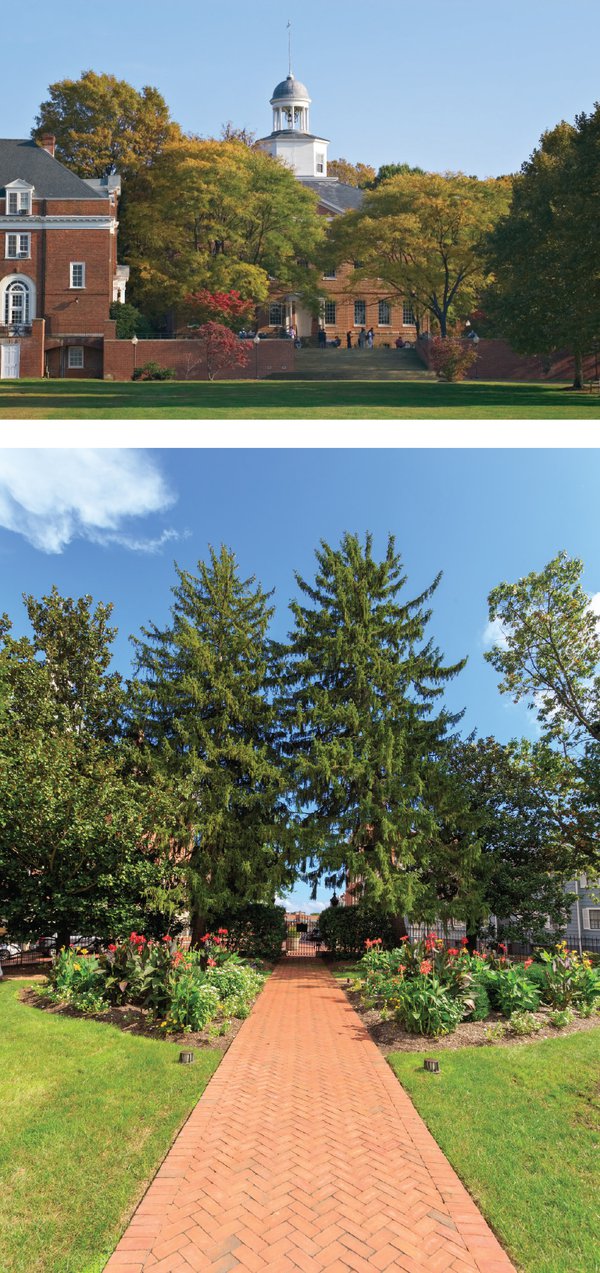
St. John’s College campus sits on 35 acres and played an important role during the Revolutionary War, as both a meeting site for the Sons of Liberty (at the Liberty Tree, which sadly fell in 1999 during Hurricane Floyd) and hospital encampment for thousands of French soldiers who fought for the American cause (a bas relief monument still stands on campus honoring the French who died on site).
Our second stop, the Annapolis campus of St. John’s College, sits on 35 beautiful acres and is just a few blocks away from Government House. In 1696, the King William’s School was established where St. John’s College now stands. On the grounds stood the now-famous Annapolis Liberty Tree, a noble tulip poplar, and one of many Liberty Trees scattered throughout the 13 colonies that served as meeting sites for the “Sons of Liberty,” disgruntled colonists seeking redress, or “liberty,” from the injustices of English rule. Of particular concern to them was the Stamp Act of 1765 that taxed all printed material in the colonies. By 1766, two famous Annapolitans joined the ranks of the Sons of Liberty—Samuel Chase and William Paca, both of whom eventually joined Charles Carroll as signatories of the Declaration of Independence in 1776. What treasonous conversations must have gone on beneath that 120-foot tall tree.
In 1781—five months after the Marquis de Lafayette encamped with American soldiers in Annapolis from March 12 to April 6—roughly 4,000 French soldiers fighting alongside the United States set up a military hospital on the school’s grounds, not far from the Liberty Tree. The French lost over a thousand men during America’s fight for independence, with dozens of them buried right under the campus ballfields between the main office buildings and College Creek. Little do today’s students know that when they spread out their spring blankets on the grass to catch up on their reading while soaking up the sun, they could be sitting above makeshift graves containing French soldiers who died so that America might be free. The hospital’s survivors soon marched on to Yorktown to fight with General George Washington’s Continental Army that forced the British to surrender on October 19, 1781.
Only two years later, in 1783, the Annapolis Liberty Tree again stood witness to history as George Washington resigned his military commission before Congress inside the Maryland State House. In 1911, the graves of the French soldiers were honored with a monument erected along the banks of College Creek. The bas relief of a mourning maiden stands on a plinth, nestled in a grotto of tall firs and redbuds, surrounded by honeysuckle and a bed of perennial flowers. While the monument still overlooks the sunny, campus meadow, the beloved Liberty Tree that stood sentinel over those unmarked graves for over 200 years, succumbed to Hurricane Floyd in 1999.
There is, however, a happy footnote to the Liberty Tree’s demise; in 1889, St. John’s College had arborists create a scion, a tiny grafted tree with identical DNA that was planted on the college’s grounds. Since then, over 200 seedlings grown from seeds taken from the 1889 scion have been planted throughout the state and, once flourishing, sold to the public so that Marylanders can own and replant a piece of American history right in their own gardens. This way, Annapolis’ Liberty Tree lives on, as does the nation it represented.
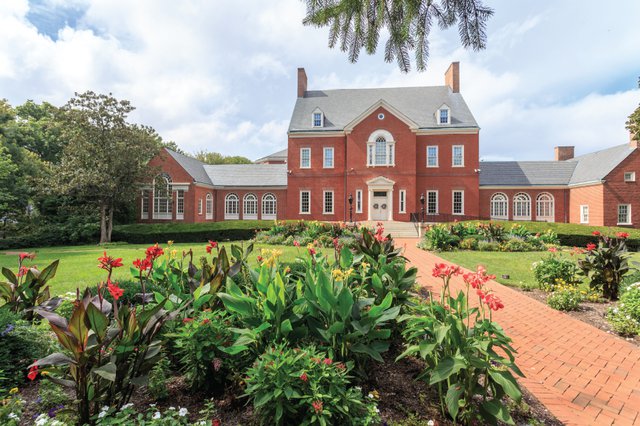
The Charles Carroll House Gardens (seen in the foreground with two distinctive chimneys) features vast, terraced gardens, hedges, and trees. The Colonial-era mansion now shares is location on the bank of Spa Creek with St. Mary’s Parish and schools (which also manages the property).
Our third and final stop is the Charles Carroll House Gardens, on the banks of Spa Creek. The plot of land on which today’s house and garden stand began as a modest farm with a small dwelling when purchased in 1687 by the first of four Charles Carrolls. He lived in three separate homes on the site, the last of which, constructed by combining the first two, contained 29 rooms and served as the birthplace, in 1737, for Charles Carroll of Carrollton, the son of Charles Carroll of Annapolis and the grandson of Charles Carroll the Settler. The expansion of the house continued until 1790, at which time the imposing four-story brick structure now visible was completed.
Charles Carroll of Carrollton, one of Maryland’s four signers of the Declaration of Independence, became one of the richest landowners in the colonies. Even today, his home and gardens reflect his wealth, taste, and style. He confidently demonstrated the qualities of leadership both in life and on land, transforming his home into a palatial estate by his affluence and stature. Carroll’s grand design had two components: First, he wanted the view of Spa Creek and the waterfront below his house to appear closer to the mansion; second, he wanted the Carroll House to seem even bigger when looking toward it from the water. The scale was everything, so to achieve these goals, he enlisted optical illusions; geometric designs that fool the eye.
Over a thousand West African slaves owned by his family implemented Carroll’s architectural vision by carving five elegant, terraced gardens arranged in an abutting triangular design using the width of the grand, brick house as the base of the highest right triangle. The original, 400-foot-long stone seawall—still there today—supported the layered components. As a result, the terraced gardens cascade from the top level, bringing the Creek into view “closer” to the home; while, looking toward the estate from Spa Creek, the mansion appeared farther away and thus much larger than it was in reality.
Archeological digs in the gardens and the house’s foundations have revealed religious and social artifacts that once were cherished possessions of the enslaved laborers who brought Carroll’s dream to life. The beauty of the triangular terraces today remains, in many ways, a tribute to not only their unimaginable suffering as slaves but also to their impressive landscaping skills.
Carroll’s architectural sleight-of-hand served another purpose; it augmented the property’s strengths while disguising its deficiencies. According to the Architectural Institute of America, “The four decreasing widths of the terraces and the retaining wall hide the ground floor, the least attractive part of the house, and distort the distance to the house…From inside the gardens, foreshortening of the terraces and framing of the waterside…make the distant shore look closer, opening the views between the house and the far shore of Spa Creek.”
Today, while traveling by boat beneath the Eastport Bridge or by car over it, gaze to the west; the Carroll House stands shoulder to shoulder with St. Mary’s Catholic Church. Look carefully, and the illusions remain—the vast, terraced lawns draw the eye toward the distant mansion.
Charles Carroll’s home is one of only 15 owned by signers of the Declaration of Independence that still stand. Not only did the unique layout of the gardens reflect Carroll’s wealth and importance, the house and its gardens also symbolize how much he was willing to sacrifice for the cause of freedom, and by extension, how much he would not have accomplished had the British won. After the Revolutionary War ended, Carroll went on to serve simultaneously in both the Maryland legislature and the United States House of Representatives from 1789–92. He laid the cornerstone of the Baltimore and Ohio Railroad in 1827. Finally, at 91 years of age, he was invited to attend the first Democratic Party convention that nominated Andrew Jackson for re-election. (Carroll didn’t attend and died shortly after that). In 1825, his son, Charles Carroll of Homewood, died. After the war, his remains were interred in the gardens, the only Carroll to be buried on the site.
The property was passed down from Charles Carroll of Homewood to his daughter and granddaughters until it was conveyed to the Redemptorists in 1852, after which it began a series of religious affiliations that continue to this day (the home has been managed since 2017 by the St. Mary’s Parish). During this time, the home lost the original frame house that dated back to 1687 and underwent a series of major exterior and interior renovations from 1983 to 2001 as well as another round of construction in recent years. The garden has similarly undergone a continuous transformation, but even today it continues to reflect the distinct personality of its original family.
Seldom does one encounter so much history and beauty in such a relatively short walk. How many times have you walked from Spa Creek to College Creek, right past the Carroll House, the Government House, and St. John’s College, without realizing what truly momentous events took place there? The next time you stroll this revolutionary path, pause for a moment and allow yourself to be mesmerized by the dazzling array of plants, trees, shrubs, and mosses lying in perfectly manicured gardens on the grounds of some of this city’s great historical properties, beckoning to residents and tourists alike.
You see, the compelling history of Annapolis does not exist solely in its physical structures—its churches, houses, inns, taverns, streets, schools, and parks. Often overlooked, but equally important, is the history on and in the land. While creating breathtaking gardens takes time and effort, these gardens remind us of the interdependence of humans and nature. Sometimes we learn a great deal from what is removed from the land, such as historical artifacts, while other times, the lessons of time are taught by what remains living on top of the property. It is up to all of us to continue to preserve the deep roots of our nation’s past, found not only in the history books but still growing in the soil.
Now that it’s beginning to look less like winter and more like spring, like me, you may be eager to get out in the garden and figure out what needs cleaning up and what needs settling down. You might even be putting together a list of gardening tasks—some tasks for you, some for other family members, and some for those folks who show up in their big truck with lots of powerful gardening tools and muscles, lots of muscles.
We’ve all been through a lot these last twelve months, and you’re probably waiting impatiently for changes, such as less time stuck indoors at home and more opportunities to get outside for exercise and fun. And, you may also be eager for some things to return to “normal.”
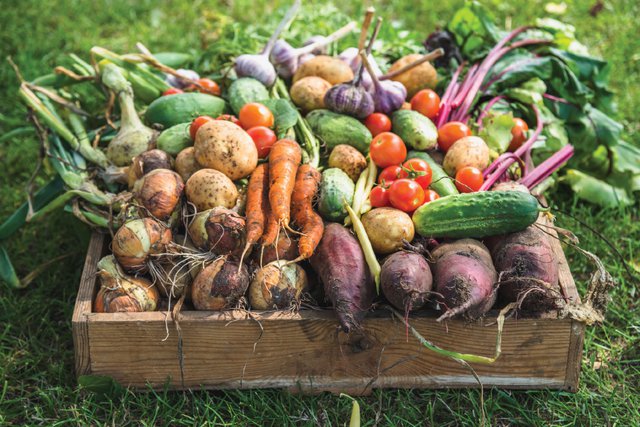
I’m going to try adding a new normal to my garden this year—vegetables. Maybe you’ll want to try that too. Yes, we’ve all grown a tomato plant in a pot on the patio. You may even have started an avocado plant from a pit or grown a tiny pineapple. But let’s get serious here. How about growing some crunchy vegetables in your garden? We’ve all learned how important self-reliance is, so why not feed yourself some crisp, sweet carrots and tangy radishes? I’m picturing myself wandering outdoors in June and August and even October to harvest my own pretty pea pods and an embarrassingly plump zucchini or two. Doesn’t that sound great?
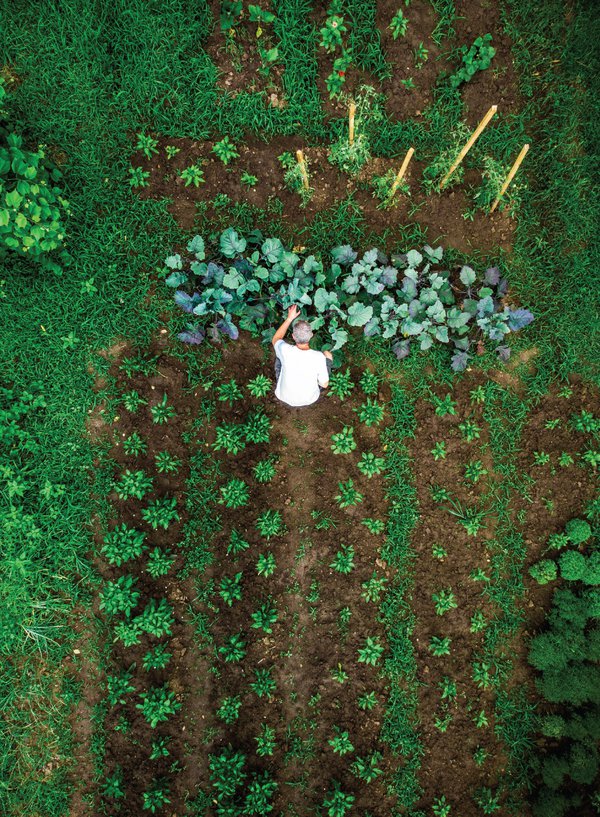
So, if you’re willing to give this a go, let’s begin by figuring out location; where in our lovely flower beds can we make room for peppers, lettuce, and cabbage? (That’s right; I’m not suggesting we dig up our pretty hostas and lush roses. No need for long, tidy rows that break the symmetry of your garden’s design. We’ll plant veggies among and around the flowers and shrubs. We can even focus on planters and pots for our aspiring veggies.) Sunlight is the most important element if you want lush, juicy, plentiful vegetables. We’re going to have to carve out spots for planting vegetables or placing planters and pots in bright sunlight. Expand
Next, we’ll need to be sure those sunny locations we’ve identified have access to water, preferably easy access. Will the sprinklers reach the bean vines and carrots? Finally, will your vegetables be reasonably well protected? Growing vegetables are vulnerable to buffeting winds, careless footsteps, and curious dogs and cats, hungry rabbits, and deer. You’ll want to think about how you might protect your ripening vegetables from these dangers and marauders.
If you’re going to try containers for your vegetable garden, you’ll want to consider the same issues of location. But, you’ll have the advantage of portability. If the spots you choose seem not to work for your young plants, move the pots and planters. If you try vining vegetables, like beans and peas in hanging pots, you can even move them during the day to capture the best light. (A handy tip about those beautiful, big planters and urns: instead of filling them top-to-bottom with soil, fill the bottom third of the container with those Styrofoam peanuts and then pour the soil over them. The pot will be lighter and you’ll have better ventilation and drainage for your plants’ roots—particularly helpful if you’re growing root vegetables.)
Okay, now that we’ve figured out where we’re going to plant vegetables, we have to figure out when to plant them. Timing is, as usual, vital. Most vegetables are annuals; they will produce for only one growing season. New seeds and cuttings are necessary each spring. A few, however, are perennials; watercress, rhubarb, asparagus, and garlic will send up new growth each spring, as long as the winters are not too harsh. Herbs are also perennials. (Another handy hint: Herbs are enthusiastic members of the garden. They will usually take off, grow like weeds, and come back bigger, but not necessarily better, with each growing season. I recommend relegating your herbs, if you grow them, to pots and planters, where you can keep a close eye on them. If they get rangy or woody, cut them down-to-size; they’ll thank you for it with tastier leaves and buds.)
And looking deeper at timing, perennial vegetables fall into one of two varieties—“cool season” or “warm season” plants. This refers to when the seeds or starter plants are set in the soil. When the earth is still cool, not frozen or very cold, lettuce, spinach, carrot, and radishes can be planted. Tomatoes, peppers, melons, and cucumbers are warm season vegetables and do well when they are set into soil that has been warmed and quickened with awakening worms and root systems.
So, we have perennial and annual, warm and cool season plantings, and the third element of timing is maturation—of particular interest as you anticipate your lushes veggies on your table. You can look up the number of weeks or months it will take a given vegetable to ripen. Baby leaf lettuce and radishes will be ready to eat in approximately 25 days. Tomatoes, melons, and squash take 2 or 3 months before they can be harvested. When you know the maturation time for the vegetables you’re planting, you can plant in two-week intervals, so you’re not harvesting all the tomatoes or all the cabbage at the same time.
Now, I’m going to close this little pep talk on a fun note. Heirloom and unusual vegetable seeds and starter plants are now easily available. There’s a lovely Chinese Pink Celery that’s sweet and crunchy. Or, you might have fun planting chartreuse and purple striped Dragon Tongue Bush Beans. One of my favorites is Black Aztec corn, which has beautiful, blue kernels, and makes delicious cornmeal or a stunning decorative addition to your fall arrangements. And while we’re considering fun, edible plants, remember you can throw in some edible flowers to accent your garden and garnish your dinner plates. Marigolds, Calendula, Viola, and Nasturtiums are hardy, little ladies and easy to cultivate.
We’ll have to compare notes on the success of our vegetable-growing experiments. Our summer tables will be loaded with goodies; we’ll be “growing local” as well as “buying local” this year.







 Opening Lines