You may be interested in hearing readings from the poems in our collection. Each of us reads several poems, and we’re in alphabetical order, so my reading comes first after the introduction. https://youtu.be/7nQqEv5X3Jc
If you’re like me, your smart phone is filled with pictures of the dog with her new toy, the kids at the beach, and so much more. But, if you look back over the last year, or even two or three years, how many pictures do you have of your garden in its varied splendor? The splash of daffodils along the side fence? Those crazy petunias that kept blooming for months? Your spindly oak sapling that’s getting bigger and lovelier each year?
With these objectives and probably many others that you can think of, here are some handy tips for making your garden’s photographs particularly lovely and useful.
First, let me share a few photographer’s tips that help get the best photo in the moment. “Good lighting” for outdoor photography is not bright sunlight. Overcast skies or early morning and late afternoon are better for pictures. The muted, softer light produces a better image. Hint: If you plan ahead, take a sheet of tin foil with you. You may be able to set it up as a reflector onto particular blooms for dramatic effect.
Frame your picture. Choose a particular plant or bloom as your focal point. Hold your finger on the screen for just a few seconds, and your phone’s camera will focus for you. Think about textures in a photograph. Try to show the fuzziness of a stem, the rough bark or feathery leaf. Look at the structure of plants as well as the form. Perhaps the unusual angle of a stem or branch, or the contrast of a vining plant with a lush one will make a more interesting photo.
Here are some tips for artistic pictures to be used later for cards and collages. Plan to take a lot of pictures; don’t limit yourself to one or two shots. You can later discard the images that don’t meet your expectations. Take pictures from different angles: can you go to an upper story or balcony and shoot down into your garden? How about a different bird’s eye view; lie down and shoot pictures up among the rose bushes or through the lavender plants?
Next, using your photographs as a record to help you record changes and areas. Consider a telescoping series of photos. Begin with a close-up of one plant, then move the lens focus to include those plants that surround the one plant. Then, capture the flower bed or portion of the garden. And finally, take a more panoramic photo that sets that single plant and its neighboring plants in the larger context of the garden.
Create a seasonal collage. Choose some key plants—perhaps even draw a little map so you remember where you are focusing each set of pictures—perhaps one series from the deck looking out, another series from the garden gate looking in. Then, take a few pictures from each vantage point during each season; you might even decide to take the pictures once-a-month. Next winter, as you shoot your last series, you can arrange all the photos from each vantage point, and note the particular beauty of that season or month.
You may use your photos to monitor a new plant you’ve just added to your garden. Initially, take pictures of the plant at different times of day so you can understand how light hits the plant. Then, take photos week-by-week or month-by-month as it flourishes in your garden. And, if it doesn’t flourish, you’ll have the images to share with a fellow gardener or master gardener who can help you figure out how to treat the plant.
Finally, your garden photographs provide a handy reminder or to-do list. Jotting down a note-to-self on a scrap of paper, a seed packet, or even a diary you carry with you, may not work out well. I have often searched through my little note pad trying to find my note about moving that Japonica or when I’d fertilized that lovely Bleeding Heart near the front door. Using pictures as reminders may work better.
Make folders on your smart phone photo application labeled with “Reminders for Spring,” “Reminders for Summer,” etc. Then, when you see that pink azalea needs to be moved after it stops blooming, or the mums will have to be pruned in early June for a better shape in September, take pictures and drop them into the “Summer” folder. If you’re like me, you always have your phone in your jeans’ pocket, so you can grab it for a photograph. A quick snap of the camera is much easier than pen and paper in the garden.
You might also create a folder titled “Inspiration.” Here’s where you’ll put those photos you took at a public garden of a cluster of Coreopsis and Cornflowers or the pretty Hibiscus you pass on your morning walk. The phone-camera will even date the pictures, so when you go into your inspiration folder, you can see exactly when you captured these lovelies at their best.
As always, you’ll come up with more ideas that suit your needs as you begin to think of your smart phone’s camera as another essential gardening tool.
Garden photos can serve many purposes. Among them are:
A fresh viewpoint on your garden—both the familiar and the overlooked beauty there.
A record of the growth and expansion of particular plants and trees—throughout the year and over the years.
A reminder of plants that need to be moved or trimmed or receive first aid at some later date.
A source of beauty to use as notecards, greeting cards, and other original creations.
What a glorious time of year in our gardens. Last year’s plantings and pruning, and our early spring feeding and watering, are repaying us with flourishing plants and voluptuous blooms. The hammock and the chaise are calling us; Relax, put your feet up. (Maybe you’re doing so as you read this). Of course, we understand summer also brings heat and humidity, even in our gardens, and on our decks and patios. But let me offer, at least, a partial remedy for summer’s sticky heat. I suggest you apply a bit of magic, a few tricks that may enable you and your family to laze about in the garden even in the heat of July and August. We can take a tip from successful magicians. They distract their audiences, redirecting attention from what is not to be seen—or in our case, felt.
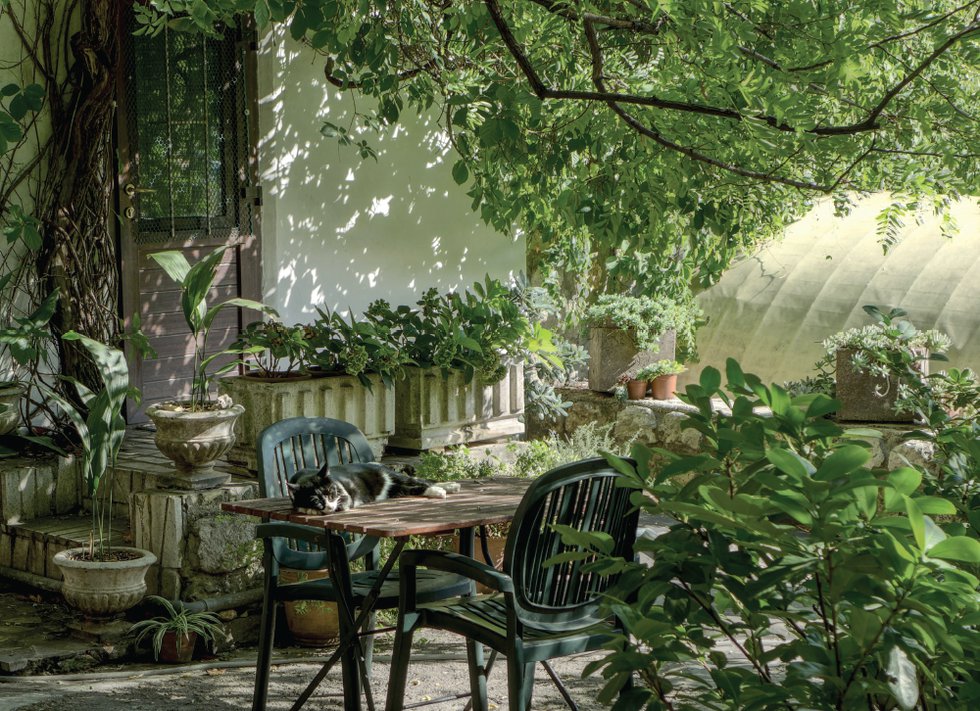
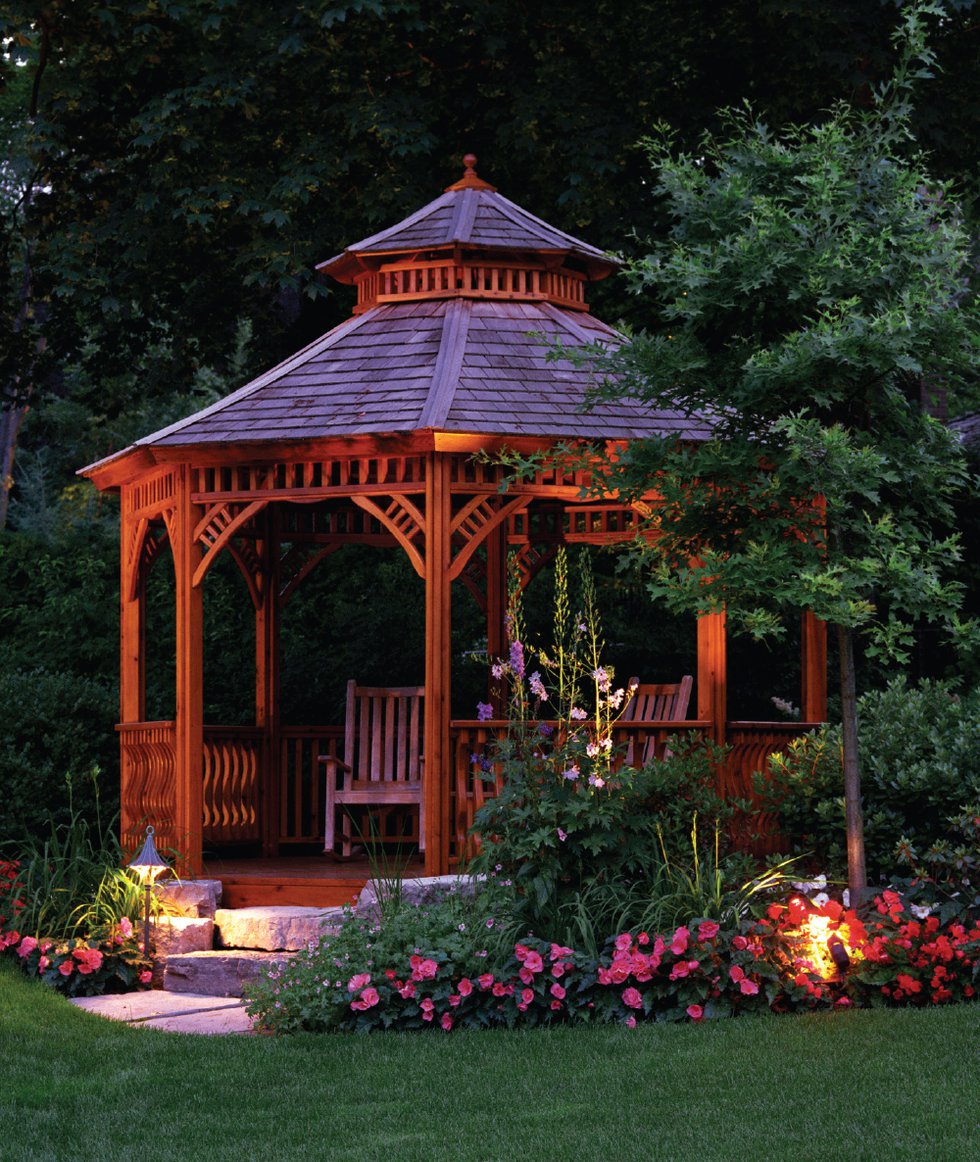
is an important part of feeling cooler. It may be a little late to plant a shade tree in your garden this summer, but there are other options. Consider how the sun reaches your deck or patio. When do these areas get the most use by you and your guests—morning, midday, sunset? How can you divert attention from the sun’s heat? Perhaps install a pergola or an arbor, depending on how much space you have. A pergola is customarily an arched frame on which vines are trained or plants are hung. You could have one installed right now and for this first summer, rely on hanging plants to create the illusion of vining, while ivy or wisteria or clematis vines are planted and trained for a shady show next summer. The idea is to distract from the heat of the day with visions of green and an impression of a shady glade. If you’d like a more modern, pared-down source of shade, install a shade sail. It can be rectangular or square, and usually white or cream color to reflect the sun. Be sure the sail is securely anchored against the winds of summer storms. One advantage to the shade sail—it can be relocated to provide the best shade. While it won’t evoke a shady glade, it may offer thoughts of sails on the Bay slipping gracefully across the waves. See how quickly our thoughts float away from the heat and humidity?
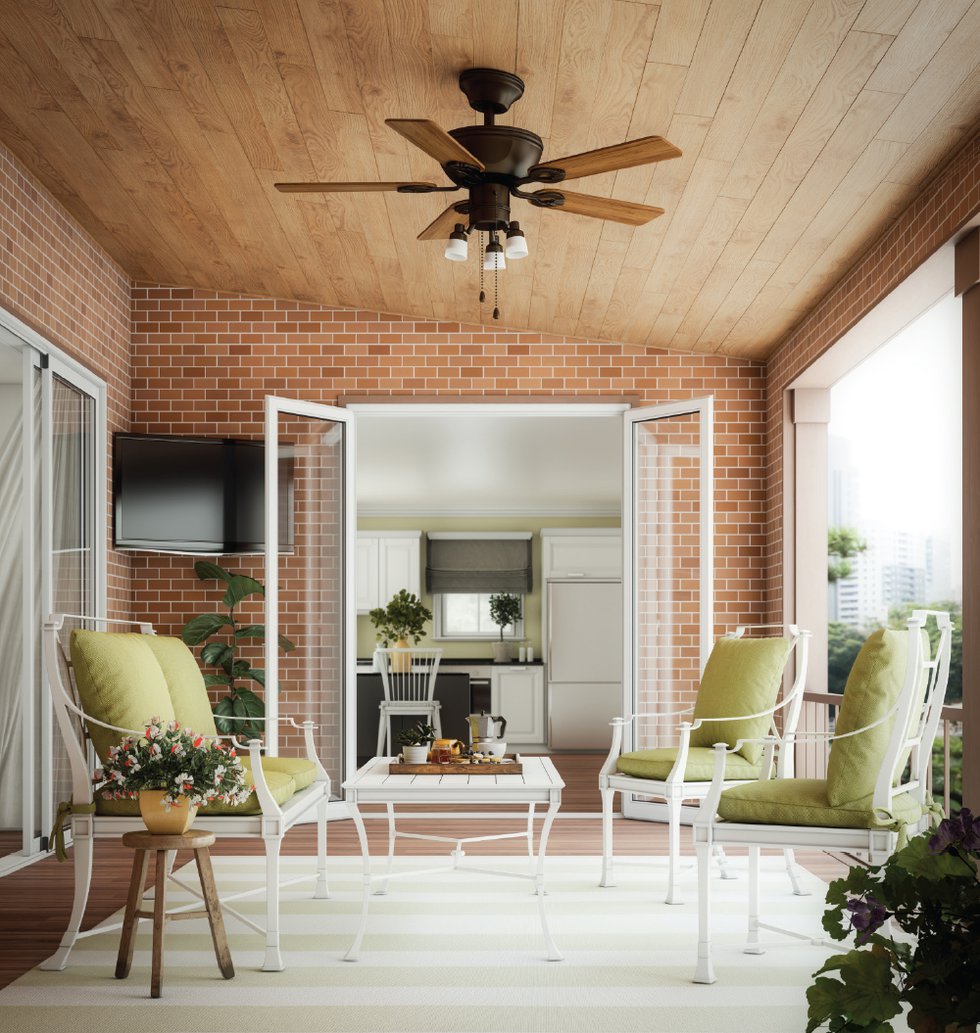
magically distracts us from the weight of Maryland’s humid air. Just think about a gentle breeze across your face and you begin to feel cooler. A few quiet floor and pedestal fans can create that same feeling, working their magic. If you place a low fan among or behind a few potted plants, you’ll hardly notice the artifice. Since you’ll need electricity, think about adding an outdoor outlet or two, if you don’t have one available. Be sure the fans you choose are quiet; it’s difficult to chat or read if there’s a roaring or rumbling motor nearby. Pedestal fans can usually be set to oscillate and setting one or two of these fans to turn slowly along the edge of your seating area works wonders. Not only will the fans provide moving, cooling air, but they will also discourage flies, mosquitoes, and gnats from joining you in your shady retreat. Another little trick: set the fans on simple timers to come on when you’re likely to be on the patio and turn off without your having to think about them. One caution: If you haven’t bought outdoor, waterproof fans, have a few plastic waste bags available to cover the fans if rain is expected. The motors won’t take kindly to being soaked.
Cool Things
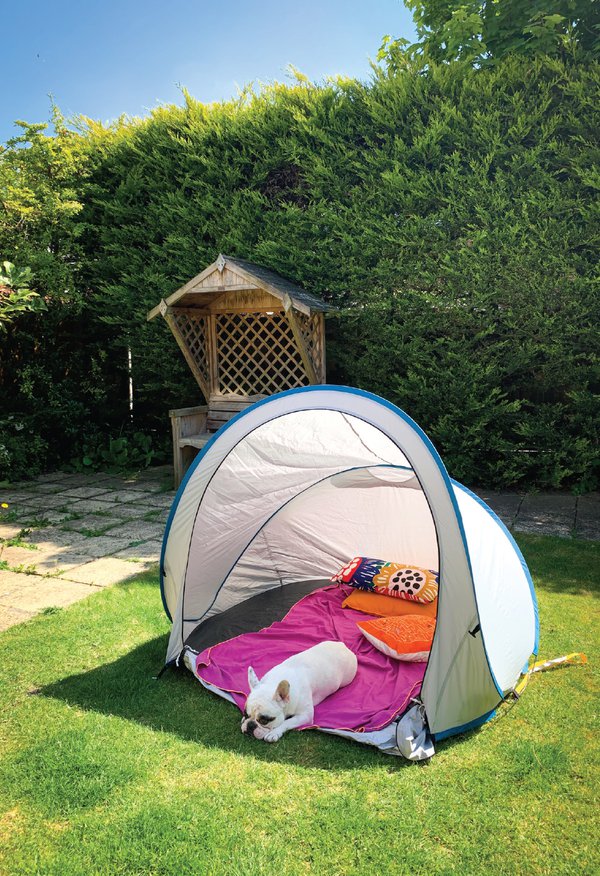
to redirect our body’s thermostats work wonders too. Consider investing in a few pet cooling-mats. You’ll find them on-line and in some pet stores. They’re available in a variety of sizes. The mats are filled with water, air, or gel and absorb body heat while creating a cool feeling. Place them on loungers and chairs and find yourself impervious to summer’s humid heat. Watch out, however, not to sit down on your cat or dog, who might have preempted your use of a cooling mat. Another “cool thing” is a mister or mister-fan. One or several misters can be installed on your deck or patio, camouflaged behind plants or trees, or attached to awnings or roof beams. Misters work by spraying water molecules that change from liquid to gas or mist. I know, you’re probably thinking, Isn’t there already too much humidity? Why add more? The difference with a mister is that the process of turning water drops into mist, a gas, takes energy/heat, which is pulled out of the air, thereby lowering the ambient temperature. There are do-it-yourself kits, but I recommend you get a reliable plumber to install your misters, including the pump to run them. Once properly installed, there’s very little maintenance, and if properly winterized, the misters will continue to work for years. If you’re wondering about the ecological cost, the power to run a mister is far less than what is needed to keep an air conditioner humming. Oh, almost forgot: you can have your misters set up to spray a mixture of water and natural-botanical mosquito repellants, essence of marigold, for example. There’ll be no mosquitos bothering you all summer long—or at least when you use the mister fairly regularly—about 2–3 times per day.
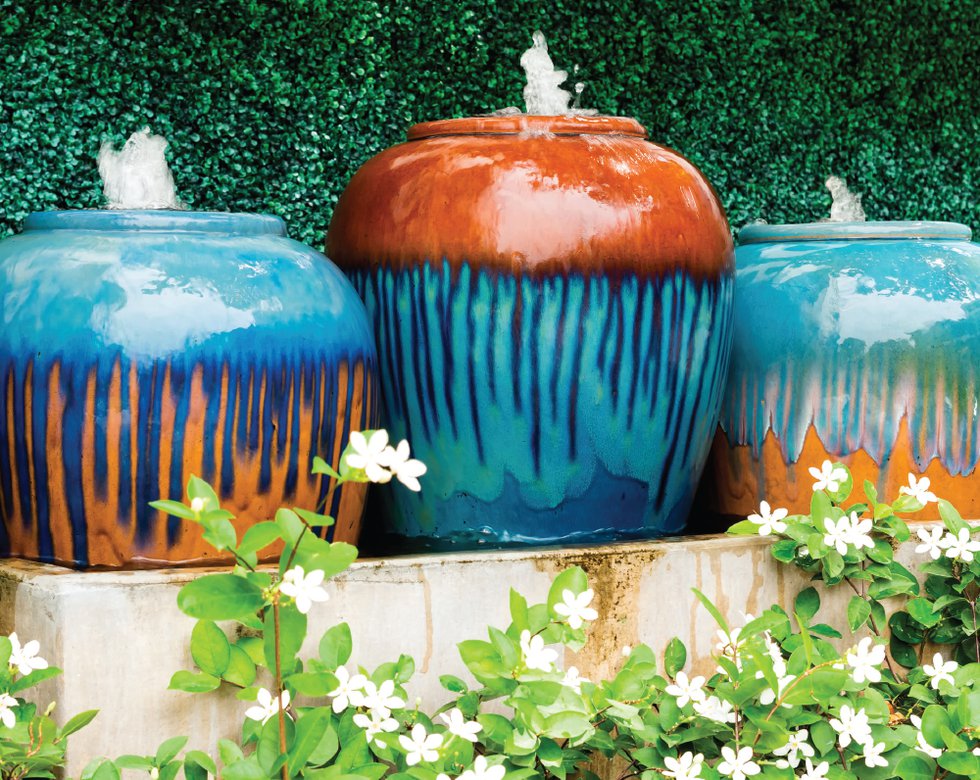
are a tried-and-true means of distracting us from hot, humid temperatures. We all long for a quiet beach and the sound of waves lapping at our toes. Add a little fountain to your patio; set it up in a shady corner, if possible, and you’ll have songbirds and butterflies as regular guests. You’ll also enjoy the sound of the water as it tumbles down. Small fountains are electric and usually plug in at an ordinary household outlet. Out caution though, you may have to add water daily. If it goes dry, the pump motor can burn out.
These are just a few simple ways to make your summer garden as delightful as possible. Work your own magic.
Friends, Thank you for all your encouragement and support of our poetry group. Last evening we read a selection of our poems on the Zoom program, “Poets vs. the Pandemic“. Each poet read four poems. Here is the link to the video on YouTube. The 50 minute program was great fun, and our amazing leader, Maryland’s Poet Laureate Grace Cavalieri had prepared us well for the reading.
I hope you get a chance to watch the program, both ours and others in the “Poets vs. the Pandemic” series. (Feel free to buy extra copies of our anthology, The Song In the Room, available on Amazon. )
Photography by Stephen Buchanan and Janice F. Booth
How several gardeners have created beauty in unexpected places.
Two years we’ve had to re-establish our relationship with Nature and the beauty and serenity of the out-of-doors. If there is a silver-lining to this pandemic, it must be our rediscovering the joys of walking in the woods and meadows, kayaking or canoeing downstream, and simply finding time for flights of fancy while swinging in the backyard hammock or lingering over lunch at a restaurant’s table beneath a cheery umbrella. Some of us may release our pent-up energy while sprucing up the house or grooming the lawn and garden. And that’s where I pick-up the tale of five patient, diligent folk who turned their pandemic energy to coaxing beauty out of unexpected and overlooked places—hidden gardens right under our noses. Part of the beauty of these gardens is that they flourish in unexpected places—a condominium, an 18th century residence, a planned community, or a mature woodland.
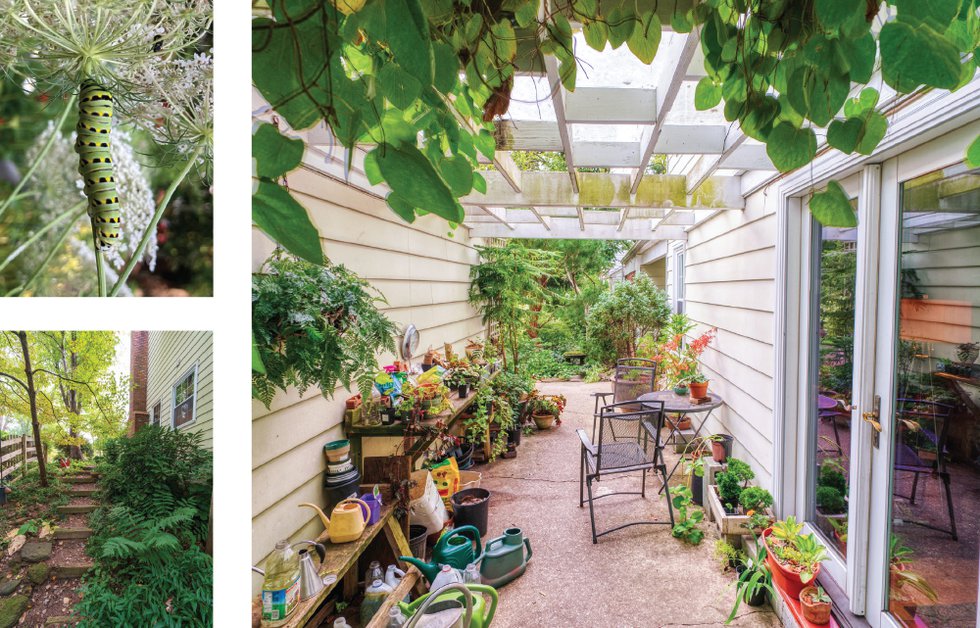
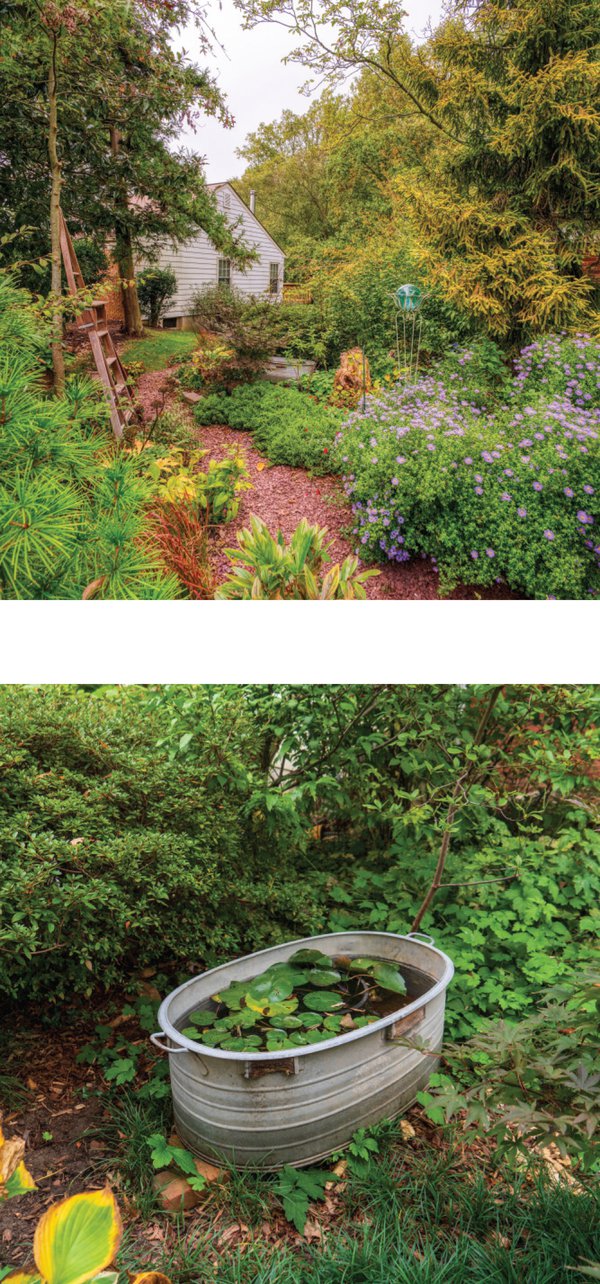
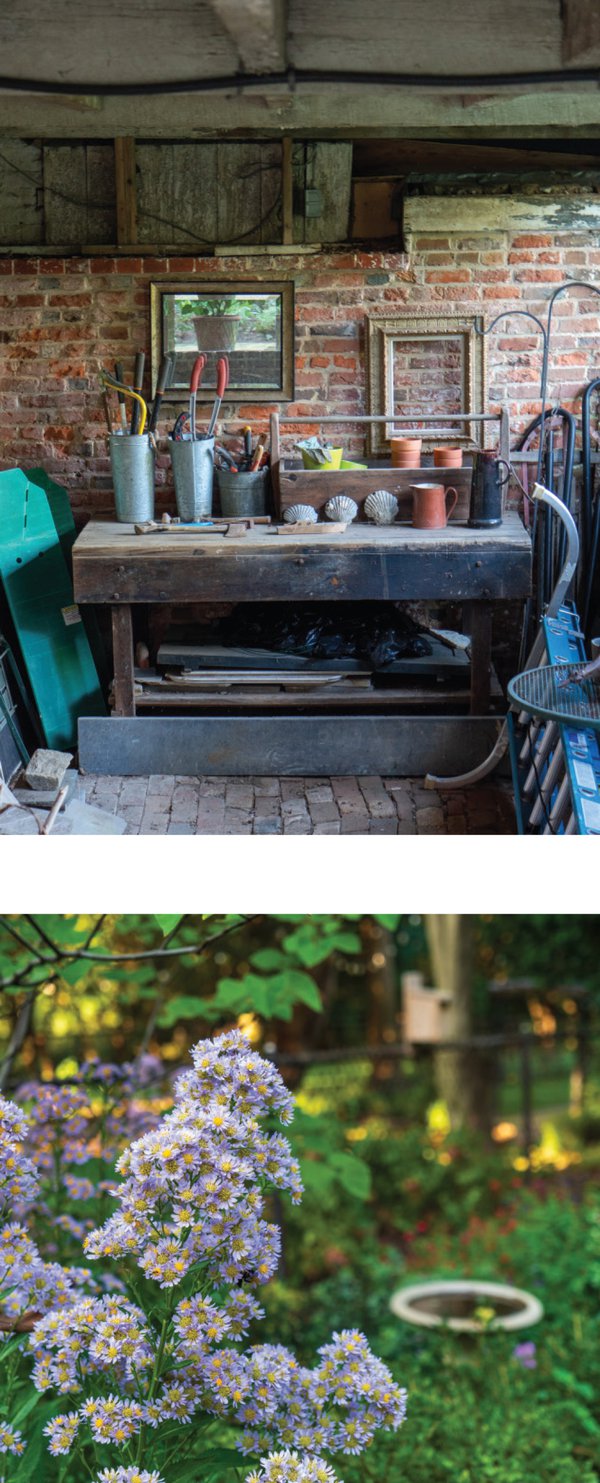
Elaine Lahn’s gardens are hidden in plain sight. The owner of a cozy house in Crofton, Lahn has transformed a few patches of green sod into a luxurious and exotic landscape. “I started with a few plants here-and-there and, before long, I was really fascinated by what I could grow in my garden,” Lahn muses. Chinese Dunce Caps, an Italian Spice Bush, Blue Iris, and Veronica—the exotic and the comfortingly familiar—Lahn has them all. Since 1986, she has coaxed and prodded tiny succulent and giant sycamore. “Some of these plants are a third or fourth try. I don’t always get things to grow where I want them. Sometimes I move them around until I find where they’re really happy.” And, to most observers, Lahn’s garden appears full of very happy plants. Instead of a lawn mower, her garage houses a handy garden bench and tools. Wrought iron table and chairs invite the wanderer to sit and watch the birds, squirrels, and chipmunks scamper among the trees and shrubs. A path meanders from her front driveway through the small, luxuriant front garden and along the side of the house, terminating at the small patio where a galvanized watering tub beneath a cluster of trees holds Water Hyacinth and a friendly frog or two. Lahn’s current project is securing the precipitous gully that is the back of her property and borders a stream that becomes a torrent during heavy rains. She’s planting shrubs and encouraging ferns and groundcover to hold the soil and keep the back of her property from sliding down into the watery bog. Lahn is an active member of the Crofton Village Garden Club. She’s delighted that her passion for gardening has sparked an interest on her son’s part. He’s helping her with various projects, including the replanting of the hillside at the back of the house.
As the wife of a Naval Officer, Mary Gatanas has lived all over the world and cultivated gardens in diverse soils. When she and her family were able to settle into their own nest, Annapolis, specifically Crownsville, was their choice. For two decades Gatanas has transformed a simply landscaped lawn into a very personal reflection of her travels and her family. Perhaps her most prized flowerbed is her “Grandson’s Garden.” Her grandson, Tristan, created a rain garden beneath his grandparents’ living room window as a Scouting project. He planted graceful, white Penstemon and vivid, red Cardinal Flowers for contrast. And Grandmother Mary proudly notes that Tristan earned an “A” for his efforts. From her grandson’s rain garden, she points to several distinctive birdhouses among the Hollies and Climbing Hydrangeas—another bit of family lore. One large birdhouse, over 50 years old, dates to Gatanas’ New England girlhood. Her father gave her the birdhouse which has moved with Gatanas to her Maryland garden, a beautiful reminder of her childhood home. “I try to think about what passers-by can see from the road. I want everyone to enjoy the garden,” she says. Throughout the garden, Gatanas blends exotics with the comfortably familiar native plants—Tree Peonies, Mullion, Lavender. Japanese Primrose, and Siberian Iris. Tiny Ground Orchids peak out from among the Astilbe, Monks Hood, Phlox, and Toad Lilies. A striking Black Winecraft Bush with dark, shiny leaves stands out against the green. Korean Lilac, Blue Plumbago, and twice-blooming Azalea provide an endless color palette to dazzle the eye. “This is the only garden where we’ve stayed long enough for me to watch my vision grow and flourish. Many times, I’ve had to leave gardens behind when we moved.” Gatanas draws my attention to an area near the house where she’s coaxing French roses to grow. “They don’t need a lot of sun and their fragrance is heavenly.” There’s always a new project in the Gatanas garden.
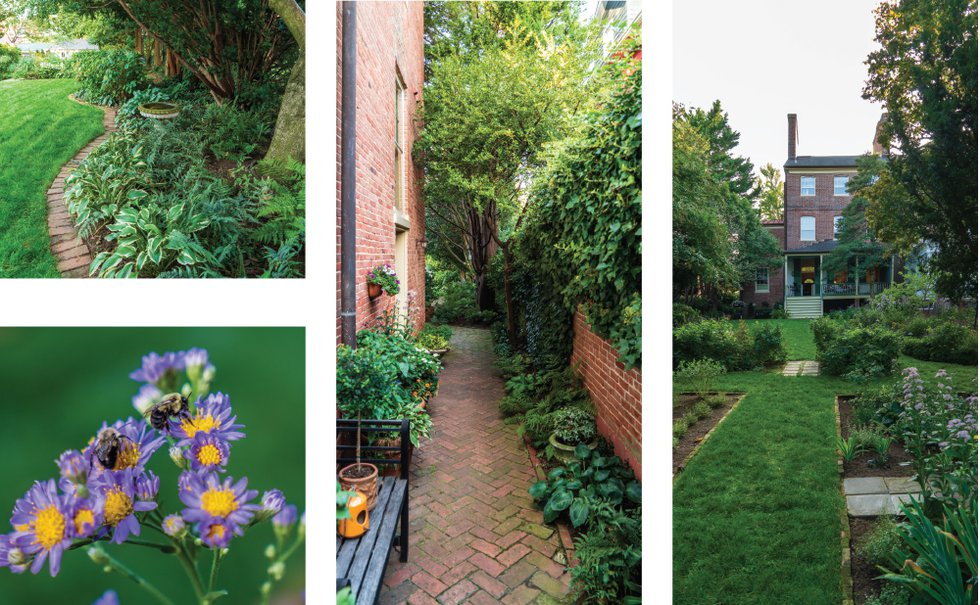
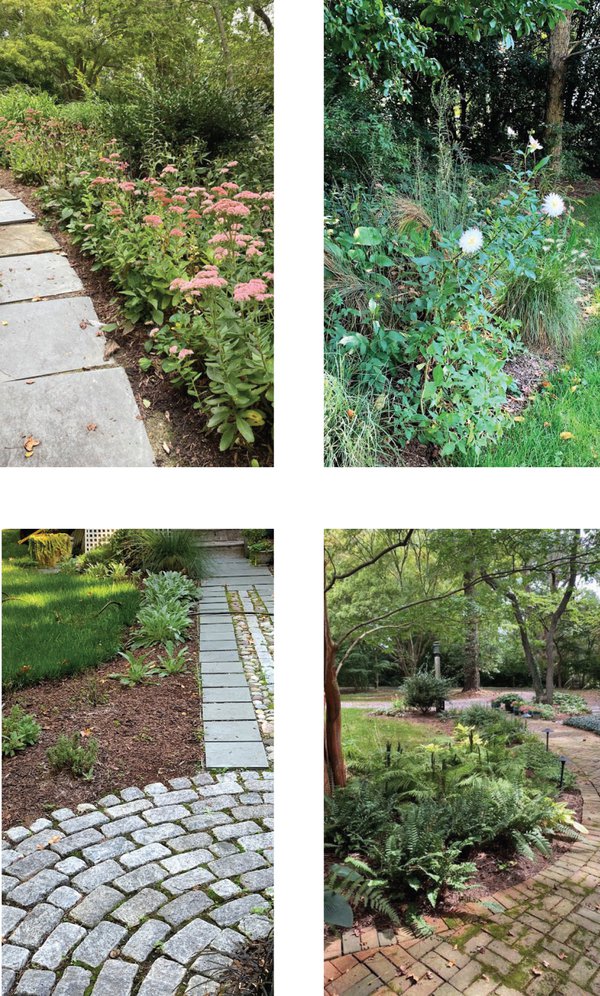
As a young bride, Barbara Cooper and her husband, Orlando Ridout V, took on the restoration of his family home in Annapolis. Her husband was a renowned author and scholar of architectural history and preservation, and together the couple undertook the very personal restoration of one of the Ridout family homes, built in 1774 and occupied since then by family members. They dedicated their spare time to rescuing their magnificent but tired architectural treasure. As work on the house neared completion and they took up residence, Orlando was diagnosed with cancer. Cooper turned all her energy to caring for her husband. “Working to restore the house’s garden became my therapy, my way of resting and healing during that difficult time.” After her husband’s death in 2013, Cooper focused on restoring and expanding the garden which is close to an acre in size. While there were fine, old Magnolia, Holly, Willow Oak, and Boxwood, most of the flowerbeds had become overgrown. What might have been lawn was mud and weeds. A former patio was only hard-packed earth. From the porch that extends along the back of the house, Cooper could sip her morning coffee and see the garden’s potential. Her mission became creating a garden that complements the elegant and welcoming house she and her husband had lovingly restored. Among the projects she undertook was using antique bricks to define the meandering flowerbeds along the perimeter of the property. Cooper also restored the patio with bricks salvaged from the house restoration. She enlisted the aid of James Moser, “Gramps” to Cooper’s daughters. He has become Cooper’s right-hand-man. He’s just completing the restoration of the home’s garage, built in the early 20th century, which had fallen into near-ruin. Cooper and Gramps Moser have also added a new flowerbed across the lawn where plants requiring more sun can flourish. Now a sun-dappled patio and walkway greet visitors entering through the distinctive, arched, red door set in the wall attached to the front of the house. When next you walk past St. Mary’s church, look for the grand, old home with red doors, and think of the lovely garden flourishing there.
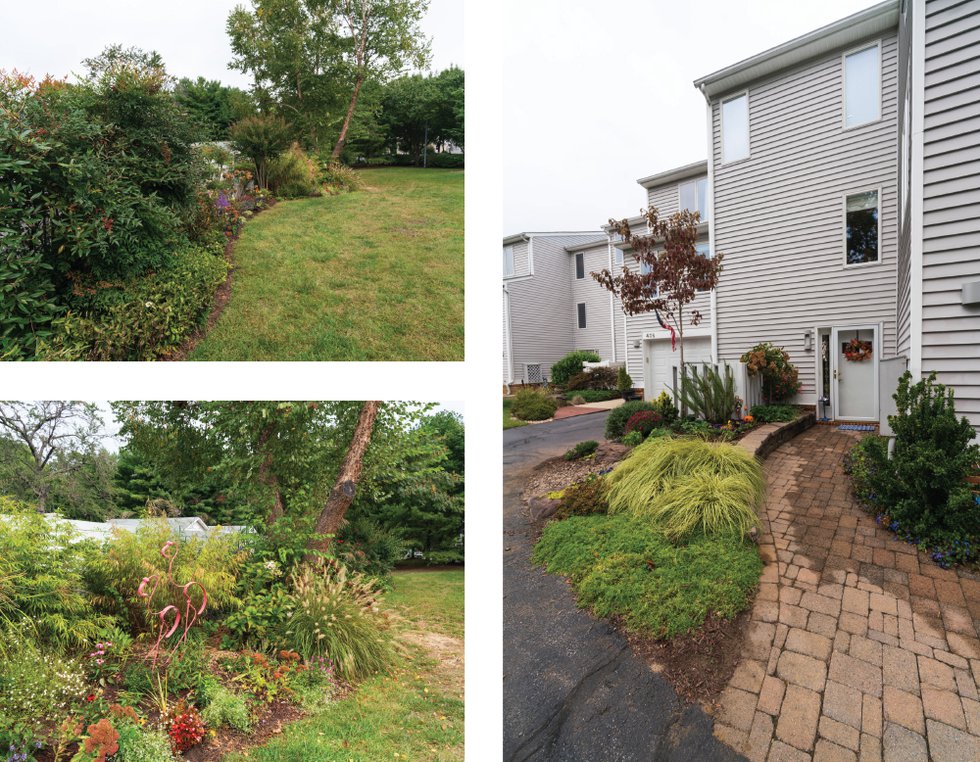
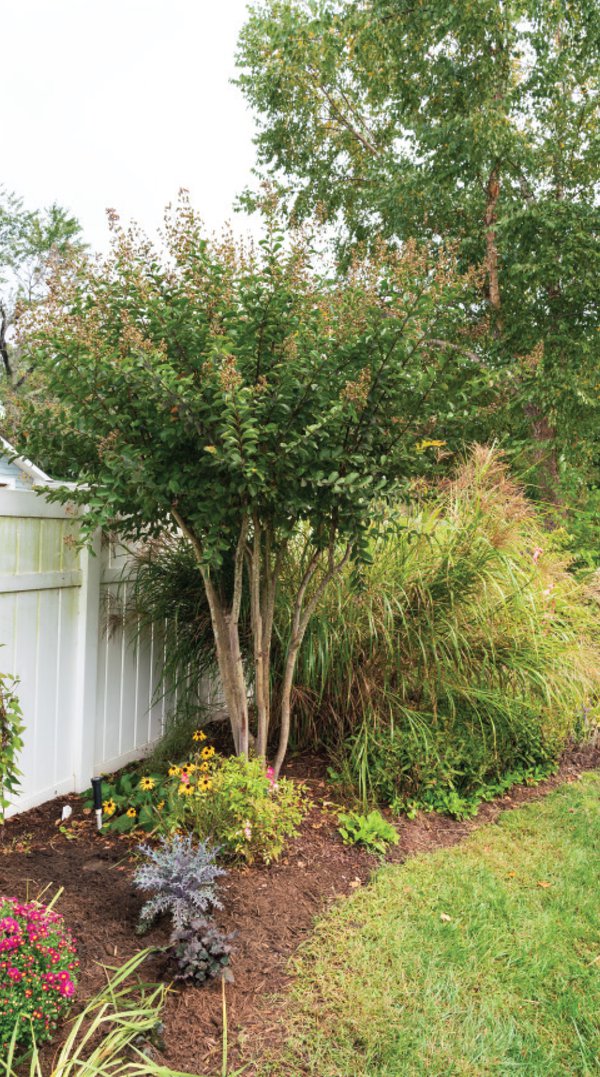
Sonny Kalis might also be called “Sunny.” Her love of gardens and their care is apparent from her involvement with the Garden Club of Annapolis and the gardens she lovingly tends. For those of us who live in townhouses and condominiums, tending a garden seems a lost pleasure. But, ask Kalis; she’ll show you how to enjoy the pleasures of gardening, as she does in her townhouse community. With the approval of her community’s Board, 16 years ago Kalis took on a small flowerbed near her townhouse. To the traditional tidy bed, she added some perennials and annuals for color, and trimmed the shrubs a bit to allow room for the flowers to flourish. She spoke with the landscapers who regularly tend the community property, and suggested ways to handle tree limbs that needed trimming and shrubs that were languishing. As time went on, Kalis took on more of the flowerbeds along the fence-line. These flowerbeds flourished and grew colorful with Snowcap and Montauk Daisies, ornamental grasses, Camellias, and even an assortment of herbs. Lovely Birches and a Mimosa tree flourished under her thoughtful care. Residents of the community came to wander among Kalis’ flowerbeds and chatted with her about her plants. “Sometimes, gifts appeared, and I’m always delighted when neighbors stop to talk with me about the plants.” She’s always looking ahead, and one goal is to have a truly four-season garden. No doubt, she’ll achieve her goal; the condominium community is enriched by Kalis’ efforts.
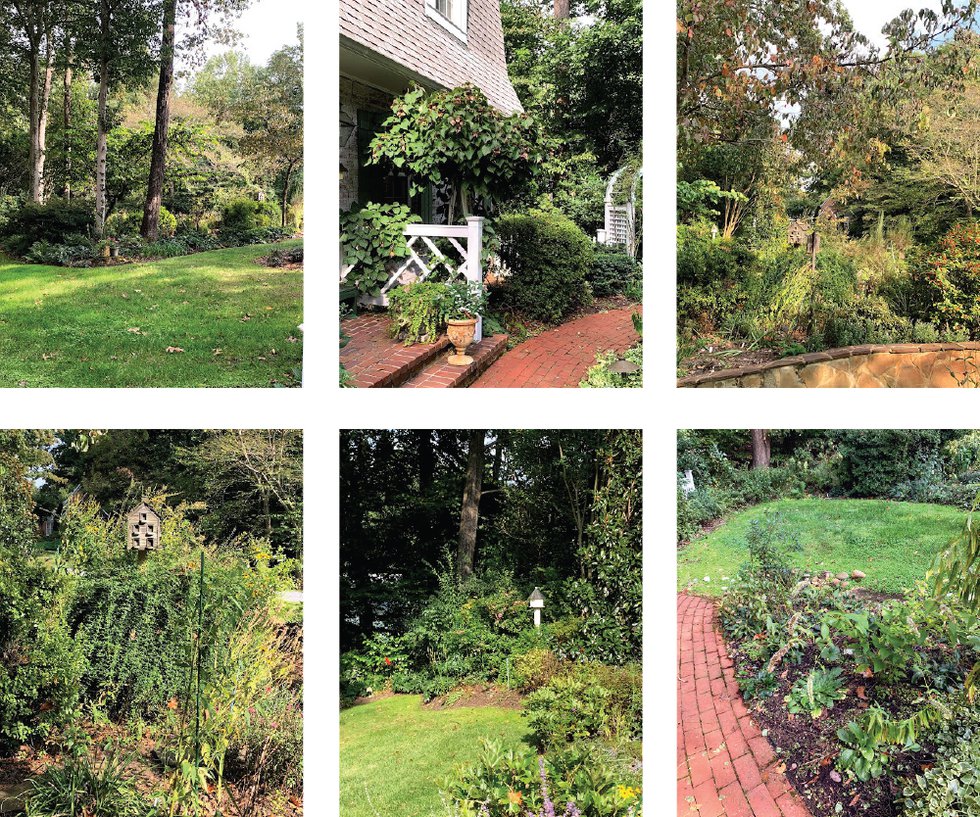
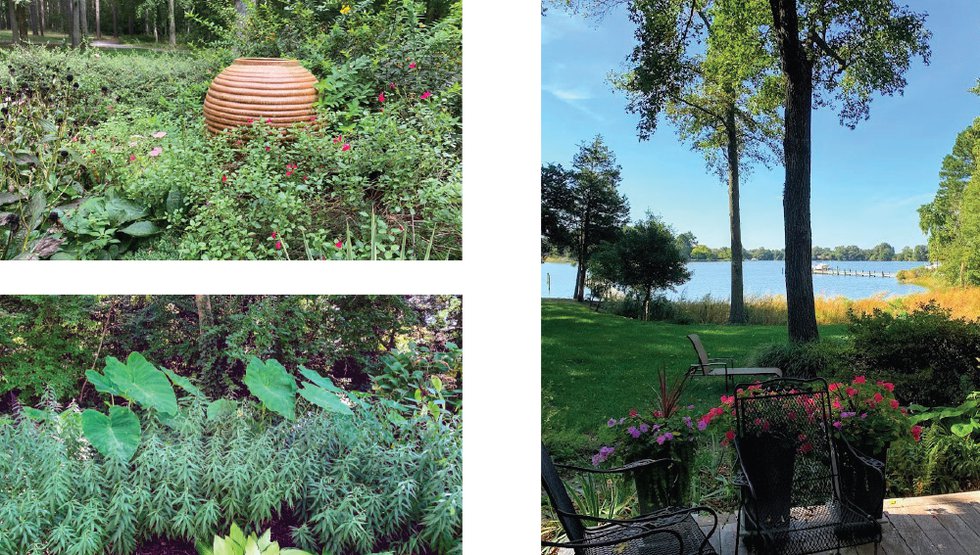
Follow a winding road ’til you come to a narrow lane. Make your way through the woods and come to a clearing. What meets the eye will be the beautiful home and gardens of Catherine Alspach and her husband. Situated on the banks of Island Creek off the Choptank River in Caroline County, Catherine’s vision for her gardens is romantic and free. “Things do what they want to do,” she observes. And what Alspach does is respect her plants’ inclinations. With a background as a landscape architect, she understands which flowers, grasses, shrubs, and trees will do well in the various sun and shade areas of her extensive grounds, approximately two-and-a-half acres of gardens on their 20-acre property. Near the front entrance of the house, she has a dramatic bed of Hakonechloa grasses; like moving sculptures these grasses seem to flow like water with the breezes that come from the creek. Cherry Laurel and mature Elizabeth Magnolia trees add their special color and grandeur to the gardens. Alspach has created a brick walk that curves gracefully among the flowerbeds. From the walkway, a path leads across a charming footbridge to Alspach’s studio, where she works on design projects. A recent project has been securing the soil along a rivulet that meanders through the garden and empties into Island Creek. “We noticed there was some erosion of the banks, so I’m trying to encourage plants to grow and secure the soil.” Because the Alspach property is deeply wooded, Catherine relies on flowerpots and urns of colorful annuals around the patio and entrance. The total effect of Alspach’s garden is a magical place—a dwelling in an enchanted forest.