Nature’s Alternatives to Fences and Sound Barriers

by Janice F. Booth

Jan. 21, 2023midnight

garden1.jpg
garden2.jpg

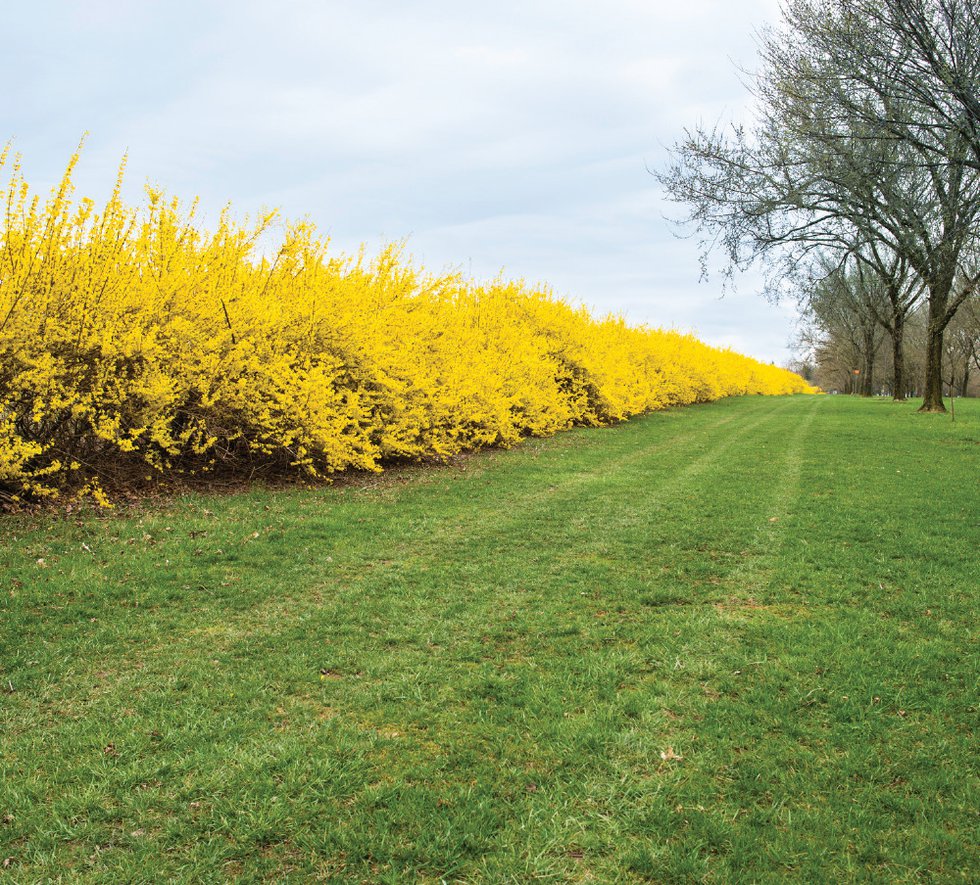
Here’s an idea for a spring project in your garden: Replace those worn-out fence posts or that chainlike eyesore with a lush hedge of forsythia or yew. Perhaps you live in a community where the covenants prohibit fences; but I bet they don’t prohibit shrubs! And as hedges, what can those shrubs be trained to do? They can gracefully delineate the borders of your flower beds and the boundaries of your property. Carefully pruned, hedges can deter intruders, muffle noise, deflect prying eyes, and protect your garden and patio from prevailing winds. Now that’s a pretty impressive list of uses for a hedge!

Whether you’re a do-it-yourself gardener or you have a clever, reliable gardener or service, you’ll want to plan your Hedges Project keeping in mind some key factors. So, here they are: 

Will your hedge be primarily decorative or purposeful? If decorative, then focus on color, fragrance, shape.

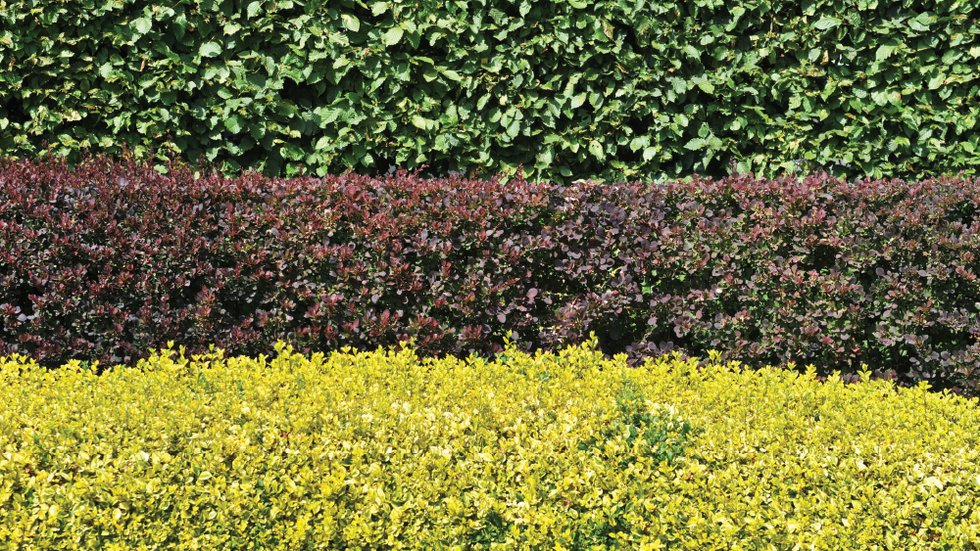
Color: You can choose shrubs that bloom, like the spring-gold of forsythia, or evergreens with variegated leaves, like the chartreuse-edged euonymus.

Fragrance: The sharp scent of boxwood deters bugs, planted beneath windows in colonial times to keep away flies and mosquitoes. However, witch-hazel provides a less pungent, woody scent to waft across your deck.

Shape: If your plan requires strongly delineated barriers, you’ll want to plant shrubs that take well to being pruned. Boxwood and privet are both old favorites for that very reason. You might even try your hand at a topiary shrub—perhaps an elegantly spiraling evergreen or a bunny or lab puppy. Flowering quince or azalea hedges will be looser, leggier, and lacy. 

If you are adding a purposeful hedge for some specific use in your garden, that use may determine the type of shrubs you plant.

Flowerbed borders: If you want a simple, attractive edge for your flowerbeds, you may want to rely on pretty evergreen shrubs that will provide an attractive border for the beds even in the winter. Juniper is deer resistant, has attractive structure and berries. A fun alternative is the Tater Tot Arborvitae, small mounds of lacy green. They require little pruning to retain their shape.

Boundary borders: If you’re going to rely on the hedges to denote your property line, size and sturdiness will be important factors. Boxwood works well here too. It can be pruned to provide a substantial hedge, not easily broached. Yew is another option that provides a looser, less obvious border. A third option is a hedge of holly. Holly has the added feature of prickliness, which can deter hungry animals and curious kids from breaching the property boundaries. 

Noise abatement: To muffle the sounds from a busy street or a neighbor’s boisterous children, you’ll want to encourage a hedge that is thick. Success here depends more on the pruning of your hedge than on the type of shrubs used. The hedge should be pruned so sunlight can reach the interior of the hedge. (More on this in the maintenance hints that follow.) 

Privacy: The same characteristics that muffle noise will also protect your garden from prying eyes. You’ll want to encourage thick growth all the way through the hedge. Additionally, consider the height and width of the mature hedge. You’ll probably want a tall, perhaps 6’ hedge. The width may vary, but I’d recommend encouraging the growth at least 2’ deep. Almost any shrub can mature into a privacy hedge. Juniper is a lovely choice, or arborvitae grows quickly and remains lush looking all year. 

Wind Break: If your garden is troubled by wind, a decorative hedge can help protect your more fragile plants. Here too, height is an important element. The Japanese holly is an interesting choice as is the stunning mountain laurel, with blossoms in the spring and green leaves all year.

Expand

garden3.jpg

Here are some general guidelines and hints for keeping those hedges growing happily and looking good, whether you’re doing the gardening or advising your gardener. 

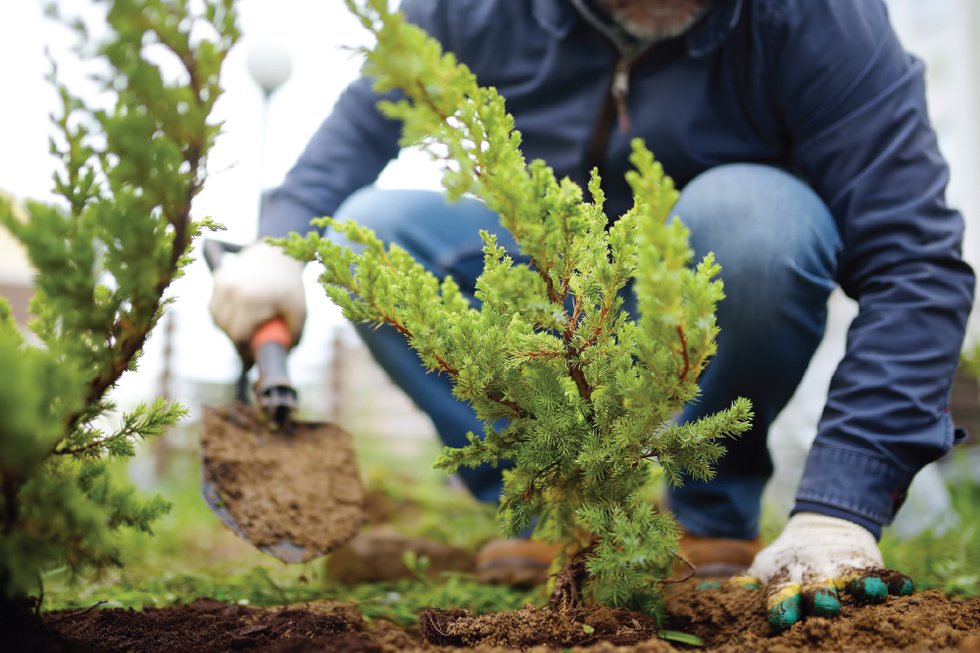
Spacing new plants: If you’re starting from scratch, a trench is the most foolproof way to start an attractive hedge. The planting trench should be about 12” wider than the root balls of the shrubs, and about the same depth as their root balls. Plant shrubs about 36” apart. 

Soil: Well composted, loose soil will be most welcoming to your new shrubs. 

Watering: As with most new plants, be generous in your watering for the first year. The trench will help maintain moist soil conditions for the new root system’s development. Mature hedges are usually drought resistant. 

Trimming: Begin pruning soon after the shrubs begin to grow. Try to keep in mind the end-result, the way you want the hedge to look when mature. Trim the new growth that doesn’t conform to the ultimate shape of the mature hedge. 

Expand

garden4.jpg

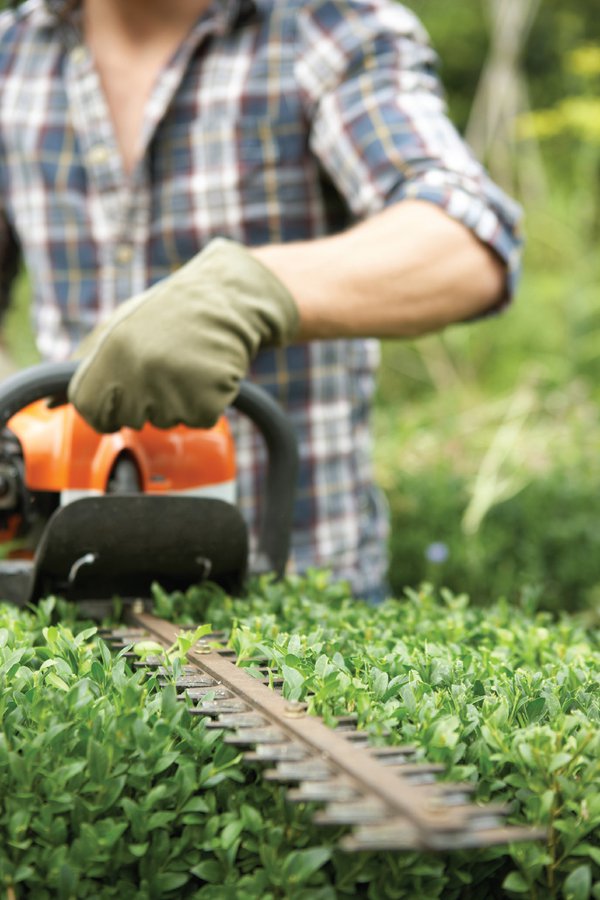
Be sure to keep your hedge clippers sharp and clean. You don’t want to introduce any bacteria among these young plants—or the mature ones for that matter. Lay a tarp or old sheet beneath the shrubs before you begin pruning. Then, whisk away the small cuttings for a tidy, finished look

Shaping: Most hedges grow 1’ to 2’ per year. The upper portion of the hedge should be slightly narrower than the lower portion. Think of a cone rather than a funnel. This will allow sunlight and moisture to reach the inner branches of the hedge, keeping the appearance lush and thick. 

If the outside of the hedge is too thick, cut back random branches deep in the hedge, encouraging the inner branches to spread and grow toward the light. The “3-year Rule”: To keep your hedge healthy, each year rejuvenate the growth by removing 1/3 of the thickest stems toward the base of each plant. In 3 years, your hedge will be all young and healthy new growth. 

Finally, as with all our gardening adventures, don’t be too wedded to one vision for your new hedges. I find my plants sometimes have their own ideas as to how they should grow and look. Embrace that. Watch your hedges as they mature and encourage them in what they do best. If there’s a break in your hedge where you didn’t want one, plant an interesting vine or flower to fill in the space and add interest to your hedge. Then, next fall, you can add a new shrub and let it fill in hole in the mature hedge. 

by Janice F. Booth

Posted in Uncategorized | 2 Comments

December Gardens Column for What’s Up? magazine

Extending our Gardens’ Blooms All Season Long

by Janice F. Booth

Dec. 27, 2022

Garden3.jpg
Garden2.jpg

There’s nothing new under the sun. (Ecclesiastes 1:9) A wise adage, but for those of us who love gardens, it sometimes feels like everything in the garden is new and amazing, season after season. With the world fading to winter’s grays and white around us, perhaps it would be fun to consider new plans for the garden. Color changes? Expanding three-seasons of blooms? If you’ve had a monochromatic color scheme, now might be the time for colors more varied. And, looking back at your garden journal, this may be the time to think about adding flowers to keep your garden gloriously blooming from early spring until the first frost.  

To ease your research and help advance your plans, let me offer some of the oft’ referenced but rarely applied lists of blooms you can plant to create a colorful garden that will bloom from May through October. (With a nod to my dependable, 1954 Better Homes and Gardens and 1995 edition of Gardening Made Easy.) I’ll focus on perennials (plants that survive the winter and bloom year after year.) For extra pizzazz and color, you can easily add annuals (plants that will last only one season.) 

Bulbs 

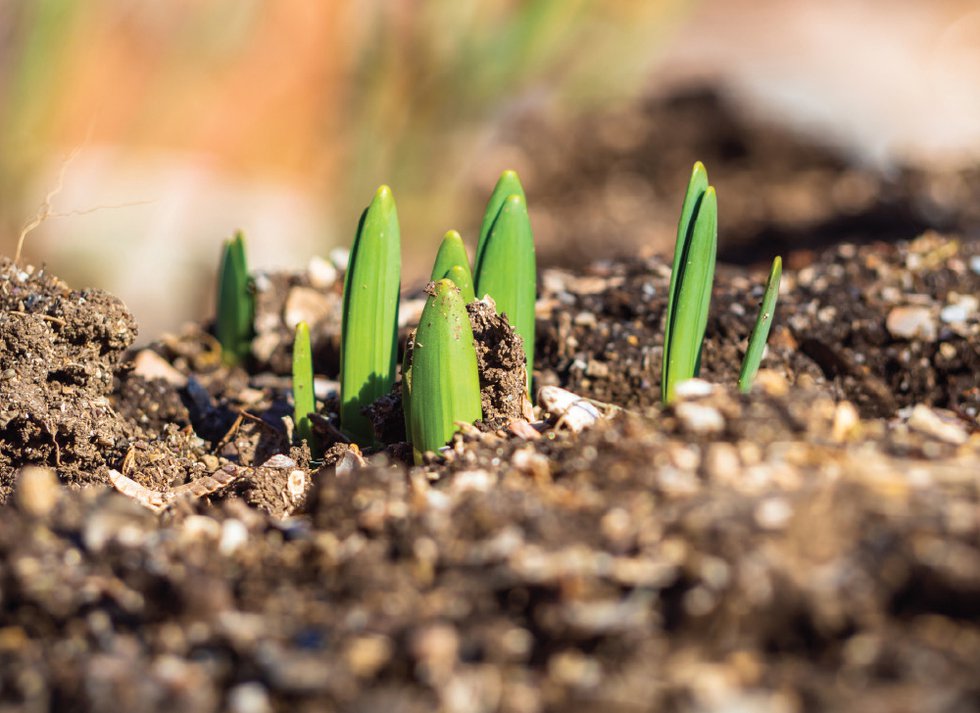
Flowers blooming spring into summer from bulbs are always welcome and familiar after winter’s cold months, grouped here by most-common color for easy planning. (Many plants may be available in a variety of bloom colors.)

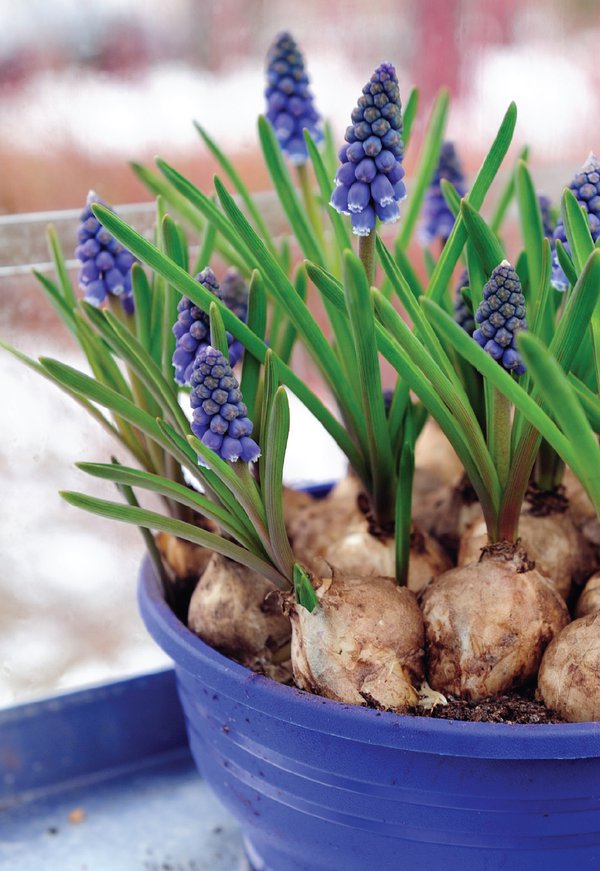
Grape-hyacinth— purple (tiny)

Scilla— blue (mid-height)

Hyacinth— blue, lavender (mid-height)

Allium— blue (tall), white, yellow, pink, purple

Tulip— red or myriad colors (mid-height)

Red bell— red, orange (mid-height)

Crocus— yellow, lavender, purple, white (short)

Daffodil— yellow (mid-height)

Snowdrop— white (tiny)

Mariposa lily— white, yellow (mid-height)

gladiolus— multicolor, white, yellow, pink, rose, lavender (tall)

Expand

Garden1.jpg

Perennials

We all have old favorites, plants that have kept our gardens blooming spring into summer and year after year. So, I’ll try to point out some less-familiar beauties you may want to try. I’ll organize these perennials by most-familiar or popular color.

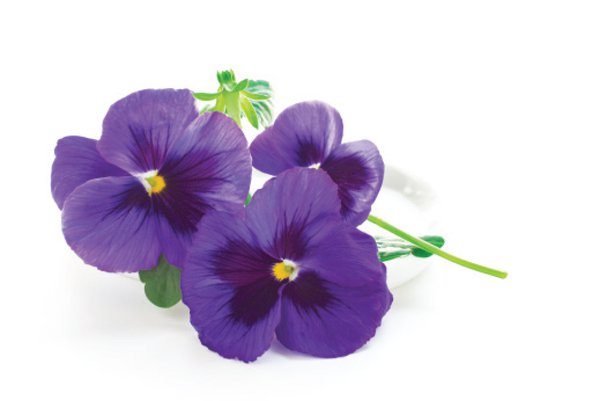
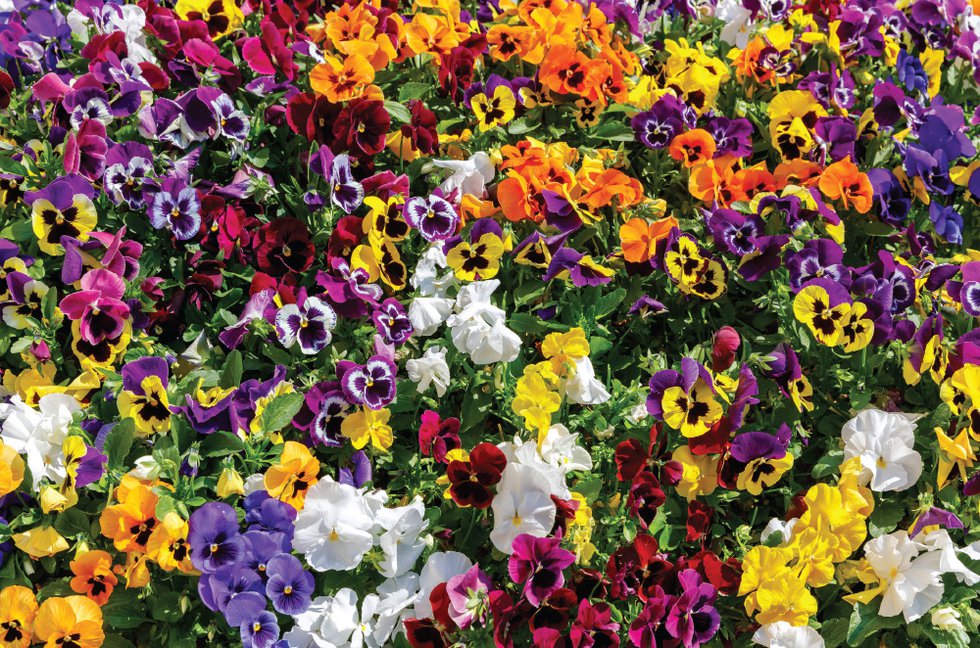
Pansy— yellow or purple are most prevalent. While they’re sold as an annual, pansies are hardy, little guys, and will survive all but the harshest winters, turning up their pretty faces with the crocuses and hyacinth. 

Mustard— yellow blooms until mid-summer. They add a light, airiness with their tiny blossoms on taller stems. 

Welsh poppy— yellow or orange blossoms with lacy fern-shaped foliage. (mid-height) 

King’s Spear— yellow blooms on 3’ tall stalks—thus, the “spear.” 

Dwarf Flowering Almond— pink, tiny blossoms amid small, glossy leaves. Plants are about 2’ tall.

Camelia— deep pink, showy flowers amongst gorgeous, glossy, green leaves. The blooms appear for 6–8 weeks, and when they’re gone, those glossy leaves on graceful branches remain a remarkable addition to the garden—and pretty as filler in picked bouquets. (Usually kept as 3–4’ tall shrub, but can grow taller)

Mourning Widow— (geranium family,) deep pink to purple dramatic blooms on slender stalks, about 1’ tall. Also called Dusky Cranesbill. 

Mountain Heather— lavender blossoms amidst evergreen foliage for a pretty groundcover.  

Snow-In-Summer— a white groundcover with evergreen foliage. Provides a lush, river of white along walks or in flowerbeds. 

Expand

Garden4.jpg

Now, moving into summer, we have lots of faithful and familiar plants in every color imaginable. You don’t need to read my column to call to mind 2–3 red to orange summer bloomers: Geranium, Bee Balm, and Gaillardia. Of course, Cone Flowers come in every color, as do petunias. So, let me again offer a few suggestions for summer plants that may have slipped your mind. 

Sweet Pea— pink or red blossoms on wonderfully curly vines. This is an old-fashioned favorite that will reappear each summer and add a bit of fairy magic to your flowerbeds. (low to mid-height)

Obedience Plant— deep pink to lavender is a personal favorite. This too is an old-fashioned plant that asks little of the gardener and behaves beautifully. You’ll get pretty greenery with blooms from August through October. Butterflies and hummingbirds will stop by to sip from the blossoms before these pollinators head south. (mid-height)

Plumbago— purple flowers that bloom all summer. Its leaves turn a deep mahogany in the autumn. The plants are usually about 12” tall. 

Balloon Flower— usually purple, bell-shaped blossoms on dramatic 2’ tall stalks. Definitely show-stoppers.

Blue Star— has clusters of small, blue and white star-shaped blossoms atop midsize stems with greenish-yellow leaves. Native to North America, Blue Star was first noted in the late 18th century. Cut back the stems in the fall for full, healthy bunches next spring.

Cardoon or Artichoke Thistle— lavender flower atop an eye-catching, thistle-like stalk. You’ll get lots of questions and reactions to this 4–6’ tall beauty.

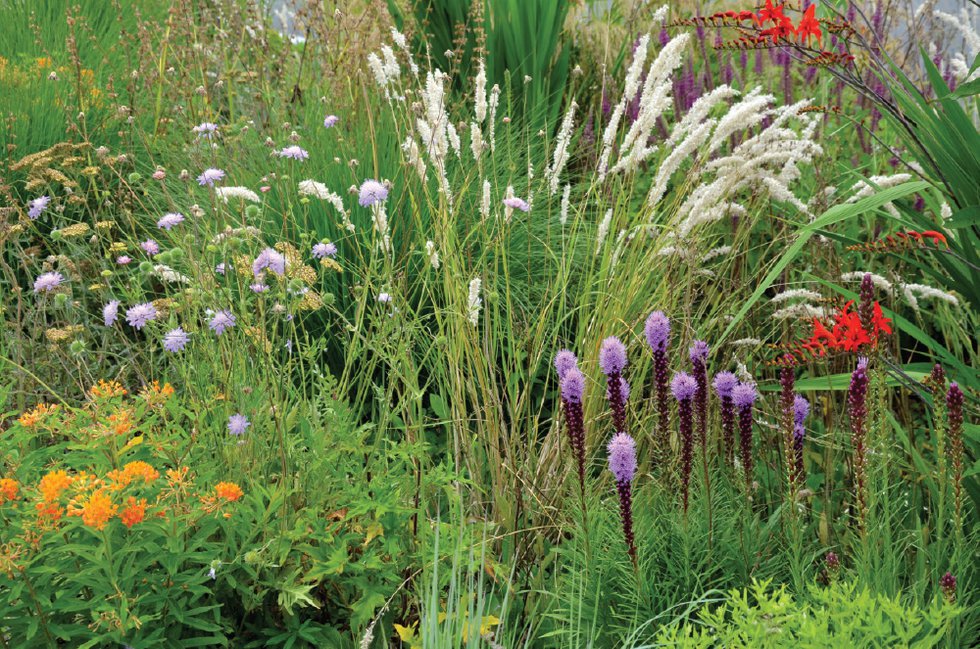
Crocosmia— also called Copper Tips, has arching stems of small, dramatic flame-red trumpets, usually in clusters of stems about 3’ tall. Trim back stems as the blooms fade, and you’ll get lots of new growth. Clumps of stems can be divided in the fall providing you with new plants to share with admiring gardeners.

Butterfly Weed— with cheerful, orange blossoms, is a real boon to pollinators, as the name implies, it’s part of the Milkweed family and will bloom from May through September! (mid-height)

Potentilla or Cinquefoils— predominately orange, but available in many colors, is perfect for hanging baskets and flowerpots. Profuse, tiny blossoms set in small, green leaves will spill over edges in lovely fashion and remain low and thick. Prune to shape the plant in autumn after a summer’s worth of blooms. Avoid getting woody branches. The branches in winter are lovely, maroon features in the garden. (low to mid-height)

Pincushion Flower— orange or purple blooms resembling old-fashioned pincushions. This sweetie will bloom from late spring until mid-October. Its foliage stays green all winter, a lovely bonus. Deadheading is a good practice if you want to keep those pretty blossoms coming. (mid-height)

There you have it: another fun list of less-familiar perennials to add to your garden. They’ll help you plan for blossoms from April through October and in color palettes from shades of pink and lavender, to oranges, reds, and the ever-useful white. Your artist’s eye will surely guide your choices. 

by Janice F. Booth

Posted in Uncategorized | 2 Comments

A Fresh Viewpoint of Your Winter Garden

BY JANICE F. BOOTH 

NOV. 02, 2022

Garden2.jpg

Another lovely autumn is drawing to its close. As I look out to my garden, I reflect on all the beautiful moments I’ve enjoyed for months on end—the glowing flowers, the choruses of songbirds, the lush greens of summer, and reds of fall leaves. And, there’s no reason my winter garden can’t be equally memorable and satisfying in its own, lovely way. So, here are my suggestions for encouraging our winter gardens to be as captivating as possible.

There are three components to consider when we discuss winter gardens. The first is aesthetics, what we consider beautiful and pleasing to our eyes in wintertime; the second is surveying what’s at hand, considering what to encourage in the garden this winter; and the third is planning for the future.

Let’s get started. Aesthetics, our principles of beauty in the garden, probably includes colors, shapes and/or structure, and balance or compatibility. Surveying the garden now, as leaves are falling and branches and stems are emerging, what shapes and proportions become apparent? Evergreens are often strong elements in the winter garden. Walls and fences, too, are dramatic shapes. As for colors, consider these same structures as sources of color: 

• multitudes of green in yews and cedars • a white picket fence • your gray or brown garden wall • a Nandina or sacred bamboo, which will soon be heavy with grape-like clusters of red berries• holly trees sporting tiny clusters of red amongst its shining green leaves • grasses—don’t lop them off, leave the fronds to sway in the winter sunlight

Expand

Garden3.jpg
Garden4.jpg

Looking a bit more closely at your gardens’ winter assets, do you have any of the following beauties growing there? If you do, now is a great time to prepare them for their winter début.

Viburnum: lovely bushes and small trees that bloom early. Consider planting for the future, Viburnum tinus which produces lush, pink blossoms through January and February. 

Bulbs: There’s still time to plant some early bloomers in your garden. Those dear crocus, narcissus, and snowdrops always delight. Don’t forget the Hellebores with their flouncing leaves and showy late winter blooms in shades of rose, pink, yellow, green, and white.

Furnishings: You may not want to stow away that graceful wrought iron table and chairs there on the patio; they will be lovely under a dusting of snow. (Do take in the cushions, however; they’ll suffer from a harsh winter.)

Feeders: What about those birdfeeders? Are you putting out snacks for your songbirds and squirrels? You may want to clean and repair the feeders, even move them away, just a bit, from their locations near the house and patio. Set them out from the house so you don’t have to contend with “dirty snow.” You’ll still have the songbirds and furry gymnasts to entertain you through the winter months. Is there anything lovelier than a scarlet Cardinal against the white snow? And there are lots of chuckles ahead as those plump squirrels hang by their toenails attempting to stuff one more kernel of corn or one more peanut into those cheeks on a winter’s morning.

Once you’ve assessed all the options you have for your winter garden this year, you might want to take it a bit farther and begin planning for changes and additions to your garden that will reach their beautiful potential in winters to come. Late fall is a great time to plant shrubs and even trees. 

Expand

Garden5.jpg

For added winter color, you may want to plant:

Dogwood: You can find beautiful choices in bark and blossoms.

White birch: Once the spindly tree takes root, you’ll enjoy the lovely bark, with its texture of curls, and pretty, tasseled blossoms in the spring. Caution: Birches need lots of moisture, preferring to grow near creeks and bogs. 

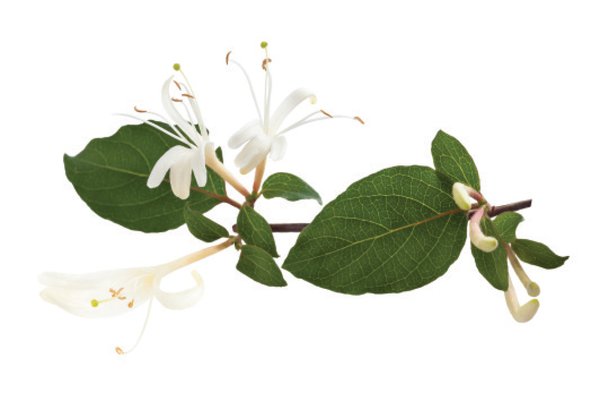
Winter honeysuckleWitch hazel, and Japanese apricot are three lovely vines and bushes that offer lush fragrance that wafts on winter winds—intoxicating with the promise of approaching spring.

Camellia: For showy blossoms in shades of rose and pink, add a Camellia to your garden. The shiny, dark green leaves make a perfect setting for the large, gorgeous blossoms that open in late February or early March. 

Here are some other flowers that handle winter weather and provide early spring color:

Semi-hardy: China aster, Lobella, Petunia

Hardy: Pansies, Sweet alyssum, Flowering Stock

Vegetables: If you’re among the hardy souls who are willing to tackle vegetable gardening, here’s a review of the types of vegetables that produce throughout the winter:

Semi-hardy: Swiss chard, Leaf lettuce, Arugula, Carrots, Beets, Rutabaga, Radicchio

Hardy: Radishes, Turnips, Broccoli, English peas, Leeks, Kale, Spinach, Collards

Expand

Garden6.jpg

Finally, just a few reminders if you decide to experiment with serious winter gardening:

Plant now: Give your new plants sufficient time to take root and settle in before serious winter weather arrives. You’ll be more likely to have tasty onions, peas, and Bok Choy if the dears have settled their roots into your welcoming garden. 

Consider watering: You may not need to do very much watering if the winter is fairly cold and some snow arrives. However, if the winter is mild and there is less than normal precipitation, prepare to occasionally carry water to your vegetables and flowers. 

Monitor freezes: The flowers and vegetables I’ve discussed in this article are hardy souls. They won’t be bothered by some frost and snow. But, if the predictions are for “hard frosts” and/or snowstorms, plan to cover your plants. Usually, old bedsheets will be sufficient, but if the weather grows extreme, there are “fluff covers” that will protect your lettuce and leeks from frostbite or the heavier piles of snow.

Don’t forget to take some photos of your winter garden in its special glory! They’ll be fun to look back on when spring arrives.

Posted in Nature | 1 Comment

Talkin’ Dirt: Conversations with Your Gardener

BY JANICE F. BOOTH 

OCT. 12, 2022

garden1.jpg

It’s not easy keeping up with the weeds, or those hardy Weigela shrubs or the Pampas grass. And then there’s the watering and edging, and trimming, and dividing and replanting that gardens require. Whew! I’m exhausted just trying to come up with the lists of regular tasks to maintain a healthy garden. Perhaps you have help, or maybe you’re planning on engaging someone to shoulder some of the work.

If you have interviewed a company or an individual to take on your garden maintenance, you probably know what you want from this important assistant. But during those conversations you may have been befuddled and just a bit intimidated by the concepts and the lingo employed by professional gardeners. To help you prepare for your next encounter with an enthusiastic horticulturalist, let me offer you two lists; one list of topics or issues to resolve when you engage a gardener, and the second a small terminology and vocabulary reference that you can read over and discard, or keep around for future reference. You’ll be happier with the services your gardener provides if you have clearly communicated your wishes—what you expect of your gardener.

Let’s start with a list of 6 general topics and issues you might want to discuss with your gardener or potential gardener:

garden2.jpg

Timing: How often do you want your gardener to tend your lawn and gardens? Are there restrictions about time of day? Caution: Don’t forget to discuss weather’s impact on the prescheduled gardening. (I’ve watched neighbors’ gardeners come in the rain and “cut” the lawn. How close or even do you think that cutting will be? And, what about ruts in the lawn from the mowers?)


garden3.jpg

Trimming: Is “edging” included with “trimming?” Will hardy mums and lanky phlox be trimmed as needed? Will the shrubs be kept to their current size and shape? Or, do you want them to cut back the shrubs a little or a lot?


garden4.jpg

Clippings and detritus: Will the clippings and random leaves and grasses be collected and bagged or taken away each time the gardener tends the garden? Do you want this material to go into a compost pile somewhere on your property?


garden5.jpg

Liability: Your homeowner’s policy may cover any injury, but perhaps not. Be sure to check with your insurance agent before your gardener begins. (Some gardening companies have their own injury insurance.)


garden6.jpg

Laborers: Do you mind if the gardener brings additional laborers to work in your gardens? Do you want the gardener to remain with the workers while they’re on site?


garden7.jpg

Maintenance tasks: Will the gardener “dead-head” and divide bulbs and plants that seem to need attention? Do you want to make the decisions, or will you allow the gardener to decide? While working on your garden, do you want the gardener to be “on the lookout” for specific invasive weeds or vines? I’m fighting a losing battle with Liriope or monkey grass; so I want every blade, every tuft out of my garden! (It’s never going to happen, I fear.) But, if your gardener knows to be on the lookout for specific invaders, you’ll be happier with the care and maintenance your garden receives.

I urge you to occasionally revisit some of these issues with your gardener. Make sure you both remain clear on what will and won’t be done on a regular basis.

Expand

garden8.jpg

Okay, now on to terminology. Here are some of the gardener’s jargon, common terms that get tossed around. You won’t have to bat an eye when your gardener throws one your way.

CEC: Cation Exchange Capacity measures how much fertilizer your soil can hold and gradually release. (High CEC is good; the soil will hold and slowly release fertilizer.)

Compost: organic matter, such as fruit peel and coffee grinds, break down and decompose to form nitrogen rich fertilizer: designed to breakdown based on soil temperature.

Deadheading: snipping off dead blossoms, to encourage more prolific flowering

EC (electrical conductivity): the measurement for the salt content in soil. High EC is dangerous to plants.

Fertilizer – Controlled-Release also called Time-Released: new, more effective formulas that release nutrients based on soil temperature rather than microbial activity.

Genus: first part of a plant’s scientific name. (plural: Genera)

Harden off: preparing a plant for winter through the gradual chilling temperatures—typically autumn’s weather.

Head-space: in container planting, the area from the top of the soil to the rim of the pot.

Height of plants: the general terms for average size: short plants 10” or less; medium plants 10–24”; tall plants 24” or more.

Heirloom Plants: These are old-fashioned, usually hardy plants, fruits and vegetables that reproduce from their own seeds. Apples tomatoes and watermelon are popular heirloom specialties.

Micro-climate: areas of a garden where conditions differ from the general garden climate. (ex: a soggy spot or an area warmed by a brick wall)

NPK: the ratio of Nitrogen to Phosphorus to Potassium (K) in fertilizer.

Perennial / Annual: perennials usually become dormant over the winter months but reemerge when warmer weather returns; annuals usually do not survive the cold winter months and must be grown from seed or cutting in the spring.

Root-bound: potted plants whose roots circle the pot on the outside of the soil, indicating time for replanting.

Senescence: the characteristic of decay and deteriorating as plants age (even perennials)

Spillers and Fillers: as the names suggest, spiller plants gracefully trail over edges while filler plants are used to fill in spaces between more dramatic plant specimens in a flowerbed or pot.

Toxicity: unhealthy conditions in a plants environment, such as too much fertilizer, too much sun or shade, too many insects, etc.

Trace elements: nutrients needed in small quantities for healthy plant growth. For example: Boron, Copper, Iron, Magnesium, Zinc. Most fertilizer products contain small quantities of these elements.

Variegated foliage: plant leaves that may be veined or edged in a color different from the primary leaves.

Xeriscape: landscaping with drought-resistant, native plants.

Posted in Nature, Uncategorized | 1 Comment

A Few Exotic Suggestions for Your Garden

BY JANICE F. BOOTH 

SEP. 07, 2022

Garden.jpg

Looking back over the summer’s rich bounty in my garden, it occurred to me that I’ve relied almost exclusively on plants and shrubs that are “sure things.” I know the habits and requirements of these old friends, and they’re pretty happy in their places in my garden. Perhaps, it will be fun to shake things up a bit—visually. Why not add a few surprises to my lovely, familiar ferns and asters?

So, if you’re ready to take a few chances, make a few changes, here are some suggestions for unusual and exotic beauties to delight the eye and pique the curiosity of admirers.

Let me begin with a few cautionary suggestions.

Potting: Since you and your exotics will be getting to know one another’s requirements, I recommend you pot the new plants. Handsome or pretty pots give you the flexibility to move your new plants if they seem unhappy and need to a change from less to more sun, from breezy to protected spots. Additionally, keeping your exotics in pots allows you to bring them indoors when cold weather arrives—into your sheltered garage or your family room, where they can be admired and looked after.

Records: Since exotics are sometimes rather finicky, keep a simple diary or notebook. Record the names and where and when you received these plants. Note any recommendations concerning the plant’s care: sunlight, watering, fertilizing, pruning, tolerance of heat and cold. As time goes on, you can update your records and take a few pictures along the way. If, heaven forbid, your exotic begins to droop, you can take your diary and photos to a botanist or master gardener for some advice.

That said, let’s look at some types of exotics you may want to adopt. Think of them as House Plants, visiting indoors until spring. Since autumn is roaring down upon us, you may want to choose an exotic plant that will fit into your décor—perhaps a sleek palm or plump cactus for a modern look, or a lush fern in a more traditional room.


Garden3.jpg

Hanging Plants: Here’s where it gets fun! If you can identify a low tree limb or a ceiling hook, indoors, there are some lovely plants that trail and vine beautifully.


Garden4.jpg

String of Pearls and String of Bananas: These two succulents are easy to grow, unusual, and pretty, either hanging or situated on a surface where there’s room for the “strings” to trail. The plant keeps its lovely green color and responds well to pruning. When spring comes, hang them outdoors, after all danger of frost has passed.


Garden5.jpg

Variegated Spider Plant: We’ve probably all been given spider plants at some point. They seem to grow without any need for assistance and produce pretty stems that cascade down with tiny, new spider plants dangling from each stem. You can find some exotic varieties with variegated colors—green edged with crème or pink. And, when they’re set outdoors, hanging from the branch of your dogwood, they grow lush and full, readying themselves for another indoor winter.


Garden6.jpg

Dramatic Plants: For that low flowerbed with its pretty creeping phlox and petunias, you might want to introduce a vertical, dramatic plant, something that will lift the eye and add a bit of pizzazz.


Garden7.jpg

Palms: An obvious choice for a bit of razzle-dazzle is a palm. There are lots of varieties. Usually, they are sold potted, so you need only drop the pot into a temporary hole in the ground or a handsome pot, and you’re set. Fan and Majesty Palms are the most familiar types, with fronds immerging from the base. Parlor Palms resemble miniature bamboo, with clusters of stems each topped with fronds. Ponytail Palms are fun, looking like an overly curled hairdo. They require a bit more room to show off properly.


Garden8.jpg

Yucca: These very dramatic and less familiar beauties do require floor space and room in the garden. The Color-Guard and Variegated Yuccas produce firm, sharp leaves that burst out of the plant’s core. They will discourage animals from getting too close, if you’re trying to get Rover to stop running through the flowerbeds. Indoors, the yucca will be handsome in a broad, open area where it can be admired from a distance.


Garden9.jpg

Bromeliads: Bursting with drama—leaves and blossoms or the Bromeliad can be pink, purple, gold, or orange. While these exotics are slow to bloom—up to three years before they mature—they are undemanding plants and the colorful leaves alone make them noteworthy additions to your home and garden. The only cautions I’d give you for these beauties; be careful to fertilize them during the nine months of growing season, and don’t overwater.


Garden10.jpg

Orchids: Finally, we come to those gorgeous and most exotic of flowering plants, the orchid. There are countless articles and books explaining how to grow orchids, so I won’t even attempt to advise you. The Moth Orchid or Phalaenopsis is the most cooperative variety with its pretty “face” and undemanding temperament. The Lady Slipper Orchid or Paphiopedilum is almost as easy to grow as any other houseplant. And of course, there are lots of other varieties, as well as orchid growers’ clubs and competitions to win prizes for your orchid.


These are just some of the dramatic or exotic plants you might want to introduce to your garden and your home. Gardening is an art as well as a craft. Experimentation is part of the fun.

Posted in Nature, Uncategorized | 1 Comment