
Garden Design Trends for a Fresh Look in 2024

BY JANICE F. BOOTH 

FEB. 14, 2024

Garden1.jpg

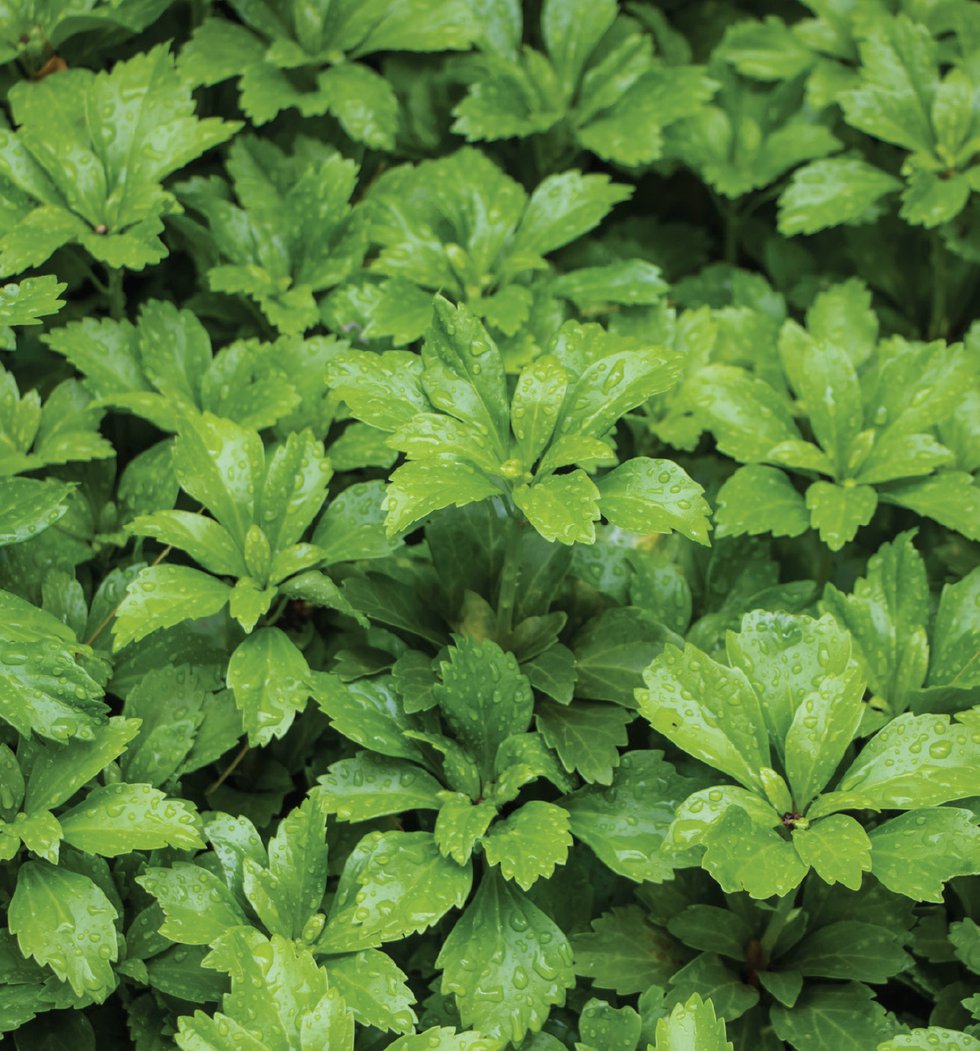
It may be cold outside, but it can be fun beginning plans for our spring gardens. Perhaps you’re happy with last year’s display and there’s nothing you want to change. But just maybe you’re a bit tired of that over-zealous cluster of rose bushes and the now-too-tall ornamental cherry tree.

Let me offer you a few inspirational suggestions for ways to update your garden and (dare I say it?) transform your garden into a trendy Eden. Yes, I know there’s nothing new under the sun, especially when it comes to gardening. But here are four fresh looks gaining popularity among landscape designers. 

They are (1) Pleaching, (2) Mixed Planting, (3) Maximalism, and (4) Xeriscaping.

Expand

Garden2.jpg

Pleaching: 

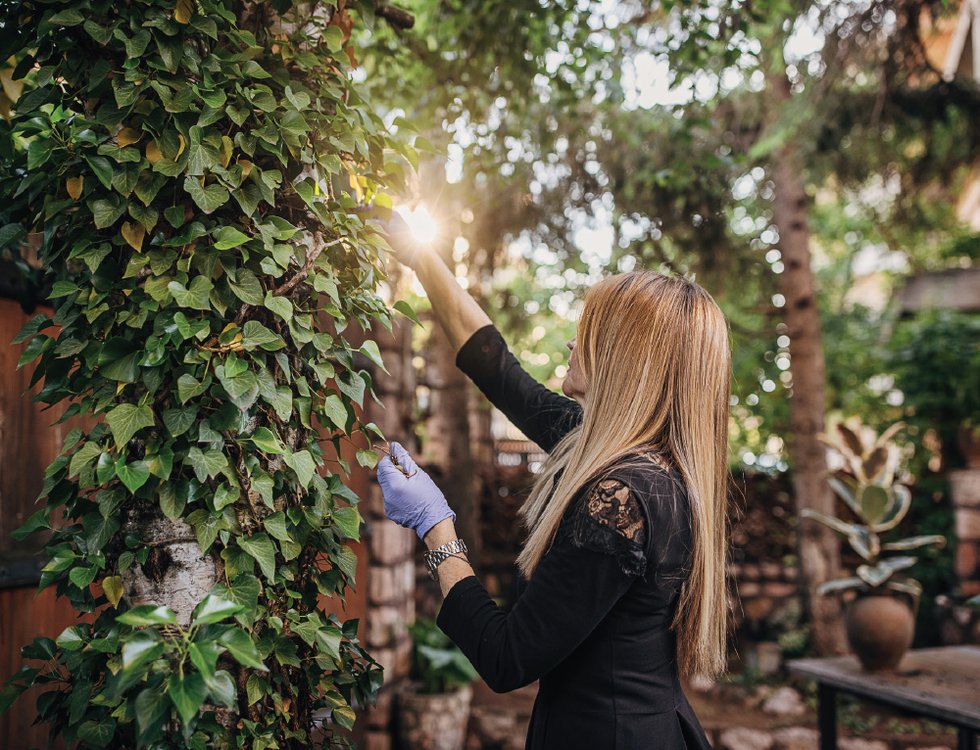
I’ll begin with pleaching because, if you like the idea, you’ll want to set aside this magazine and rush right outside and start pleaching! Dating back to the Middle Ages, this creative approach uses your garden’s trees and shrubs to create an environment, a space created from woven branches. Begin by tying and weaving pliant branches of shrubs and/or trees together to form a tunnel, roof, or hedge of greenery. Pleaching is particularly lovely when used in combination with arbors, trellises, and pergolas. 

You’ll need: (a) cotton garden twine, (b) a stepladder, and (c) patience. After you’ve decided where you’re going to pleach and which trees or shrubs will lend themselves to the training, it’s time to work. (Pleaching works best with deciduous trees.) Winter is the best time to do the weaving and tying of branches. In the spring, when those secured branches send out new shoots, they’ll begin to intertwine with the neighboring tree or shrub. The new shoots are easy to train by gently tying them to mature branches. By early summer, you may already see lacey boughs shading your path or patio area. Throughout the summer trim the occasional random shoot or branch heading off in its own direction. By autumn next year, there’ll be a lovely sculpture of vining branches overhead.

Expand

Garden3.jpg

Mixed Planting: 

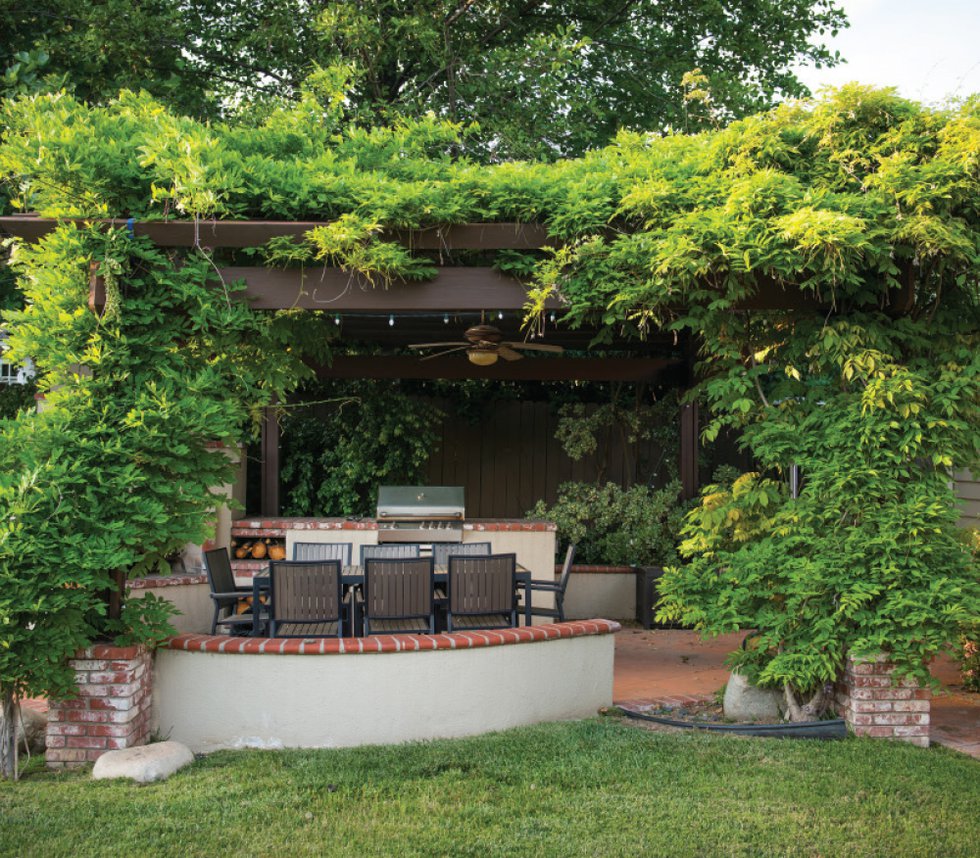
Mixed Planting is a practical and sometimes challenging approach to garden design. Traditionally, one creates a flower garden and/or a vegetable garden. Mixed planting is a garden designed to mingle flowers, fruits, and vegetables. The two types are not customarily mixed because the vegetables are grown in quantities to be harvested, while flowers are raised for beauty and occasionally for bouquets. 

The problems faced by this combined garden are (1) location: how to harvest the carrots without harming the daisies blooming nearby, or how to control the pea vines so they don’t strangle the lilies growing majestically beside the vines. (2) Maintenance can be difficult too, if your asparagus needs to be treated for beetles with a spray the foxglove can’t tolerate, or your tomato plant needs generous watering but it’s drowning the dahlias. So, lots of planning is essential. A great project for the snowy days ahead. 

Expand

Garden4.jpg

Maximalism: 

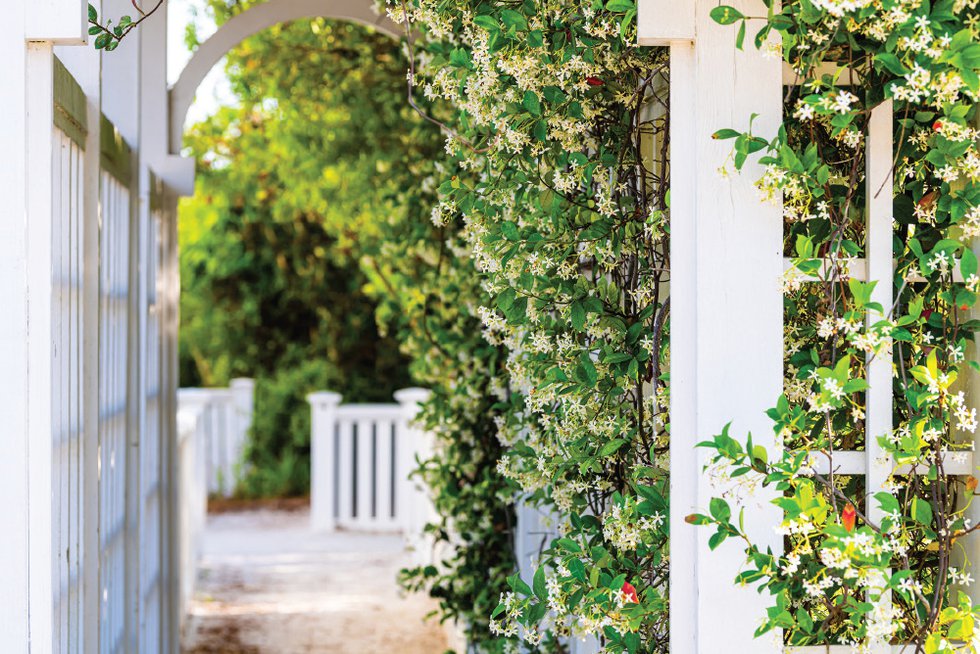
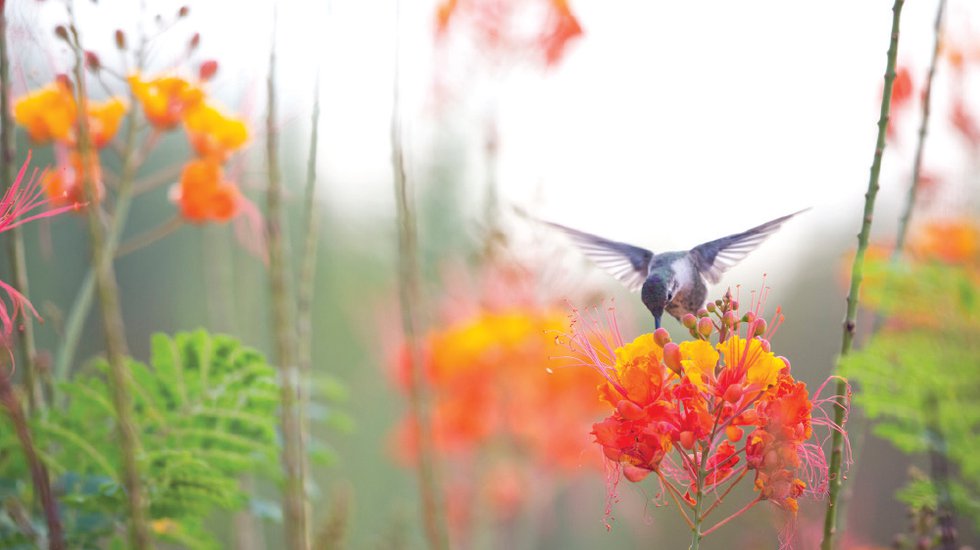
As a reaction to the Minimalism of the last decade, there’s a trend now to Maximalism in garden design. One type of Maximalism is known as “meadow scaping.” The New York City High Line, designed by Piet Oudolf, exemplifies this approach—a profusion of wildflowers loosely interspersed with ornamental grasses. Another type of Maximalism is the Romantic Garden popularized in the 19th century. Romantic gardens use a plethora of plants and bright, lush colors to create a panoply of sensory experiences. There’s lots of room in this design style for one’s personal mark—applying color, texture, and volume to planting. To some degree, the Maximalist Garden responds to the deepening concern for pollinators in our gardens. The variety and lushness of plantings are exactly what bees, hummingbirds, and other pollinators enjoy. 

Expand

Garden5.jpg

Xeriscaping: 

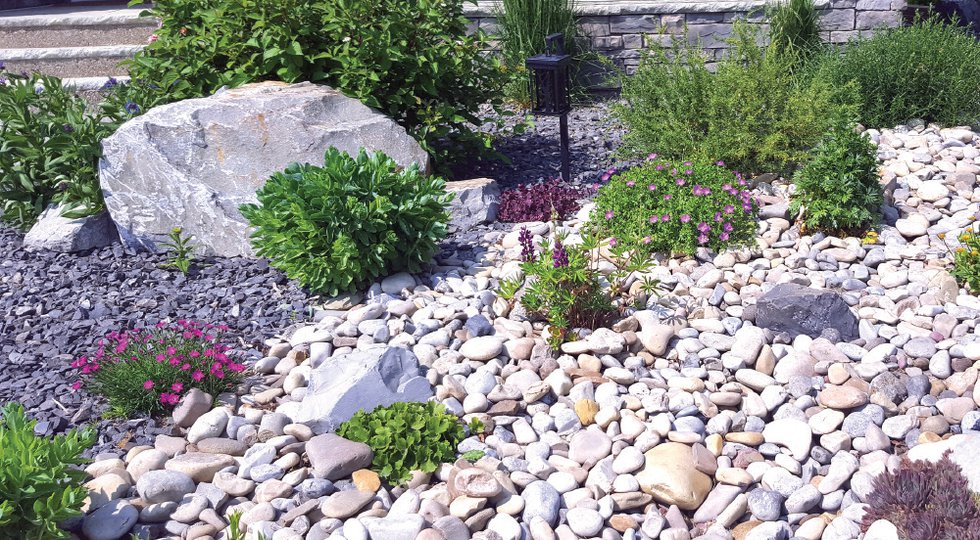
The term “xeriscape” refers to planting with the intent of little or no artificial irrigation. The trend to decrease or eliminate lawns is an example of this movement’s impact. Recently, there are two new approaches to xeriscaping: (1) Gravel Gardens and (2) Industrial Gardens.

Gravel gardening uses layers of pea gravel to provide a well-drained setting for sturdy, well-established plants. Laying down layers of small, clean pebbles is critical. Into this bed of gravel, reasonably mature, healthy perennials are settled—holes dug in the gravel allowing the established plant-roots to get deep enough to reach the ground beneath the gravel. While it takes careful planning, including clean, differentiated borders to hold the gravel in place, once established the gravel garden needs little attention—it looks after itself. 

Industrial Gardens is an unusual direction in garden design. As the name implies, items we think of as used in industry are repurposed in the garden. For example, cement blocks can be filled with soil and used as planters. Metal rods and beams may provide interesting vertical designs and supports for vines. The challenge for the gardener is to see materials for their color, texture, and versatility. The garden becomes a modern, or even post-modern assemblage. 

Whichever of these trends captures your imagination, you’ll surely adapt them to your particular vision of a garden. And that is the true beauty of gardening, harmonizing the natural world with our cultivation and care of that world. 

Posted in Nature, Published articles, Uncategorized | Tagged , , , , | Leave a comment

My poems are reaching a wider audience:

I received two wonderful pieces of news today, both concern my poetry.

One of my poems, “Strands”, has been selected for inclusion in the annual Bay to Ocean Journal: The Year’s Best Writing from the Eastern Shore. That publication will be out in the fall.

Another of my poems, “How Can I Speak About Hunger” is included in the Hunger issue of THE PENDEMIC JOURNAL, page 5.

In each publication, I am honored to be among such gifted artists.

Posted in Poetry | 2 Comments

Dan Murano’s Photospechio.com Visual & Literary Arts

https://fotospecchio.com/books/the-road-beneath-our-feet/processional

The Road Beneath Our Feet

Colorado - 2019

Colorado – 2019

Processional

Across the meadow, from among the sheltering pines,
The furred ladies, discrete in their closeness, 
Follow one another in stately fashion.

Far from their rocky Channel island,
These Jersey ladies patiently plod the rocky highlands,
And return to paddock and barn,
Faithfully keeping to their path.

The setting sun, slipping down through forest and meadow, 
Lights the matrons’ way.
Soft lows acknowledge their pacific acceptance
Of day’s end, of obligations, and of their place in the procession.

— Janice F. Booth


Janice F. Booth

Janice F. Booth is the author of Crofton: Images of America; her poetry is published in The Song In the Room, a collection of poems by six poets. She writes for a variety of periodicals, including a long-running gardens column for What’s Up? Publications. She has over 50 years’ experience as an educator. Read her blog at www.open-line.org.

Posted in Nature, Poetry, Published articles, Uncategorized | 3 Comments

Five Prosaic Problems: One Simple Solution

January Gardens column in What’s Up? Magazine

BY JANICE F. BOOTH 

garden3.jpg

It’s cold outside. The winter sunshine hides nothing as I gaze across the garden. It’s a good time to take stock of the landscape just beyond these warm rooms. If you’re gazing out and noticing some troubling aspects of your landscape, I may have one, simple solution. 

Let me review five common problems our landscaping can present, and one easy-to-implement solution:

1. The Problem: UNSIGHTLY ELEMENTS 

If your home and its landscaping are new to you, recently leased or purchased, then perhaps there may be flaws that stand out. For example, the air conditioning unit clearly visible from the driveway, or the unattractive foundation—gray cinderblocks with some ugly stains. 

The Solution: SHRUBS 

Consider planting deciduous or evergreen shrubs near or around these annoying flaws. Some privet or boxwood shrubs around the AC box can effectively disguise the equipment. I suggest these two shrubs because they take well to tight pruning; it’s important to keep the new growth from getting too close to the AC fan and electrical unit, both of which may need regular servicing. You don’t want the technician wrestling with the shrubs. Boxwood and privet are well-behaved evergreen and semi-evergreen respectively, giving you a tasteful, green screen year-around. And what about the foundation’s cinderblocks? This is another situation that requires choosing a well-behaved shrub that will not damage the house’s foundation or interfere with drainage. Depending on the architectural siding material of your house, you might choose shrubs that add a touch of color or pick up the texture. Azaleas and hydrangeas are lovely, can be color-coordinated, and accept pruning. 

2. The Problem: PROPERTY or GARDEN TOO NARROW, TOO SMALL 

It’s quite exciting to move from a small apartment into a grander home, or, alternately, decide to downsize from a large property and garden to a small patio or garden area. It can be daunting, expanding or downsizing. How can you quickly create a setting that pleases you and leaves you happier with the plot of land you have now? 

The Solution: SHRUBS 

If you look out that winter window at a large expanse that will be your garden and lawn, you might feel a bit overwhelmed. There are considerations of time and budget. Some well-chosen shrubs can fill in a large, empty space. Useful old favorites include weigela, which has pink and/or white blossoms and a delicate fragrance, or spirea, another lovely old favorite with its sprays of white blossoms that cascade and grow quickly. For some height in the garden, butterfly bushes can soar and produce tall, flowering spreads beloved of the butterflies! On the other hand, if you’re having to adjust to a small patio or enclosed garden, do not despair! Shrubs are your friends. Gather some pots; they should be varied in size and perhaps in shape and color. At your favorite nursery, buy an assortment of small bushes (soon to be shrubs.) A beautyberry shrub produces pretty, purple berries and repels ticks! (Or so say the entomologists.) Gardenias in pots are lovely for decks and patios. They have shiny leaves and produce intoxicating blossoms. One caution, you’ll have to move their containers to well-protected spots over the winter. Another advantage of the potted-garden, it’s movable. You can shuffle your shrubs as they mature and turn them to keep them growing symmetrically. 

garden2.jpg

3. The Problem: Boundaries 

Your neighbor’s adorable chocolate lab has made her path to the creek through your yard. Or, the house next door has become a rental, and you’re looking for a quick way to clarify where your yard begins and the neighbor’s yard ends. 

The Solution: (You guessed it!) SHRUBS 

Get out that spade and dig a series of holes inside your property line about 12”. (You’ll need to leave room for the shrubs to spread.) Two excellent choices for “keep the dogs away” boundary shrubs are cotoneaster and pyracantha. Both are handsome shrubs with white and red berries respectively. But, what makes them particularly useful as boundaries is their prickliness. Both shrubs have thorny branches that discourage animals and people from diving through them. Quick boundary shrubs are our old favorites, forsythia and burning bushes. In fact, combining them makes a handsome border—the forsythia’s yellow sprays in the spring and fuchsia and orange burning bush leaves in the fall. 

garden4.jpg

4. The Problem: CREATING WILDLIFE HABITAT

Almost 15 million people identified as bird watchers in 2021. Perhaps you’re a birder too. Or maybe you enjoy identifying butterflies, catching a glimpse of a graceful deer gliding through your backyard or a russet fox slipping in-and-out of the shadows. How, you might ask, can you encourage the wild things to visit your garden without endangering your family’s health and wellbeing? 

The Solution: SHRUBS 

All these beautiful, shy creatures are seeking safe havens for rest and, sorry to say so… food. You can make your landscape more inviting to shy birds and other wild creatures by encouraging the growth of some large shrubs, perhaps shrubs with berries. As I mentioned earlier, the tick-repelling beautyberry is attractive, loose-branched, producing fall berries. Winterberry is another stunning shrub, holding its bright red berries all winter—a feast for the eyes and the small birds and animals. (Caution: You’ll need two, a male and a female to produce berries.) One or two taller evergreens will provide perfect cover for birds. Holly and juniper are great choices, and they too produce berries. 

garden5.jpg

5. The Problem: EROSION

Winter is a great time to examine areas of your lawn and garden that might be eroding. Sometimes the solution is simply adjusting downspouts, but more often, there is some water source being misdirected. If the erosion is allowed to continue, your plants and even building foundations can be damaged, or washed away. It may be worth a walk through and around your property with an eye toward the marks of erosion.

The Solution: SHRUBS again! 

If you find ruts, short or long, boggy areas, or places where plants seem to have disappeared, it’s time to address the problem. You may need to bring in a specialist in “hard landscaping.” That is, someone who deals with ground erosion and moving plants and earth to maximize the safety of the foundations and plantings, and the avoidance of further damage. For this problem, it’s more difficult to identify specific shrubs to use. Until the source of the water is identified and corrected, repairing the damage will be fruitless. But, once the water has been redirected, you can plant shrubs that will fit into the setting. Unlike more delicate plants, shrubs can take a bit of wind and even sun, as well as compensate for wet soil…for a while. 

And so, I repeat, when you’re faced with a dilemma, a gardener’s nightmare, even. Think shrubs! They’re tough, easy to propagate, and relatively undemanding. 

Posted in Nature, Published articles | Tagged , , , , | Leave a comment

December’s column in What’s Up? Magazine

Beautiful Bare Bones:

Reconsidering Our Gardens in Winter

BY JANICE F. BOOTH 

DEC. 06, 2023

garden1.jpg
garden2.jpg

The holidays are upon us, and you’re probably leafing through these pages while waiting to pickup a child at a music lesson or for your turn at the dentist. So, I will be direct: Don’t overlook, during this busy season, the gifts to be enjoyed in the garden—yours and the gardens of others. Let me suggest a relaxation technique that’s foolproof: Consider spending a little time (a) admiring and evaluating your own garden in winter, then (b) visit a public garden or two for ideas and inspiration—a winter garden walk can be a lovely experience to share with friends and family. 

When the leaves and flowers are gone, the garden stands in her starkest beauty. Take a bit of time to admire the architecture of your own garden, no matter the size. Consider:

The skyline is a good place to start. Is there variety in height? 

The smallest garden can create a pretty tableau against the sky at dawn or dusk. Perhaps you’ll want to add a tall, feathery grass to break up the line, or do you need to trim down some shrubs to open a vista. 

If you have a spacious garden, do taller and smaller trees and shrubs create a crenelated view? 

Then there is depth. As you look out across your garden, does it appear, in the words of Robert Frost, “dark and deep?” 

In small gardens, a wandering path can suggest depth, and a carefully placed garden sculpture draws the eye to what appears deeper in the garden. 

Larger gardens more easily exhibit depth, however continuity of depth can be a challenge. Without rivers of blossoms to draw the eye, does the garden hold together moving back and away? Here too, a reconfiguring of your garden’s paths and the addition of a few visual points of interest can lead the eye into more distant areas in the garden. 

Expand

garden4.jpg

Winter’s austerity allows texture to take center stage. The eye will note with interest variety in the textures of bark, branch, and berries.

Bark: Copper, Paper, and River Birches, Sweetgum, Coral Bark Japanese Maple, Cherry Tree all offer beautiful textures.

Branch: Red Twig Dogwood, Corkscrew and Witch Hazel, Oakleaf Hydrangea, False Cypress, and Smokebush provide color all year, particularly welcome among the grays and browns of winter.

Berries: Holly bushes and trees, Winterberry, Firethorn, Beauty Berry, and Chokeberry are popular with the birds and other wildlife that shelter in your neighborhood over the winter. 

Finally, consider whether there are “holes” in your garden, areas where nothing is delighting the eye or striking the imagination.

Which brings us to my second suggestion: Take an hour or perhaps longer and visit a local public garden. Once you’ve evaluated your own garden, you have some questions and ideas that may be answered or enhanced by other gardening professionals. (No need to reinvent the wheel or settle for less than charming ideas.)

Expand

garden3.jpg

Here are some public gardens in Maryland that will probably be open when you wish to visit but be sure by checking their web sites. Plan to take some photos while you’re wandering through the garden. You may also want to take a note pad; you may run into one of the professional gardeners. Ask them any questions you have about your own garden. They’re usually delighted to “talk shop” with a fellow gardener. 

And, we must not forget the spectacular treasures we have within easy driving distance, the National Arboretum (usna.usda.gov) and the National Botanical Gardens (usbg.gov). Both are right down Route 50, and both are free to the public. If you haven’t visited them in a while, please do. 

The Botanical Gardens have a spectacular display of seasonal plants and a huge room with toy trains running among villages, woods, mountains, and rivers all constructed from natural fibers—bark, branches, leaves, heart wood, and more. Open through January 2nd.

Just a little tidbit I ran across in my research: If you’re off to Britain any time soon, the largest and oldest public winter garden is in Regent’s Park, London (royalparks.org.uk/visit/parks/regents-park-primrose-hill). Constructed in 1842–1846, the winter garden is, as you might expect, spectacular—fit for a king or queen!

BY JANICE F. BOOTH

Posted in Nature, Published articles | Leave a comment