
I’m honored to have my poem included among those published in this handsome chapbook. The reading and this resulting collection were planned and executed by Annapolis Poet Laureate, Jefferson Holland.
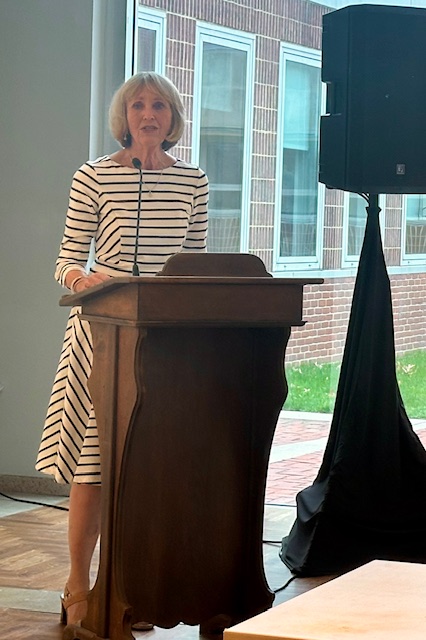
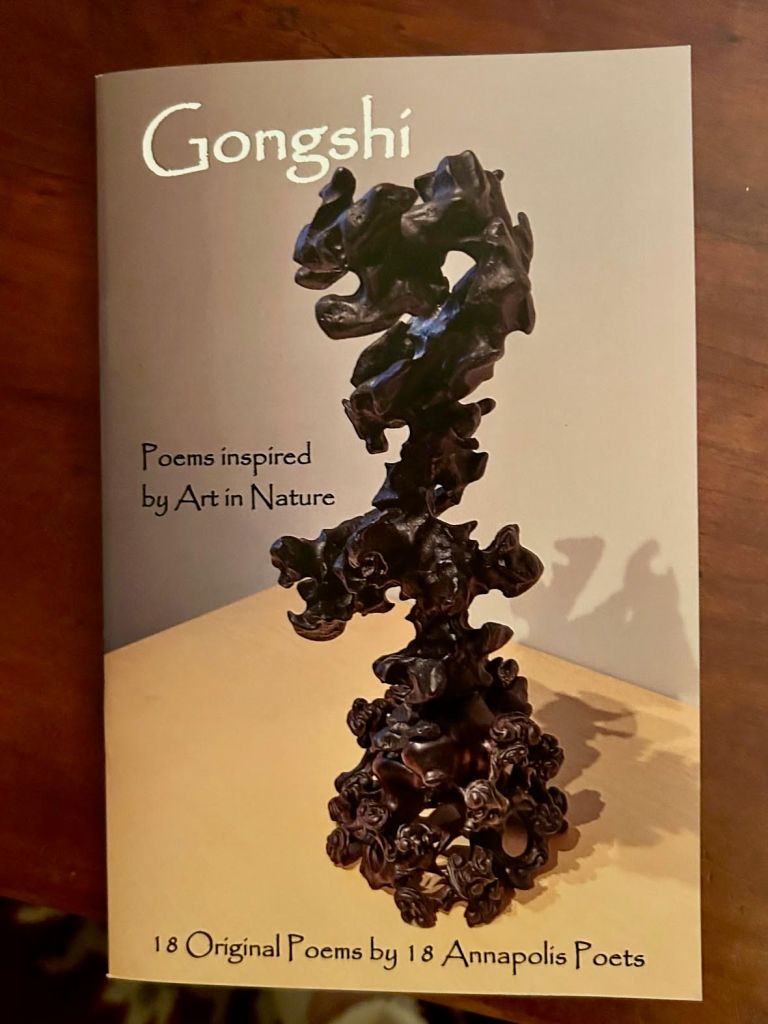

I’m honored to have my poem included among those published in this handsome chapbook. The reading and this resulting collection were planned and executed by Annapolis Poet Laureate, Jefferson Holland.
I’m delighted to share with you my interview done by Sistah Joy for her series SOJOURN WITH WORDS. It was an honor do discuss my thoughts on poetry with another accomplished poet. I hope you enjoy the interview and the poems I read.
Jul. 03, 2025


Hiram Larew, founder of Poetry X Hunger. Photo by Portia Wiggins
“Poetry invites truth telling, and for me [Glaser], poetry sings most profoundly when it points us toward compassion. Narrative poetry can powerfully share the stories of those who live hungry, who suffer from the plague of poverty. Unlike essays and explanations, poetry offers a direct route to our hearts: It is not argumentative. It does not speak to the mind so much as the spirit… by offering us new eyes and ears through which we might gain new understandings.” —Michael Glaser, the 9th Poet Laureate of Maryland, speaking about the Poetry X Hunger organization and the use of poetry to fight hunger.
As recently as 2023*, more than 47 million Americans went to bed most nights worried that there would not be enough food to feed their family the next day. Seven million children in the U.S. in 2023 ate less than they wished to, went an entire day without eating, and/or could not afford a balanced meal. (*The most recent year for which data is available.)
Those statistics may, or may not, be surprising to you. What we eat, who eats, and who does not eat are issues covered regularly in the press, in blogs, and on social media. I may have a plate of cheese and crackers at my elbow as I watch the news and fret over such suffering. And after a hardy breakfast of eggs and juice, maybe I’ll send a check to one food aid organization or another. What else is there to do?
Remedies? Many volunteer organizations in our state work to feed the hungry. Maryland-based Poetry X Hunger (PXH) is one of those organizations drawing on what they have to give—poetry—in the monumental task of reducing hunger. This organization of writers employs poetry to awaken us to the plight of hunger and to feed hungry people, in the U.S. and across the globe.
Since its inception in 2017, Poetry X Hunger has been recognized for its integrity and success “in pointing us toward compassion” and providing concrete resources to reduce hunger. PXH has received project grants from the Maryland State Arts Council, several County Arts Councils, and, even, the United Nations.
Hiram Larew, an award-winning poet, founded Poetry X Hunger after his retirement from the U.S. Department of Agriculture (USDA) and the U.S. Agency for International Development (USAID), where he was director. Discussing the inception of this unique use of poetry, Larew muses over a visit he made to the Statue of Liberty in New York Harbor where he reread the poem at the statue’s base, “New Colossus” written by Emma Lazarus in 1883. The sonnet includes these famous lines, “Give me your tired, your poor, Your huddled masses yearning to breathe free.”
Larew observes, “I saw the power of poems to address social problems…It’s all about using the power of poems, turning poetry into food.” Larew established his nonprofit organization to actively address the entrenched social problem of hunger.

Food storage purchased with a PXH grant by Roots For Life.
Under the umbrella nonprofit Chesapeake Charities (in Stevensville), Poetry X Hunger devises creative ways to provide small grants to groups working to ease hunger on local levels. PXH partners with organizations on money-making activities to fund these donations and more. Examples include poetry readings (online and in person), poetry contests, and activities engaging children in the challenge of using their poetry to help us understand the scourge that is hunger. Poets donate their honorariums and speaking fees, while others make outright donations.
In 2024 alone, Poetry X Hunger raised $13,000 to help feed the hungry and raise awareness of hunger in our own communities. Among the recipients of those dollars were the Anne Arundel County Food Bank, the Maryland Food Bank, and the D.C. Food Bank. Some of those funds were used by Roots For Life, a D.C.-based community farm, to help purchase a walk-in storage area with refrigerator where locally grown produce could be stored awaiting distribution.
And the organization’s international profile is rising. In November 2024, Brian Manyati, a contributor to Poetry X Hunger’s poetry page, addressed the International Literary Festival in his native country, Zimbabwe. He spoke about his poetry and its power to reach the ears and hearts of a wide audience. Similarly, but from Tanzania, Joseph Mukami Mwita contributes his poetry to PXH. He observes, “One thing that poetry does is grease humanity’s wheels.”
For a special project Poetry X Hunger joined with two international organizations, Seed Programs Internation and Sustainable Community Initiative for Empowerment. These three organizations raised enough money to fund the creation of school gardens in Kampala, Uganda. When schools reopened in February 2025, school garden clubs were formed. While students till, plant, and harvest, club members study urban farming, watering and weeding practices, urban tools, and more. Student manuals reinforce the hands-on learning.
Another powerful illustration of Poetry X Hunger’s work is their partnering with Feed the Children. Canadian poet, Josephine LoRe contributed a poem, “Enough,” through PXH. Her poem has been used in a compelling Feed the Children video spot, with 165,000 views and counting. “Would words be enough” read aloud over scenes of people working to feed the hungry, the poem, begins:
Ongoing and future plans for Poetry X Hunger include poets reading at a summer conference of the Alliance to End Hunger. Another exciting project for PXH poets is the possible publication of a collection of Poetry X Hunger poems. Profits from the sale of the anthology will be used to fight hunger.
You may be wondering about the amount of planning and direction needed to keep all these projects and programs going. The poet-force behind the scene, Hiram Larew never rests; he has authored seven collections of poems, and counting, including his 2025 This Much Very. His poetry has earned prestigious awards, including four Pushcart Prize nominations. In addition to overseeing Poetry X Hunger, Larew received an Individual Artist grant from the Maryland State Arts Council. He founded Voices of Woodlawn, a program of poetry, music, and visual art expressing and recognizing the tragic history of plantation slavery. Larew is a Courtesy Faculty member at five U.S. universities. He assists Baltimore’s WBJC Classical Radio (91.5 FM) to identify poets for interviews on the widely broadcast BookNotes program. And he was a member of the Shakespeare Folger Library’s poetry board. All this in his “retirement.”
Prior to retirement, Larew was a representative for USDA and USAID; he has advanced degrees in Botany, Horticulture, and Entomology. Directing from the front lines, Larew guided aid programs in countries including Afghanistan, Armenia, Egypt, and Haiti. He supported regional university faculties as they established programs as part of Universities Fighting World Hunger.
Hiram Larew is adamant about the power of poetry to change hearts and, by degrees, lives. “Poetry brings a heart and an awareness that data and statistics can’t—though we need both,” he says.
If you want to get involved, visit Poetry X Hunger’s website, poetryxhunger.com. The homepage has a useful “Donations” button and a place to add your name and contact information if you want to volunteer your skills.

Anne Arundel County Food Bank (Maryland)
Maryland Food Bank’s Eastern Shore Branch Office (Maryland)
St. Mary’s Caring (Maryland)
Prince George’s County Food Equity Council (Maryland)
Community Action Council of Howard County (Maryland)
Roots for Life (Washington, D.C.)
Food for Others (Virginia)
Feed the Children (Oklahoma)
Seed Programs International (North Carolina)
Food for Lane County (Oregon)
Fulfill (New Jersey)
The Food Pantries for the Capital District (New York)
Mid-Norfolk Foodbank (United Kingdom)

Chloe Gibeon, age 12
Poetry X Hunger also worked with the Westside Campaign Against Hunger in New York City. WSCAH held a poetry contest, inviting young poets to raise their voices and their poems to fight hunger. One highlighted poet was Chloe Gibeon, age 12 (above):
Its green eyes glint
as it tears bellies
with sharp claws…

…Some people gorge
but they keep it for themselves.

They don’t know
hunger’s green eyes
the pain of the claws.
Jul. 03, 2025
I am honored to have my poem, “On Slumbering Water,” among the poems chosen for the Summer Issue of UpStART Magazine.

What’s Up? Magazine
Mar. 07, 2025

Of course, the gardening year never really starts or ends. It is one continuous, entwining circle. A succession of tasks and pleasures; where one plant dies and another grows up to take its place. A balance of planning for tomorrow and next month and five years hence, whilst living for today. —Mahatma Ghandi
Like me, you’re probably nodding and smiling as you reflect on Ghandi’s observations on gardening. Spring is in the air, and we who garden are sharpening our trowels and buying new gardening gloves. Maybe you’ve looked over last year’s garden diary and photos, and you’re thinking about a few changes in your garden. One project to consider is extending your garden’s year-round beauty.
A garden that offers beautiful lines and colors 12 months of the year is a bit of a challenge. If you’re ready to take on that challenge, here are a few things to consider: (A) plants that add color in the winter and (B) review your mature plants for expanding seasonal color.

Witch Hazel
While your garden’s winter appearance is still fresh in your mind, consider how to add color next winter.
Pause here: Success for any garden project depends on 4 things: watering, mulching, fertilizing, and pruning. We’re doing a lot of that now that Spring is here, but don’t forget to continue these essential activities into autumn in preparation for the winter garden you’re planting now. Now is the time to expand your garden’s seasons. So, let’s get started:
1. Consider the heights and widths of your garden when all the lovely foliage has wilted and the neighbor’s cement block garage or doghouse are peaking at you through the fence. Where do you need height? Where breadth of growth?
2. Three types of plantings can enhance the color and architecture of next winter’s garden – trees (conifers and deciduous), shrubs and bushes, and perennial plants.
3. Starting with trees and shrubs, here are some wonderful choices to plant now for beautiful colors next November:
Witch Hazel—a small tree or large shrub, its elegant branches are festooned with feathery blossoms; yellow, orange, or red, depending on the variety, from January to March. Witch Hazel is valued for its medicinal uses too.
Dogwood, red or yellow twigged—a familiar small tree in our region, its renowned for white or pink spring show. But the red or yellow winter bark is a showstopper! Dogwood’s easy to plant and maintain. (Whether you’re doing it yourself or using those wonderful, strong gardeners.)
Copper crape myrtle—you may already have one of these beauties in your garden. The copper crape myrtle’s bark may be cinnamon, red, beige, or yellow. The smoothness of the tree’s trunk enhances the elegance of the trunk.
Winterberry, Serviceberry, & Beauty Berry shrubs—these guys are a chorus of winter delight. Each has clusters of berries in reds or purple. They fill in nicely in areas where the flowers of summer are no longer on display.
4. Don’t forget to include in your plans those sturdy plants that bloom in summer and into the early winter. They include:
Camelias—glossy, green leaves and showy blossoms in shades of pink and red. Stunning in February, if they’re planted in a protected area they can become bushes.
Hellebore—if they love where you’ve planted them, they’ll give you blossoms from November through to March! Pink, white, and green.
Winter jasmine—that lovely vine, flowers now and even in February. Keep an eye on that vine. It may get out of hand.
Kale and Ornamental Cabbage—to avoid legginess, plant or pot them in autumn; they add color and texture to winter’s blandness.

Ornamental Cabbage
Coordinating the colors of our flowering plants is a familiar challenge for all of us who garden. Changing conditions in the garden may require some revisions in the planting. Consider these:

Blue Mistflower
1. Sun-to-shade ratios: The sunny garden has its problems with watering and fertilizer, but the shade garden has those problems plus the problem of encouraging color in the shade. Are those lovely trees casting shadows further over the flowerbeds? Will the neighbor’s new addition block the morning sun? Here are a few suggestions for the shady parts of your garden
Actaea or Fairy Candles—pink with dark maroon foliage
Blue Mistflower—tiny purple flowers bloom in early autumn
Bottle Gentian—blue flowers bloom in early autumn
Coral Bells—bright autumn flowers
Windflowers—pink and purple autumn flowers
Korean Angelica–beautiful red to purple clusters, but… biennial.
Turtlehead–clustered pink blossoms on a tall-ish stalk.
2. Space: crowding & expanding: March gives us some idea about which plants we know and love have survived winter and where sturdy plants have grown too large for their places in the garden.
Wander among the flowerbeds checking for emerging green on mature plants or telltale grayish-brown where green shoots should appear.
Observe the “footprints” of favorite plants. Can the too-large plants be divided, or must they be moved to a different location in the garden?
Where space has opened up, reconsider sunlight and moisture, and which new plants might settle in nicely. (Don’t forget this may be the perfect opportunity to add the winter-color plants.)
As Ghandi so wisely observed, in our gardens the planning and work are never done. But it is fun to try some new plants for the dazzling surprises they’ll provide all through the year.
Mar. 07, 2025
noon
 Opening Lines